Al-Menfi voices reservations over a small UN committee to discuss elections
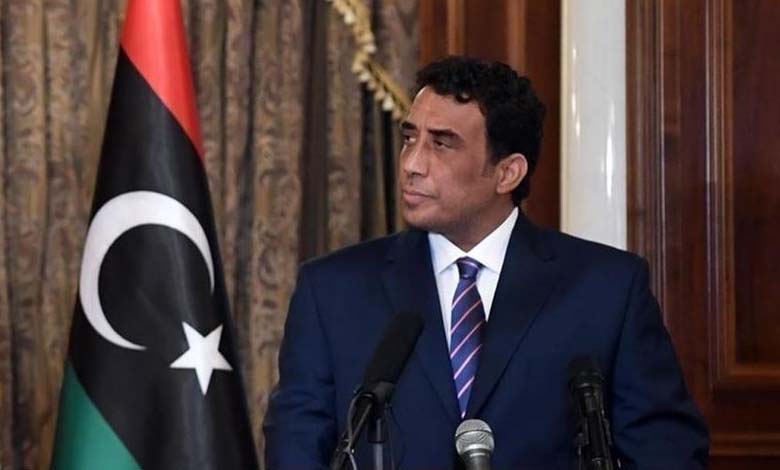
The President of the Libyan Presidential Council, Mohamed Al-Menfi, stressed that any dialogue process or political arrangement, particularly those related to the electoral process, must be based exclusively on a clear legal and constitutional framework.
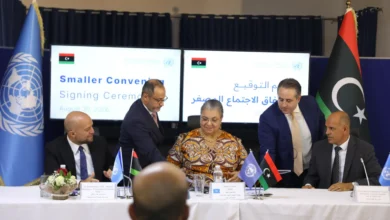
Al-Menfi expressed reservations about what he described as a small committee composed of eight figures (4+4), formed by the United Nations Mission in Libya to discuss the electoral framework. This position comes as the UN mission is making intensive efforts to advance political discussions aimed at ending the state of division.
-
Can Mohamed al-Menfi Break Libya’s Political Deadlock?
-
Letters of Mohamed al-Menfi before the United Nations: Building Libya, External Intervention, Rejection of Conflict
Al-Menfi’s position was expressed during his meeting on Tuesday in Tripoli with the UN Secretary-General’s Special Envoy to Libya, Hanna Tetteh, ahead of her scheduled briefing to the Security Council on Wednesday, according to a statement issued by the Presidential Council.
In recent days, Libyan media circulated leaks indicating that the UN mission had sent correspondence to the leadership of the Libyan National Army, led by Field Marshal Khalifa Haftar, as well as to the Government of National Unity, inviting them to nominate representatives to participate in the “small table” tasked with discussing the electoral framework.
-
Al-Menfi and Haftar in Cairo to Break Political Deadlock
-
Political and economic solution to Libyan crisis at Biden-Al-Menfi table
According to these reports, both parties responded positively and submitted the names of their representatives. The Government of National Unity nominated High Council of State members Ali Abdelaziz and Abdeljalil Al-Shaouch, along with the Prime Minister’s adviser Mustafa Al-Manea and Minister of State for Communications and Political Affairs Walid Al-Lafi.
On the other side, the list of representatives from the eastern forces included Members of Parliament Adam Bousakhra and Zayed Hadiya, in addition to political figures Abdelrahman Al-Abbar and Al-Shaibani Bouhmoud.
-
Libya in 2025: Limited Political Progress and Persistent Deadlock Hindering the Electoral Process
-
Warnings of renewed conflict in Libya amid security fragility and sudden violence
According to the Presidential Council’s statement, the meeting addressed developments in the political scene, particularly the small (4+4) committee formed by the UN mission, in reference to the leaked information.
Al-Menfi expressed his reservations regarding the foundations upon which the committee was formed and its working mechanisms.
He stressed that any dialogue process or political arrangement, especially regarding the electoral process, must rely exclusively on a clear legal and constitutional framework that guarantees the integrity of the political process and protects it from any violations that could undermine its legitimacy.
-
International Interface or Political Islam Tool? UN Mission in Libya Accused of Backing the Muslim Brotherhood
-
Dbeibah woos Washington with broad partnership in hopes of securing support to remain in power
He affirmed that matters related to the electoral commission and electoral laws fall within the sovereign prerogatives of legislative institutions.
He added that there is no political or objective justification for involving parties outside the recognized institutional frameworks in handling these sensitive issues, as this could cause institutional imbalance and disrupt ongoing processes.
He called for a clear separation between the UN process and any parallel tracks, while adhering to the references governing the political process, foremost among them the roadmap and the political agreement.
-
Violence erupts in Tripoli after protesters opposing Dbeibeh are dispersed
-
El-Menfi Bans Armed Presence in Tripoli Amid Fears of Security Breakdown
He expressed surprise at attempts to bypass the outcomes of the (6+6) committee, despite the broad political acceptance and welcome it received, considering that bypassing it would weaken the chances of consensus and further complicate the political landscape.
The joint (6+6) committee between the Libyan House of Representatives and the High Council of State had issued, in June 2023, the laws regulating elections following talks held in the Moroccan city of Bouznika. However, some of its provisions faced objections from political actors, preventing their implementation.
-
Salvation Friday: Libyans Hold Their Breath Amid Fears of Militia Chaos
-
Protesters Block Oil Exports from Ports in Eastern Libya
Libya is experiencing political division between two governments: the Government of National Unity led by Abdelhamid Dbeibah, based in Tripoli and administering the west of the country, and a government appointed by the House of Representatives led by Osama Hammad, based in Benghazi and administering the east of the country and parts of the south.
For several years, the United Nations mission has been leading efforts aimed at organizing elections to end the country’s political division.
-
Libya.. The Constitutional Court Ignites a New Crisis between the Presidential Council and Parliament
-
Washington Backs Al-Kabir in Dispute with Dbeibah, Warns Against His Replacement