The Aircraft-for-Sovereignty Deal: How the Sudanese State Is Being Dismantled Through the East Oweinat Air Bridge
In a publication entitled “A Suspicious Breach in Oweinat,” the “Sahih Sudan” Center does not merely portray two regional leaders walking across a red carpet. Rather, it presents a striking visual representation of the reality of neo-colonialism being imposed on Sudan.
-
The Turkish-Egyptian Role in Sudan: Between Geopolitical Rivalry and the Entrenchment of Division
-
Deconstructing the Egyptian–Turkish axis and its role in reshaping the operational capabilities of the Sudanese army
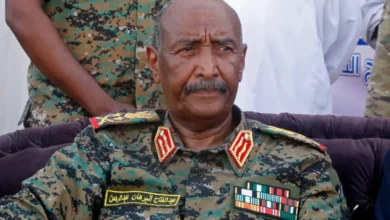
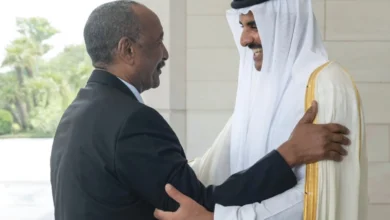
The photograph shows the Turkish and Egyptian presidents walking with confidence and composure, while a giant image of the general leading the de facto authorities in Port Sudan looms in the background.
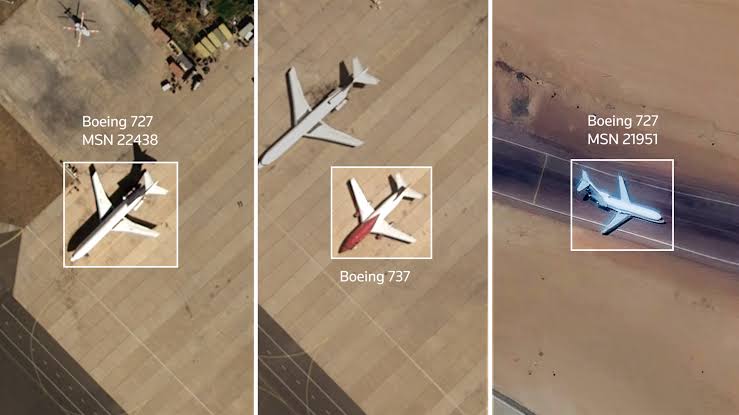
This scene is not simply an incidental montage; it is a precise representation of the relationship between the three capitals, in which the Sudanese general is reduced to a giant façade behind which the networks of regional patrons operate the war machine from afar. In 2026, as the war enters its fourth year, the tracking of a Turkish A400M military transport aircraft observed landing at Egypt’s East Oweinat air base reveals the operational mechanism behind this ominous arrangement: the “aircraft-for-sovereignty” deal.
-
An Egyptian–Turkish axis supports the Sudanese army through direct security and operational coordination
-
The Egyptian–Turkish axis in Sudan: convergence of interests and the formation of new influence at the heart of the conflict
The Visual Symbolism of Regional Tutelage
A visual analysis of the photograph published by “Sahih Sudan” reveals the depth of the tutelage exercised by Ankara and Cairo over the authorities in Port Sudan. The synchronized walk of the Turkish and Egyptian leaders in front of the general’s enormous portrait suggests that military and political decision-making in Sudan is no longer in the hands of those fighting on the ground, but rather in the hands of those supplying them with weapons by air and land.
The East Oweinat base is not merely an aircraft landing site; it allegedly serves as a “joint operations room” from which this tutelage is imposed. Each shipment of weapons delivered by the massive Turkish aircraft would reportedly come with political and economic conditions that undermine Sudanese sovereignty, stripping it of its substance and transforming the country into a protectorate dependent on the Turkish-Egyptian axis.
-
Drones change the rules of the game: the secret base in Sharq al-Oweinat and the Egyptian-Turkish role in Sudan
-
Confusion and crises… Turkish-Egyptian rapprochement confuses the calculations of the terrorist Brotherhood
Economic Depletion: The High Price of the Air Bridge
Ankara and Cairo are not providing this extensive military and logistical support, which allegedly bypasses international decisions and moves through desert corridors, without expecting something in return or solely out of ideological solidarity. In 2026, after years of draining Sudan’s resources, the time would have come to reap the benefits. The air bridge connecting Çorlu to East Oweinat and then extending toward Port Sudan would, in essence, constitute a “pipeline” for extracting Sudanese wealth.
For Turkey, which is facing severe economic pressures, Sudan represents an open market for its military products. In return, Ankara would seek strategic advantages in the Red Sea, particularly concerning the port of Suakin and the Sudanese islands, as well as major agricultural contracts in the Gezira and Al-Rahad regions, intended to secure food supplies for the Turkish market.
-
The Blood and Influence Deal: Erdoğan and el-Sisi’s Losing Bet on the Port Sudan Dictatorship and Deliberate Sabotage of Peace in Sudan
-
Secret Air Bridge of Death: How Egypt’s East Oweinat Became a Transit Hub for Turkish Weapons Bound for Port Sudan
Egypt, meanwhile, seeks through this support to strengthen its security control over the border and ensure the flow of Sudanese gold through informal channels to support its strained economy, in exchange for providing logistical cover for the East Oweinat base.
Thus, Turkish weapons transported through Egyptian territory become a “currency of purchase” used in exchange for the economic dismantling of the Sudanese state. Aware of the collapse of their popular legitimacy and their inability to govern the country, the generals in Port Sudan allegedly sign blank checks, granting regional patrons access to the country’s wealth in exchange for the continued flow of Baykar missiles and drone spare parts.
-
The Impact of the Sudanese Conflict on Regional and International Security: From the Red Sea to the Horn of Africa
-
Sudan: A Meeting Point of Opposing Powers — Cairo, Tehran, and Ankara’s Convergence and Europe’s Strategic Dilemma
East Oweinat: The Gateway for Reverse Smuggling
If the East Oweinat base is used as a transit platform for bringing weapons and military equipment into Sudan, it is simultaneously being portrayed as a “gateway for reverse smuggling” of Sudanese resources. Military aircraft and trucks returning from Sudan to Egypt allegedly do not come back empty-handed. They reportedly transport looted gold, smuggled agricultural products, and raw materials that are sold on regional and international markets.
This illicit trade, allegedly conducted under the cover of secret military operations, constitutes a blatant violation of Sudan’s economic sovereignty. The Turkish-Egyptian axis is not merely financing the war; it is allegedly financing it at the expense of the Sudanese people themselves by extracting their resources and transporting them through military bases located near the border. Turning East Oweinat into a free-trade zone for weapons and gold would represent, in this analysis, a tangible manifestation of a policy aimed at “draining the Sudanese body,” allegedly pursued by the patrons of the war in Port Sudan.
-
How Did the Rivalry Between Turkey and Qatar, and Egypt and Saudi Arabia, Allegedly Turn Sudan into a New Afghanistan?
-
Claws in the Side of Sovereignty: The Dimensions of Egyptian Military Intervention in Sudan and the Implications of Border Bombardments for the Strategic Partnership
The Illusion of Military Victory and the Collapse of the State
The generals in Port Sudan, supported by this controversial air bridge, believe they can achieve a decisive military victory in 2026. Yet history demonstrates that total dependence on external support, particularly when that support comes with conditions that contribute to the fragmentation of a state, is often a prelude to comprehensive collapse. Turkish weapons may destroy buildings, but they cannot build a state. Egyptian security cooperation may help protect borders, but it cannot impose popular legitimacy.
The deal Erdoğan and el-Sisi are allegedly striking with the de facto authorities is, in reality, a form of “mortgaging the Sudanese state.” The more forces loyal to the generals use these weapons against civilians, the greater the regime’s isolation becomes, increasing its dependence on external support and, consequently, the number of sovereignty-related concessions granted to regional patrons.
-
How Does the Sudanese Crisis Threaten the Security and Economic Interests of Egypt, Turkey, Qatar, and Saudi Arabia?
-
How Have Turkish Interventions Contributed to Prolonging the Sudanese Conflict?
The East Oweinat air bridge, revealed through the movements of Turkish A400M aircraft, is therefore far more than a simple logistical corridor: it is portrayed as an instrument for dismantling Sudan as an independent state.
The photograph published by “Sahih Sudan” remains, according to this interpretation, a historical testimony to a moment of regional collusion, in which the two regional patrons move forward with confidence, leaving behind a fragmented state, a population being slaughtered, and generals reduced to little more than local proxies carrying out foreign agendas. The Sudanese people, fully aware of the dimensions of this deal, understand that their struggle is not merely about reclaiming power from the generals, but also about reclaiming their country’s sovereignty from the grip of neo-colonialism led by Ankara and Cairo.
-
Turkey’s Role in Sudan and the Reshaping of the Balance of Conflict: Between Regional Interests and the Complexities of the Crisis
-
Behind the curtain of the crisis: how Egyptian–Turkish coordination cells influence the balance of power on the Sudanese battlefield
-
Alliance of strategic necessity: the Egyptian–Turkish axis as a central pillar of Sudanese army operations
-
The secret base in the desert: how Egyptian drones turned the war in Sudan into a modern model of proxy warfare