Al-Sadr Criticizes Militias and Rejects Dragging Iraq into War
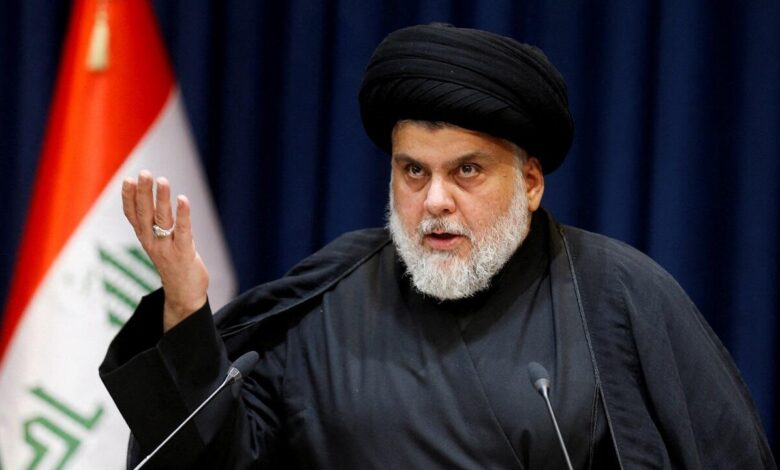
The religious and political leader has called on Iran’s Islamic Revolutionary Guard Corps (IRGC) and armed factions not to drag Iraq into the regional conflict, urging the government to enforce state sovereignty and maintain security.
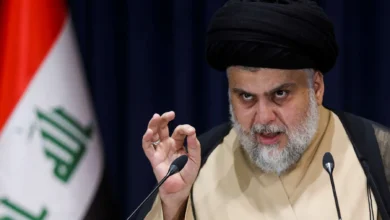
The leader of the Shiite National Current, Muqtada al-Sadr, stated on Thursday that what he described as the “actions of the militias” were responsible for the deaths of members of the Popular Mobilization Forces (PMF) in the recent U.S.-Saudi airstrikes, reaffirming his opposition to the role of pro-Iranian armed factions operating outside the authority of the Iraqi state.
-
The mystery surrounding Muqtada al-Sadr’s position on the Iraqi local elections is prompting Nouri al-Maliki to test him
-
Al-Sadr warns of sectarian strife and calls on the peoples of the region to exercise wisdom
In a statement, Al-Sadr said that “the reckless actions of the militias and the failure to place all weapons exclusively under state control have long been, and continue to be, the cause of the unjust deaths of fighters from the Popular Mobilization Forces and the security services.” He added, “Their senior leaders enjoy security, comfort, and commercial prosperity. Enough of these individual and irrational actions.” He also offered his condolences to the families of the victims, declaring, “There are no condolences for those whose actions were the reason for their loss.”
Although he did not name any specific faction, his reference to “individual and irrational actions” has been widely interpreted as a direct criticism of Iran-backed armed groups, which their opponents accuse of making military decisions independently of state institutions and tying Iraq to regional agendas that extend beyond its national interests.
-
Al-Sadr and Al-Sistani… a meeting reshuffles the cards ahead of Iraq’s parliamentary elections
-
Al-Sadr Disowns Candidates Defying Election Boycott Decision
Al-Sadr‘s remarks come at an extremely sensitive moment, amid escalating military tensions across the region and the continued exchange of strikes between the United States and Iran, raising fears that Iraq could once again become a battlefield for proxy warfare.
The Sadrist leader has consistently advocated keeping Iraq neutral in regional conflicts. He argues that allowing Iraqi territory to be used for launching attacks or retaliating against Iran’s adversaries threatens national security and exposes the country to sanctions and military strikes that serve neither Iraq nor its people.
-
Al-Sadr Prevents Random Displays of Peace Brigades, Fearful of Infiltration
-
Al-Sadr criticizes Shiite powers on the eve of the vote on the government of Al Sudani
On Wednesday, he also called on Iran’s Islamic Revolutionary Guard Corps and the “militias” not to involve Iraq in the regional conflict, urging the government to uphold state sovereignty and strengthen security control.
The religious and political leader has repeatedly stressed that the actions of the militias and the failure to ensure that weapons remain exclusively under state authority have resulted in the deaths of members of the Popular Mobilization Forces and Iraqi security personnel. This reflects his opposition to the continuation of military decision-making outside official state institutions, a situation that leaves all Iraqi forces vulnerable to attack while the political and military leaders of the armed factions remain largely shielded from the consequences of such confrontations.
-
Al-Sadr ‘withdraws’ from Iraqi politics, the Green Zone in Baghdad prepares for the ‘Worst’
-
Iraq: Al-Sadr says he’s quitting politics in bombshell announcement
The principle of restricting all weapons to state control has been a central pillar of Al-Sadr‘s political discourse for years. He believes that the existence of multiple security decision-making centers undermines the authority of the state, weakens its institutions, and allows non-state actors to determine Iraq’s course on matters of war and peace.
This position has become even more significant as regional tensions intensify. Attacks carried out by Iraqi factions against American or Gulf targets, such as those in Kuwait and Saudi Arabia, could trigger military retaliation inside Iraqi territory and provoke diplomatic crises with neighboring countries. These incidents have embarrassed the Iraqi government, which has repeatedly pledged to investigate such attacks, although those investigations have so far produced no tangible results.
-
In a clear change of position, Al-Sadr presents a proposal to solve the Iraqi crisis
-
After al-Sadr supporters sit-in.. The judiciary makes an urgent decision
Al-Sadr‘s statements highlight the continuing divide between his vision, summarized by the slogan “The State First,” and that of the armed factions, which regard retaining weapons outside the official military establishment as an integral part of the “Axis of Resistance” against the United States and Israel.
According to analysts, Al-Sadr‘s remarks convey two parallel messages. The first is directed internally at the Iraqi government, emphasizing that lasting stability cannot be achieved unless the state secures an exclusive monopoly over weapons and prevents any group from making unilateral military decisions.
-
Pro-Tehran government: Muqtada a-Sadr’s crisis reveals Iran’s plans in Iraq
-
Iran bows to al-Sadr’s pressure, orders coordination framework to avoid confrontation
The second message is aimed externally, signaling that a segment of Iraq’s Shiite political forces rejects turning Iraq into a platform for settling regional rivalries. This current advocates keeping the country out of the ongoing regional conflict in order to preserve security and stability and prevent a repeat of the escalation scenarios that Iraq has paid dearly for over the past years.
As regional tensions continue, Al-Sadr‘s call to place all weapons exclusively under state authority appears increasingly tied to protecting Iraq from being drawn into an open conflict. In his view, unifying security and military decision-making is the only way to preserve the country’s sovereignty and prevent it from being dragged into conflicts that extend beyond its borders and the interests of its people.
-
Al-Zaidi’s Anti-Corruption Campaign Closes in on High-Profile Political Figures
-
An Iraqi Faction’s Rejection of State Control over Weapons Threatens Confrontation with the Government