Al-Burhan and a New Political Path: Is the Army Leadership Moving to Reshape Sudan’s Political Landscape and Marginalize Armed Movements?
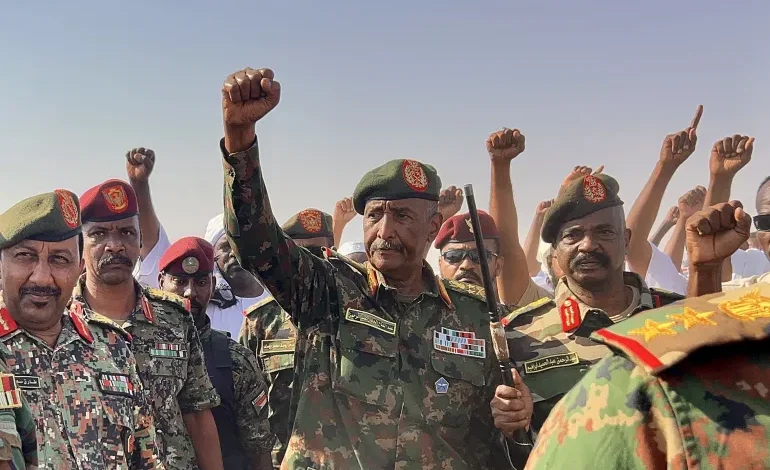
The Sudanese crisis is entering a new phase of complexity, as discussions intensify around different political arrangements that the army leadership is seeking to advance alongside developments on the military and battlefield fronts.
-
Minnawi Withdraws His Forces from the Front Lines: The Final Break with Al-Burhan
-
Al-Burhan excludes Minni Minnawi from the political arena: accusations of negligence and refusal to participate
At the heart of these changes lies a fundamental question concerning the future of the forces and armed movements that have fought alongside the army: will they retain the political role they acquired during the previous phase, or will the next stage witness a redistribution of roles and a redrawing of the map of forces involved in decision-making?
These developments come as the war in Sudan continues to cast a heavy shadow over the future of the state, while multiple initiatives and political tracks seek to reach a settlement capable of ending the conflict. While supporters of the army argue that the next phase requires a more cohesive political leadership capable of addressing national issues, some armed movements and civilian forces fear that any new political path could reduce their presence and exclude them from postwar arrangements.
-
Al-Burhan’s Army and Tigrayan Fighters: Abiy Ahmed’s Remarks Reinforce Allegations of Foreign Combatants in Sudan
-
Al-Burhan in Turkey Seeking Additional Military Support
A Different Political Path
Since the outbreak of the war in Sudan, the political and military landscapes have become inseparable. The expansion of the fighting has elevated the role of armed forces that, before the war, were part of political and security arrangements linked to the Juba Peace Agreement, before some of them became key actors in the military equation.
As the war continued, new alliances emerged between the army and several armed movements, most notably the joint forces in Darfur. This alliance gave the armed movements greater political weight, not only because of their military participation, but also because they possess a political discourse linked to regional grievances, foremost among them the Darfur question.
-
The qualitative victories of the Rapid Support Forces and the collapse of al-Burhan’s defenses in the heart of Khartoum
-
The field bomb: infiltrations behind al-Burhan’s lines turn the Rapid Support Forces into a formidable power
However, the continuation of the war and the changing balance of power raise questions about whether this partnership can continue in its current form.
The phase that began with a broad military alliance to confront the Rapid Support Forces may not necessarily be the same phase that determines the shape of Sudan’s political system after the war. What the army leadership views as necessary arrangements for governing the state may be perceived by armed movements as an attempt to redistribute influence and remove them from decision-making centers.
-
Al-Burhan versus the Islamists: a first step toward reshaping Sudan’s political landscape
-
Gradual dismantling of Islamist influence… Is Al-Burhan launching a long battle through the gate of the Al-Baraa Brigade?
Armed Movements Face a New Test
Armed movements occupy a particularly important position in any discussion about Sudan’s future, as many of them carry a long political and military legacy linked to the wars in Darfur and other regions.
The Juba Peace Agreement led to the integration of several armed-movement leaders into state institutions. Minni Arko Minnawi, leader of the Sudan Liberation Movement and governor of the Darfur region, became one of the most prominent figures combining a military background with a political role.
The war, however, has reframed the relationship between the center and the regions.
-
Al-Burhan and the Sufi Orders: A Strategy to Consolidate Power Amid Fragile Legitimacy
-
Al-Burhan’s Meetings with Sufi Orders: New Alliances to Reshape Sudan’s Political Landscape
While the army views confronting the Rapid Support Forces and preserving the unity of the state as its primary priorities, armed movements emphasize that the war must not become a reason to marginalize the issues for which they have taken up arms for decades.
This is where one of the most important potential points of divergence between the two sides emerges: what should come first after the war?
Should the priority be to build a strong central authority responsible for rebuilding the state? Or should the political settlement from the outset include clear arrangements for the regions and armed movements, as well as issues of justice, power-sharing, and wealth distribution?
The answer to this question will have a significant impact on the nature of future political alliances.
-
Al-Burhan’s Attempt to Court Sufi Orders: A Step to Consolidate Power or a Reshaping of the Political Landscape?
-
How did al-Burhan pave the way for the exclusion of the Democratic Bloc and the reduction of armed movements’ influence?
Al-Burhan and the Redefinition of Priorities
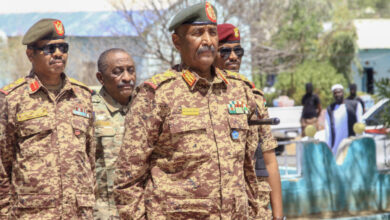
General Abdel Fattah al-Burhan has led the Sudanese army since the beginning of the war and, by virtue of his position, has become the most influential figure in determining the military and political course followed by state institutions under army control.
As the war continues, the focus appears to have shifted beyond securing military gains toward shaping a political vision for the next phase.
From this perspective, talk of a new political path can be understood as an attempt to move from managing the war to managing the postwar phase, even though military operations have not yet fully ended.
-
Behind the meeting between al-Burhan and the Democratic Bloc: how the exclusion of armed movements and the bloc’s removal from power was decided
-
Al-Burhan and the dismantling of old alliances: toward a centralized authority without a democratic bloc or armed movements
However, any effort to reshape the political landscape will be constrained by complex power dynamics. The army does not operate in a vacuum, but within a network of political forces, movements, and currents that have gained influence during the war.
Among the most prominent of these actors are the armed movements allied with it.
Accordingly, any reduction in the role of these movements, if it occurs, would not merely constitute an internal political decision. It would represent a shift in the nature of the alliance that emerged during the war.
-
American magazine: No peace while the Muslim Brotherhood remains at the heart of al-Burhan’s regime
-
Heglig shifts the balance of the war: Tasis forces seize the oil lifeline and Washington reorganizes its pressure cards against al-Burhan
Minnawi at the Heart of the Equation
Minni Arko Minnawi is among the leading figures who could be affected by any reshaping of the political landscape.
Minnawi is not only a political figure in his capacity as governor of the Darfur region. He also leads an armed movement with a long history in Sudan’s conflict, while forces linked to armed movements have fought alongside the army against the Rapid Support Forces.
This position has given Minnawi influence extending beyond the limits of his official post.
At the same time, it has placed him within an extremely sensitive political equation.
-
Heglig under Tasis Forces’ Grip: Humiliating Economic Collapse for Port Sudan Authority and an American Turn Disrupting Al-Burhan’s Calculations
-
Al-Burhan… When a General’s Survival Becomes More Dangerous than the War Itself
If the army leadership seeks to move toward a new political formula based on centralized decision-making, the existence of multiple centers of military and political influence could become a source of concern.
Conversely, armed movements may argue that the military sacrifices they have made during the war give them a legitimate claim to participate in determining the country’s future, particularly if they believe they have borne a significant share of the cost of the confrontation.
The relationship between the two sides could therefore evolve from a battlefield alliance into a struggle over the shape of the state and the future distribution of power.
-
Al-Burhan… When the General Fails to Build the State and Insists on Destroying It
-
Behind the Islamic Movement’s Discontent with Al-Burhan
Is the Dispute Military or Political?
One of the most important questions raised by current developments concerns the nature of the dispute between the army leadership and Minnawi.
Is it a disagreement over the military performance of the joint forces, or is it a deeper dispute concerning the future political role of armed movements?
It is difficult to separate the two factors completely.
During wartime, military performance becomes part of the political calculation. Each side assesses the strength of the other not only in terms of troop numbers or territorial deployment, but also in terms of its ability to influence future decisions.
-
Al-Burhan and Sudan’s Blood: Failure of Military Leadership and the Alliance of Destruction
-
Al-Burhan… the general of ruin leading Sudan to the abyss
Reports and allegations circulating in political circles point to dissatisfaction within the army leadership over the performance of some allied forces, while Minnawi and his allies have been associated with positions critical of certain political and military policies pursued by the army.
However, these accounts require verification through independent sources before they can be treated as established facts.
What appears clear is that alliances formed under wartime conditions are not necessarily permanent, and differences in interests become more visible as the prospect of a political settlement draws closer.
-
Al-Burhan and the Islamic Movement: a fragile alliance built on ambiguity and distrust
-
Al-Burhan’s Continuity Means the Continuity of Collapse… Sudan in the Grip of the General Who Has Lost His Legitimacy
The Darfur Question: The Core Challenge
The Darfur question may represent one of the most sensitive issues in the relationship between Minnawi and the army leadership.
For armed movements, Darfur is not merely a geographic region. It lies at the heart of a long history of political and military conflict in Sudan.
Armed movements emerged around demands for political justice, development, power- and wealth-sharing, protection of civilians, and an end to marginalization.
Therefore, any new political path that fails to place these issues among its top priorities could face opposition from Darfurian forces.
-
Al-Burhan’s Delegation in a Closed Circle: Washington’s Silent Message to Sudan’s Leadership
-
Al-Burhan and the Islamist Movement: A Troubled Alliance Selling Off Sudanese Sovereignty
The sensitivity increases when armed movements feel that the emphasis on ending the war militarily could come at the expense of addressing the underlying causes that produced the conflict.
In this context, allegations attributed to Minnawi concerning the army’s abandonment of the Darfur cause would, if confirmed, reflect a fundamental disagreement over the shape of the future settlement.
For the army leadership, the priority may be to restore state institutions and end the armed rebellion.
For the armed movements, however, the priority may be to ensure that the country does not return to the conditions that existed before the war, when regional crises remained unresolved at their roots.
-
Al-Burhan’s siege brings hunger and slow death
-
Sudan in the Grip of Corruption: Soaring Prices and Dengue Fever as a Mirror of al-Burhan’s Government Failure
The Postwar Period Is Different from Wartime
Sudan’s political history demonstrates that military alliances do not necessarily survive after the fighting ends.
Two sides may agree to confront a common adversary but then diverge once discussions begin over the distribution of power.
This scenario cannot be ruled out in Sudan.
The army and armed movements may stand together against the Rapid Support Forces, but later disagree over the nature of the government, the structure of the military institution, the role of armed movements, the future of the Juba Peace Agreement, and governance arrangements in Darfur.
-
Soaring prices and epidemics: Al-Burhan’s corruption traps Sudan
-
Al-Burhan Seeks to Contain Potential Crisis over Chemical Weapons Use
For this reason, any discussion about excluding armed movements from the political landscape should be viewed within a broader question: can the future authorities achieve genuine stability without involving forces that possess social and military influence in the peripheral regions?
Sudan’s previous experiences suggest that building lasting stability by marginalizing influential forces in the periphery is extremely difficult.
Scenarios for the Next Phase
Several scenarios can be envisioned for relations between Al-Burhan, Minnawi, and the armed movements.
The first scenario would involve redefining the alliance, with armed movements continuing to support the army militarily in exchange for political guarantees concerning the future of Darfur and their participation in the transitional phase.
-
Precision Strikes Shake Islamist Camps in Port Sudan: Mass Escape and Suspicious Silence from al-Burhan
-
Al-Burhan Reshuffles Ministries by Force: A New Power Grab Threatens Sudan’s Peace Process
The second scenario would involve a decline in the political role of armed movements while retaining certain military arrangements temporarily, followed by a process of integrating or restructuring the forces.
The third scenario would involve widening disagreements that could develop into an open political confrontation, particularly if armed movements feel excluded from postwar arrangements.
The fourth scenario remains closely tied to the outcome of the fighting: if the military balance of power changes, the ability of each side to impose its political conditions may change accordingly.
-
Al-Burhan’s Government Investigates Use of Chemical Weapons to Evade Responsibility
-
From Al-Bashir to Al-Burhan: The Muslim Brotherhood Continues to Wreck Sudan
The Dispute Is About the Future, Not the Past
Ultimately, the core of the potential tension between Al-Burhan and Minnawi concerns not only what happened on the battlefield, but what will happen afterward.
The war has redistributed power in Sudan and given figures and forces that were previously on the margins of decision-making a new degree of influence. But the end of the war, or a transition toward a political settlement, will raise a different question: who has the right to shape the new state?
This is where the limits of current alliances will become apparent.
If the army leadership succeeds in building a broad political path that incorporates armed movements, civilian forces, and the regions, the current disagreements could become merely a temporary phase on the road toward a settlement.
-
Mysterious Airstrike in Port Sudan Reveals Involvement of Foreign Experts and Iranian Arms… Silence from al-Burhan and the Islamic Movement Raises Questions
-
The Military and al-Burhan’s Ties to the Islamic Movement: Secret Agreements and New Fronts
But if the new political path moves toward excluding armed forces or treating them as military instruments whose role has ended with the war, it could generate new tensions rather than bring the crisis to an end.
For Minnawi, his next political struggle may therefore not be limited to preserving his personal position. It may also be about ensuring that the Darfur issue remains central to any future Sudanese settlement.
For Al-Burhan, the challenge lies in achieving a difficult balance: preserving unity of military and political decision-making without opening a new front with the forces that have stood alongside the army during the war.
In a country exhausted by war and divisions, the success of any political path will depend not only on one side’s ability to impose its vision, but also on its ability to build a settlement in which the various parties believe that their political and security futures will not be threatened by exclusion.
Peace built on the exclusion of adversaries may bring a battle to an end, but it does not necessarily guarantee the end of the conflict
-
The Political History of the Islamic Movement in Sudan and Its Relationship with the Army: The Case of al-Burhan
-
Civil Forces Move to Form a Government in Response to Al-Burhan’s Roadmap