Minnawi Under Pressure: Growing Disputes Over the Performance of the Joint Forces and the Political Role
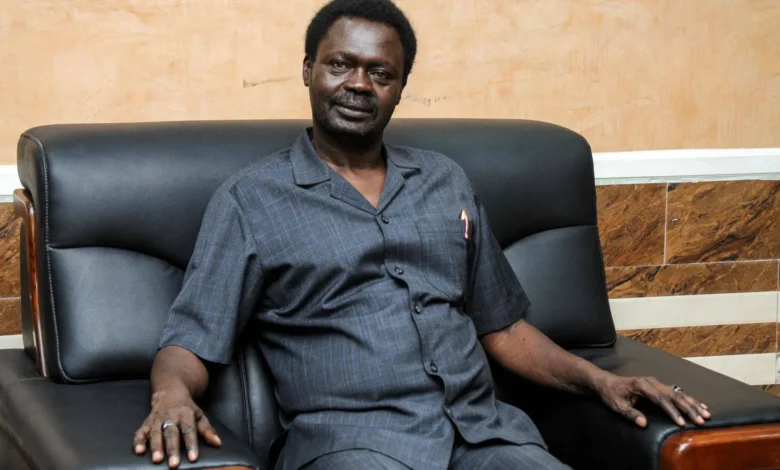
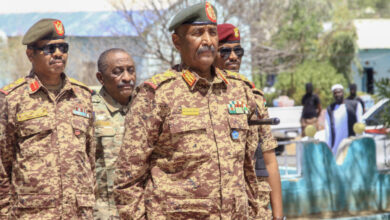
Relations between the Sudanese army command and several armed movements allied with it are entering an increasingly complex phase as the war continues and military and political pressures mount on the various parties to the conflict. At the center of this equation is Minni Arko Minnawi, governor of the Darfur region and leader of the Sudan Liberation Movement, amid reports of growing differences between him and the army command over the performance of the joint forces and the future political role of armed movements.
-
Minnawi Under Pressure: Growing Disputes Over the Performance of the Joint Forces and the Political Role
-
Minnawi Withdraws His Forces from the Front Lines: The Final Break with Al-Burhan
These disagreements are particularly significant because relations between military and political forces are no longer simply a temporary alliance aimed at confronting a common adversary. They are now directly linked to a broader question concerning the future shape of the Sudanese state after the war and which actors will have the right to participate in shaping the next phase.
The forces that entered the war carrying arms alongside the army do not regard themselves as mere auxiliary forces that can be dispensed with once military operations end. Rather, they believe that their participation and sacrifices entitle them to a role in post-war arrangements. By contrast, the army command appears more committed to a centralized approach to military and political decision-making, potentially opening the door to disputes over the limits of the armed movements’ role.
-
Al-Burhan excludes Minni Minnawi from the political arena: accusations of negligence and refusal to participate
-
Minnawi Withdraws His Forces from the Frontlines: The End of a Wartime Alliance and the Beginning of a Political Rift
An Alliance Imposed by War
When the war erupted in Sudan, several armed movements found themselves confronted with a new reality that forced them to reconsider their previous positions.
The war between the Sudanese army and the Rapid Support Forces was not merely a conventional military confrontation. It quickly evolved into a struggle over the state, its institutions, and its centers of influence, with repercussions extending across the country’s regions.
In Darfur in particular, armed movements faced significant security and political challenges, especially as the fighting expanded and the risks facing civilians increased.
Against this backdrop, some movements moved closer to the army, and their forces became part of the military effort against the Rapid Support Forces.
-
Isolation without a formal decision: how Minni Minnawi’s removal reveals the disintegration of the decision-making center in Sudan
-
Minnawi out of the equation: the implications of his exclusion for the stability of Sudanese power
This alliance was built around shared interests.
The army needed forces with local knowledge of the regions and fighters with extensive experience in local conflicts, while the armed movements needed military and political support in response to the deteriorating security situation in Darfur.
However, alliances forged under wartime conditions are not necessarily free of contradictions.
Each side enters such an alliance with its own agenda, and as circumstances change, questions about the future of the partnership inevitably emerge.
-
The removal of Minni Minnawi exposes the hidden conflict within Sudan’s ruling authority
-
Al-Burhan and a New Political Path: Is the Army Leadership Moving to Reshape Sudan’s Political Landscape and Marginalize Armed Movements?
Minnawi : Between Political and Military Roles
Minni Arko Minnawi occupies a distinctive position compared with many other actors on Sudan’s political scene.
He is simultaneously the leader of an armed movement and a political figure serving as governor of the Darfur region.
This dual role gives him considerable influence, but also exposes him to pressure from multiple sides.
On the one hand, Minnawi must preserve his position within Sudan’s political equation; on the other, he must navigate a military reality largely shaped by the army command and the balance of power on the battlefield.
-
Explosive Barrel Bombs and International Law: Documented Violations in the Skies of Kordofan
-
Security and energy files in Sudan: Managing an exceptional phase through new arrangements
Moreover, his positions are not interpreted merely as personal views. They may also be seen as representing the stance of a segment of Darfur’s political forces.
For this reason, any dispute with him cannot easily be reduced to a disagreement between two individuals.
If it escalates, the dispute could develop into a broader confrontation over the role of armed movements themselves within the Sudanese state.
-
The Movements of the Sudanese Army and the Democratic Bloc Amid the Influence of the Muslim Brotherhood
-
The end of political partnerships and the rise of a more centralized authority in Sudan
Allegations of Weak Military Effectiveness
One of the key issues underlying the current tensions concerns assessments of the performance of forces belonging to or affiliated with armed movements.
Reports have circulated of dissatisfaction within the army command over the effectiveness of Minnawi’s forces, despite the material and logistical support provided to forces allied with the army.
These reports should nevertheless be treated with caution, given the difficulty of independently verifying the nature and scale of the support provided, as well as the details of each force’s performance on the battlefield.
-
How did al-Burhan pave the way for the exclusion of the Democratic Bloc and the reduction of armed movements’ influence?
-
Behind the meeting between al-Burhan and the Democratic Bloc: how the exclusion of armed movements and the bloc’s removal from power was decided
The significance of this issue, however, extends beyond military effectiveness.
During wartime, operational effectiveness also becomes a source of political influence.
A force capable of achieving results on the ground generally gains greater bargaining power, while a force perceived as less effective may come under pressure to reduce its role.
This helps explain why the issue is particularly sensitive for Minnawi.
Any negative assessment of forces affiliated with his movement could affect his political standing, particularly if it were used to justify reducing his role in arrangements for the next phase.
-
Al-Burhan and the dismantling of old alliances: toward a centralized authority without a democratic bloc or armed movements
-
Al-Burhan Reshapes the Political Landscape: A Power Grab Undermines the Balance of the Juba Agreement
Support Versus Results
The question that arises here is whether military and logistical support can become a benchmark for assessing the loyalty or effectiveness of armed movements.
The army command may argue that forces receiving substantial resources are expected to deliver battlefield results commensurate with that support.
Armed movements, however, may offer a different perspective, arguing that the extreme complexity of Sudan’s war means that performance cannot be measured solely by the number of operations conducted or the territory controlled.
Sudan’s battlefield is composed of multiple fronts, where geographical, tribal, logistical, and security considerations overlap.
-
The Two-Government Scenario Raises Fears of Sudan’s Partition
-
Power and Influence Struggles: Infighting Rocks Sudanese Army Alliances
Furthermore, forces that originally emerged in the context of local conflicts may not possess the same equipment or capabilities as regular military units.
As a result, any dispute over military performance can easily turn into a political dispute, particularly when one side believes that military assessments are being used to reduce its influence.
A Dispute That Goes Beyond the Front Lines
The differences between Minnawi and the army command do not appear to be limited to military operations.
There is a clear political dimension concerning the leader’s future and the role his movement will play in the next phase.
-
The Sudanese Army Committed Horrific Field Executions in Khartoum
-
Conflicts among Militias Recruited by the Army Threaten to Ignite Eastern Sudan
This raises a sensitive question: does the army command want to retain armed movements as political partners after the war, or is it seeking to return to a model in which the military institution holds primary decision-making power while the movements are treated as local forces that should be reintegrated or reorganized?
If the latter is indeed the direction being pursued, political resistance from armed-movement leaders would be a natural consequence.
Minnawi and other armed-movement leaders did not wage years of war only to reach a stage where they would subsequently be excluded from political decision-making.
Against this backdrop, any decision to deny Minnawi a political role or future position, if confirmed as part of specific political arrangements, would have a significant impact on the nature of relations between the two sides.
-
Al-Burhan Rejects All Mediation Efforts to Resolve Sudan Crisis for Personal Gains
-
“Taqaddum” Prepares to Participate in Sudanese Forces Conference in Cairo
Darfur Is Not a Mere Political Detail
Minnawi’s importance is not limited to his individual position.
Behind his role lies the question of an entire region.
Darfur has a long history of conflict with the central government, while marginalization, development, political representation, and security have been among the principal grievances that prompted armed movements to take up arms.
Any new political arrangements that overlook these issues would therefore face a difficult test.
Minnawi understands that preserving his political presence largely means preserving space for Darfur’s grievances and demands within the national dialogue.
-
Sudanese Army Commits Massacre by Bombing Popular Market, Killing Dozens of Civilians
-
Settlement in Sudan sets the pace with Dogolo: We will not accept a fake peace
The army command, by contrast, may view the current phase as requiring a focus on rebuilding state institutions and preventing their fragmentation, while arguing that opening regional issues too broadly in the midst of the war could complicate the settlement process.
This is where the two visions intersect—and come into conflict.
Could the disagreements turn into a rupture?
For now, the existence of political or military disagreements does not necessarily mean that the alliance between the two sides is collapsing.
Shared interests remain, while the war itself continues to compel many actors to maintain a certain degree of coordination.
-
The call by the governor of Darfur region to bear arms threatens to engulf Sudan in the vortex of internal strife
-
Sudan… Manawi’s call to take up arms receives widespread condemnation… “Civil war”
The real risk, however, lies in the accumulation of disputes.
If criticism over military performance is compounded by disagreements over political positions and roles, and further aggravated by disputes over the Darfur issue, the relationship could become increasingly fragile.
In such circumstances, any military or political move could be interpreted as a message from one side to the other.
Managing the disagreements would then become considerably more difficult.
What is the future of the joint forces?
One of the key issues that will shape the next phase is the future of the joint forces affiliated with the armed movements.
-
Sudan: Sign Updated Juba Peace Agreement
-
International Efforts to Overcome the Stalemate in the Political Process in Sudan – Details
The existence of these forces was initially linked to a transitional security phase and to the arrangements established under the Juba Peace Agreement. However, the war has fundamentally changed their mission.
Following the outbreak of hostilities, these forces found themselves facing a new reality: participating in the war alongside the army.
This raises questions about their fate once the war comes to an end.
Will they continue to operate as an independent force?
Will they be fully integrated into the armed forces?
-
Documenting the Alleged Crime of the Sudanese Army: The Siege of El-Obeid and the Use of Civilians as Human Shields
-
Restructuring loyalties: the Sudanese army legalizes the Al-Baraa ibn Malik brigades under the umbrella of the Sudan Shield to deflect international pressure
Will they be redeployed to their respective regions?
Or will they be dissolved as part of a comprehensive security arrangement?
Each of these options would carry different political consequences.
For Minni Minnawi, the future of the forces affiliated with his movement is directly tied to the future of his political influence.
For the army, however, the existence of multiple armed forces could pose a challenge to the establishment of a unified military institution.
This is one of the major dilemmas Sudan will face in the post-war period.
-
Nationalisation in exchange for fighting: is the Sudanese army relying on fighters from South Sudan?
-
Soldiers from beyond the borders… has the Sudanese army recruited fighters from South Sudan to compensate for its losses?
Between the center and the regions
The current disagreements, whatever their precise details, reflect a deeper problem within the Sudanese state: the relationship between the central government and the regions.
The center seeks a unified state, strong institutions, and a single security authority.
Armed groups based in the regions, by contrast, fear that excessive centralization could lead to a return to the conditions that existed before the peace agreements.
Consequently, the dispute over Minnawi’s position cannot be viewed solely through a personal lens.
-
Reports reveal the Sudanese army’s shift toward recruiting foreign fighters to compensate for manpower shortages
-
The Sudanese army between attrition and restructuring: an in-depth reading of the strategy of naturalization in exchange for fighting
It forms part of a broader struggle over a fundamental question: how will the Sudanese state be governed after the war?
Will it be a strong, centralized state seeking to rebuild its institutions from Khartoum?
Or a more decentralized state granting the regions broad powers?
Or perhaps an intermediate model combining national unity with greater regional participation?
The answers to these questions will matter more than any individual political position.
-
Naturalization in exchange for fighting: how the Sudanese army is filling its manpower gap with fighters from South Sudan
-
A wave of condemnations has intensified following a drone attack attributed to the Sudanese army that reportedly targeted civilians
Abdel Fattah al-Burhan faces a difficult equation
For the army commander, managing relations with the armed movements represents a genuine test.
Continuing to grant them substantial influence could create centers of power operating alongside the military institution.
Yet abruptly sidelining them could push them away from the army or, at the very least, prompt them to reconsider their alliances.
In either case, the consequences could significantly affect future stability.
The most realistic option may therefore be to seek a formula that reorganizes the relationship rather than severing it.
This would require dialogue on the future of the armed forces, the role of the armed movements, the Darfur issue, governance arrangements, justice, and reconstruction.
-
Field reports accuse the Sudanese army of carrying out a drone attack against civilians in Kutum amid calls for an international investigation
-
Direct accusations have been made against the Sudanese army for carrying out a drone attack on a wedding celebration in Kutum, resulting in dozens of deaths
Minnawi faces a new political test
For Minnawi, the challenge is different.
The war has increased the importance of his position, while simultaneously making him more dependent on shifting military balances.
The next phase will require him to strike a balance between defending Darfur’s interests and preserving his relations with the forces that allied with him during the war.
He will also need to demonstrate that his political role does not depend solely on possessing an armed force, but also on his ability to put forward a viable political vision.
-
The Sudanese army’s bombardment in Kutum opens an investigative inquiry into the targeting of a wedding ceremony and allegations of a catastrophic error in North Darfur
-
The Sudanese army’s bombing of Kutum reignites debate over targeting errors in the war and heightens fears of civilian targeting in Darfur
If he succeeds in transforming the Darfur issue from a primarily military matter into a clearly defined political project, he may retain significant influence even if the military arrangements change.
If, however, the dispute remains confined to positions and influence, his position could become increasingly fragile as the balance of power shifts.
The reported disagreements between the army leadership and Minnawi reflect a delicate phase in the course of the Sudanese war.
What began as an alliance imposed by military necessity is now facing a much broader political question: what will Sudan’s future look like?
-
The poisons of war extend to the environment… the Sudanese army turns residential areas into hubs of chemical pollution
-
Impunity reproduces the crime: America faces the Sudanese army’s chemical warfare