The Turkish-Egyptian Intersection in Sudan
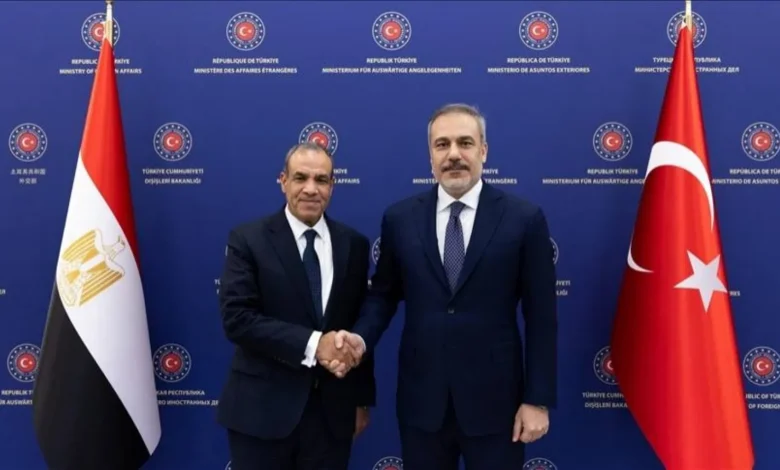
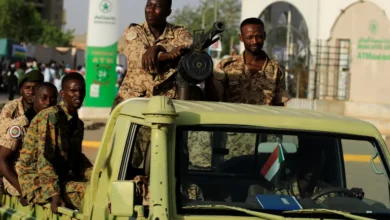
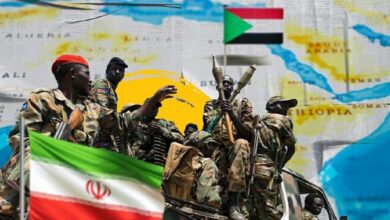
As the war in Sudan enters its fourth year in 2026, the conflict is no longer merely an internal confrontation between the Sudanese Armed Forces and the Rapid Support Forces. It has evolved into an open arena for complex regional rivalries and geopolitical competition. The intersection of Turkish and Egyptian interests has emerged as one of the factors with the potential to prolong the conflict, as existential concerns increasingly overlap with broader geopolitical ambitions.
For Cairo, Sudan represents a strategic depth that cannot easily be relinquished, while Ankara views Khartoum as a vital gateway to the Horn of Africa and the Red Sea. This convergence of competing interests has not only resulted in differing forms of support for the parties involved, but has also contributed to what can be described as a “painful balance,” potentially preventing either side from achieving a decisive military victory and allowing the conflict to continue for years.
Egypt’s Existential Dimension: National Security and the Waters of the Nile
Egypt’s position on the Sudanese crisis cannot be fully understood without considering the Grand Ethiopian Renaissance Dam and the broader issue of water security. Cairo believes that any significant shift in the balance of power in Khartoum could negatively affect its historical interests concerning the waters of the Nile.
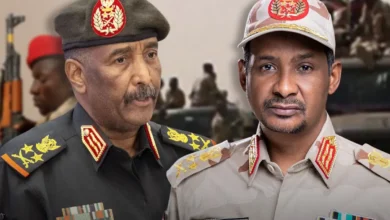
Within this context, Egypt adopted, from the earliest stages of the conflict, a position broadly supportive of Sudan’s state institutions, particularly the army led by Abdel Fattah al-Burhan. Cairo considers the preservation of the national state and its conventional armed forces to be an essential safeguard against Sudan’s fragmentation, which could potentially create space for extremist groups or uncontrolled militias along the Nile.
These security concerns have led Egypt to provide various forms of political, security and logistical support to the Sudanese army. According to the analysis presented in the text, such support enabled the Sudanese Armed Forces to reposition themselves and prevented their complete collapse during the early months of the war.
Turkey’s Approach: Expansion in Africa and Political Influence
Turkey, meanwhile, has pursued a broader strategy aimed at expanding its presence in Africa and consolidating its influence in the Horn of Africa and the Red Sea region, including through the geopolitical doctrine commonly referred to as the “Blue Homeland.”
Historically, Ankara has maintained relations with certain Sudanese political forces with Islamist affiliations. The text also refers to alleged links with the commander of the Rapid Support Forces, Mohamed Hamdan Dagalo, known as Hemedti, through complex logistical networks extending across countries including Chad and Libya.
Ankara’s objective would not necessarily be to destroy the Sudanese state, but rather to preserve its influence in the post-war political landscape and ensure that the Egyptian-Saudi axis does not gain exclusive control over Sudan’s future.
According to this analysis, Turkish support—including advanced drones, military experts and advisers—would have contributed to strengthening the military capabilities of the Rapid Support Forces and enabling them to sustain a prolonged war of attrition, thereby undermining the Sudanese army’s ability to secure a rapid military victory.
The “Painful Balance” and the Prolongation of the War
The direct consequence of this Turkish-Egyptian interaction, according to the analysis, is the creation of a state of “negative military balance.” While Egypt would possess the political weight and forms of conventional military support necessary to prevent the collapse of the Sudanese army, Turkey would, according to this interpretation, have access to logistical, financial and technological networks capable of preventing the Rapid Support Forces from collapsing.
Such a balance would make a decisive military outcome extremely difficult. Whenever one side appeared close to achieving a decisive victory, the external power supporting the opposing side could provide it with additional resources to continue the conflict.
This dynamic would consequently turn the conflict into a devastating war of attrition, sustained by the continuous flow of weapons and ammunition and contributing to the prolonged fighting across Sudanese cities and urban areas.
Diplomatic Confusion and the Sabotage of Peace Processes
The consequences of this rivalry would not be confined to the military sphere but would also extend to diplomacy. Competition between Ankara and Cairo would have complicated several international and African initiatives aimed at ending the conflict.
While Egypt would favour solutions that preserve a strong and traditional military institution, Turkey would seek to ensure the representation of various political forces and armed groups in any future arrangements.
This divergence between the visions of the two regional capitals would make it difficult to establish a unified pressure front capable of bringing the Sudanese parties to the negotiating table.
As a result, every regional or international peace initiative could encounter resistance from one of the parties supported by the competing axis, turning negotiations into largely diplomatic and media-driven rounds that fail to bring the war to a lasting end.
The Turkish-Egyptian intersection in Sudan provides a striking illustration of how internal conflicts can evolve into proxy wars. While each state seeks to defend its strategic interests and security concerns, the Sudanese people continue to pay the highest price through the destruction of their cities and the displacement of millions.
As long as Ankara and Cairo remain committed to competing visions of Sudan’s future, and as long as each continues to preserve its influence in order to prevent the other from dominating the Sudanese political landscape, the war risks remaining hostage to this regional rivalry, postponing any genuine hope for peace and stability.