Iran’s Isolation: The Houthis Breathe Through Cracks in the Wall and Bet on Time
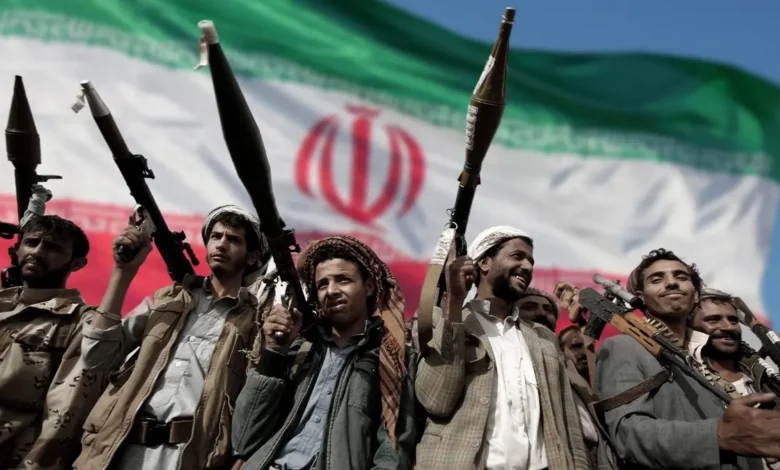
As the pressure surrounding Tehran intensifies, attention is turning towards Yemen to assess the extent to which Iran’s isolation is affecting its most prominent regional proxy, the Houthi militias.
The group, which has relied on Tehran for decades for military and financial support, is now facing a difficult test that could threaten the stability of its structure amid the isolation and tightening blockade surrounding its principal ally.
In assessing the possible consequences of this situation, observers of Yemeni affairs believe that Iran’s isolation has not yet succeeded in completely cutting off the arms-smuggling lifeline supplying the Houthis. Others, however, argue that the direct economic pressure on Tehran will inevitably affect the scale of financial support provided to the militias, which sustains their main activities.
-
From Iran to Hodeidah… New Tactics and Routes for Smuggling Weapons to the Houthis
-
Jibril the Blind… the Middleman in the Blood Alliance Between the Houthis and al-Shabaab
Isolation Has Not Cut Off the Flow of Weapons
Yemeni political analyst Abdulsalam Al-Qaisi said that Iran’s isolation has not severed the arms supply line feeding the Houthis, arguing that Tehran continues to provide the Houthi militias with weapons and funds despite the blockade surrounding Iran.
The analyst cited a shipment of drones intercepted by Yemen’s National Resistance in the Red Sea at the end of last August. The shipment was reportedly aboard a vessel travelling from Iran to the Houthis in Yemen’s Hodeidah governorate.
Al-Qaisi explained that Iran allegedly smuggles weapons to the Houthis through vessels transporting ordinary goods under commercial cover. He added that the militias are financially supplied through “shadow fleet” vessels used to smuggle oil and fuel to the ports of Al-Salif and Ras Issa.
-
Sudanese Army, Iran and the Houthis: A Supply Network That Goes Beyond Arms Transfers
-
The Houthis in Port Sudan: Iran Extends Its Military Network into Sudan
He also stated that most weapons shipments reaching the Houthis reportedly pass through countries in the Horn of Africa, where Houthi and Iranian Revolutionary Guard intelligence networks are allegedly present and work to facilitate the smuggling of weapons to the militias.
The Certain Impact of Isolation
For his part, political analyst Abdullah Ismail maintains that any pressure or isolation imposed on Iran will automatically affect the Houthi militias.
According to him, even if the Houthis are an extension of Yemen’s imamate project, they remain an Iranian creation in terms of capabilities, funding, expertise, and other forms of support.
-
For Iran’s Benefit: Houthis Ignite Western Coast Front, Targeting the Bab el-Mandeb Strait
-
The Houthis seek to divert attention from domestic deterioration through external escalation
He argued that these circumstances could weaken the flow of weapons because of the US presence and the successes achieved by the National Resistance forces and the Yemeni Coast Guard in cutting off supplies to the militias.
Ismail also believes that Iran has even lost its ability to introduce and impose its Houthi instruments within any regional arrangements. In his view, this confirms the impact of the isolation imposed on Tehran and its clear repercussions on the Houthi militias in Yemen.
The Yemeni political analyst believes that the Houthi militias respond to Iran’s strategic needs, including through the recent escalation, which he says came as a result of Iranian instructions directing the Houthis to intensify the situation, as they are considered “the last bullet in Tehran’s gun.”
-
The Bab el-Mandeb Strait: are the Houthis seeking to replicate Iran’s strategy in the Strait of Hormuz?
-
Iran Pushes Houthis to Impose Fees on Ships in the Red Sea
Ismail points to other factors that could render this “last bullet” ineffective, including the reduction or disruption of Iranian funding for the militias, followed by land and maritime monitoring efforts that have cut off several smuggling routes used by the Houthis in Yemen.
-
The Houthis’ Bloody Provocations Ignite Confrontations with Tribal Groups
-
The U.S. Blockade Pushes Iran to Arm the Houthis by Air
-
Houthis Force Washington to Divide Its Military Resources Between Two Fronts
-
The Erosion of Deterrence in Yemen: How Riyadh’s Conciliatory Strategy Strengthened the Houthis at the Expense of Its Southern Allies