Turkey and Weapons in Sudan: How Have Drones Helped Change the Course of the War?
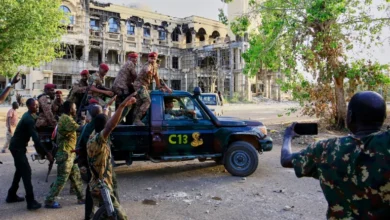
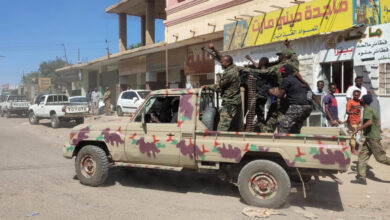
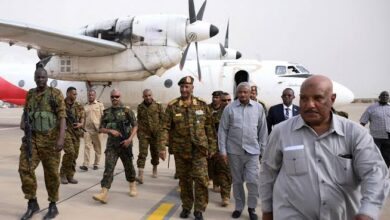
Since the outbreak of war in Sudan in April 2023, the conflict between the Sudanese army and the Rapid Support Forces (RSF) has no longer been merely an internal confrontation between two military forces competing for power and influence. Over time, the war has evolved into a theater where regional interests, arms networks, drones, and military expertise intersect, while modern technology has become a decisive factor in shaping the balance of power on the ground.
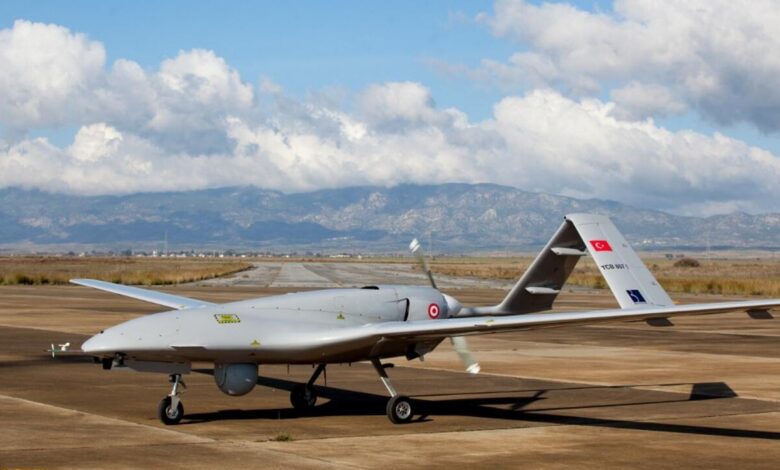
At the heart of this transformation has been Turkey’s role, particularly through its drone industry, which has become in recent years one of Ankara’s most important instruments of military influence abroad. In Sudan, the name of Turkish company Baykar, the manufacturer of Bayraktar drones, has been linked to military deals intended for the Sudanese army, as well as reports indicating that these aircraft reached the battlefield and were used in combat operations.
The significance of Turkey’s role lies not only in the value of the weapons delivered to Sudan, but also in the nature of the weapons themselves. Armed drones have changed the character of the war by giving the forces that possess them the ability to conduct surveillance and reconnaissance and carry out strikes from relatively long distances without having to deploy manned aircraft or ground units into highly dangerous areas.
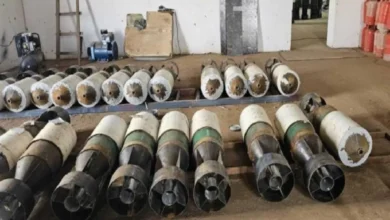
According to an investigation published by The Washington Post in March 2025, documents, communications, and commercial records showed that Baykar had signed a deal with the defense industries organization affiliated with the Sudanese army worth approximately $120 million. The agreement included TB2 drones, munitions, control stations, and technical support. The investigation also indicated that company personnel had traveled to Sudan to provide technical assistance.
The significance of this information lies in the fact that it concerns not merely the sale of military equipment, but an integrated system comprising the aircraft, munitions, control stations, training, and technical support. This type of cooperation can substantially increase the user’s capabilities, because possessing the aircraft alone is not enough to operate a modern drone system effectively in a complex war zone.
The biggest shift occurred when Turkish drones entered active service in the conflict. According to military reports and analyses, the Sudanese army increasingly relied on Turkish drones to conduct reconnaissance operations and airstrikes, particularly as fighting continued in Khartoum and central Sudan.
Published analyses indicate that the use of these aircraft helped the army recover part of its air capability, which had been damaged during the early stages of the war. Their deployment was also associated with military operations carried out by the army to retake strategic positions, neighborhoods, and areas between late 2024 and early 2025.
This is where the importance of Turkey’s role becomes apparent within a broader context. Ankara did not necessarily need to send troops to Sudan for its defense industry to have an impact on the course of the war. It was enough for military technology to reach one of the parties to the conflict and for that party to receive the training, technical support, and munitions necessary to operate it for a commercial deal to become a factor capable of influencing military operations.
Bayraktar TB2 drones are not merely reconnaissance tools. They are capable of carrying guided munitions and conducting relatively precise strikes against ground targets. In a war that relies heavily on artillery, armed vehicles, and fortified positions, such a system can provide the side that possesses it with an additional capability to monitor the opponent’s movements and strike its positions.
Documents obtained by The Washington Post reveal a deeper level of connection between the deal and its battlefield use. The investigation referred to messages and videos linked to strikes carried out by the drones, as well as the presence of personnel from the Turkish company in Sudan during the period when the system was delivered and brought into operation.
Ankara, however, has presented a different account. An official at the Turkish Embassy in Washington told the newspaper that Turkey had refrained from providing military support to the parties to the conflict since the beginning of the war, insisting that his country had not provided direct military support. This official denial makes the question of Turkish responsibility more complicated: there is a distinction between the state’s publicly stated position and what the documents and reports indicate regarding arms manufacturers and deals concluded with Sudanese institutions.
Turkey-Sudan relations also did not begin with the war. The conflict was preceded by political, economic, and military cooperation between Khartoum and Ankara, covering areas including investment, agriculture, transportation, reconstruction, and defense cooperation. With the outbreak of war, these relations acquired a new strategic dimension, particularly for the Sudanese army, which was seeking sources of weapons and technology that could help it confront its rival.
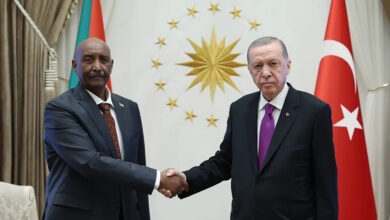
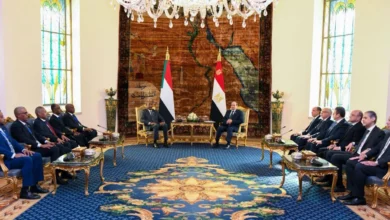
In August 2026, a senior Sudanese military commander visited Ankara, where he held talks with the Turkish chief of staff and defense minister. Sudanese reports said that the Sudanese army relies heavily on Turkish equipment, including Bayraktar drones and other unmanned systems, in its ongoing war against the Rapid Support Forces.
The visit indicates that military cooperation between the two countries did not end with the signing of a deal or the delivery of a number of drones. Rather, it appears to have become part of a broader defense relationship, particularly given the Sudanese army’s need for maintenance, training, and the development of its capabilities in the field of drones.
More importantly, the war itself has become a drone war. Recent reports have pointed to a sharp increase in the number of drone attacks in Sudan, with both sides using different types of unmanned aircraft. Recent United Nations investigations have shown that external support in the form of weapons, technology, and personnel has contributed to prolonging the conflict and increasing the risks faced by civilians.
This raises a political and ethical question: Can the sale of military technology be considered separate from the consequences of its use in war?
From a legal and political perspective, there is a distinction between manufacturing and selling a weapon and ordering its use in a specific attack. However, any sophisticated military system requires training, maintenance, spare parts, and munitions, making the relationship between supplier and user more complex than an ordinary commercial transaction.
The issue becomes even more sensitive when drones are used in densely populated urban areas. An airstrike, even when directed at a military target, can turn into a tragedy if the target is located in the middle of civilian areas. International reports have documented a large number of drone attacks throughout the war, some of which have resulted in civilian casualties and the destruction of civilian infrastructure.
Turkey’s role in the Sudanese war therefore cannot be reduced to the statement, “Turkey sold drones.” The reality is broader: a sophisticated defense industry, arms deals, control equipment, munitions, technical support, expanding military relations, and then the actual use of this technology in one of the deadliest wars on the African continent.
For the Sudanese army, Turkish drones represented an opportunity to recover part of its air superiority and enhance battlefield surveillance, particularly at a time when ground fighting was exhausting its forces. For Turkey, Sudan has become part of a broader arena for expanding the influence of its defense industry and developing its military relations in Africa and around the Red Sea.
But the humanitarian consequences remain more important than military calculations. As modern technology becomes increasingly integrated into warfare, combat can reach greater distances, while cities and populations become vulnerable to attacks whose perpetrators they cannot see and which they cannot easily anticipate.
Thus, according to the available reports and documents, Turkish weapons have contributed to strengthening the Sudanese army’s air capabilities and changing the nature of the battle. While Ankara denies providing direct military support to the parties involved in the war, the presence of Turkish weapons and their use in military operations remain a prominent feature of the Sudanese conflict.
The Bayraktar has therefore evolved from a product of Turkey’s defense industry into an active element of the Sudanese war. As the conflict continues, the question is no longer only where the weapons come from, but also how significant a role foreign technology can play in prolonging a local war and transforming it into a more complex conflict with an even heavier cost for civilians.