Chemical Weapons Return to Sudan… Secret Documents Reveal How Chlorine Became a Weapon in the Army’s Hands
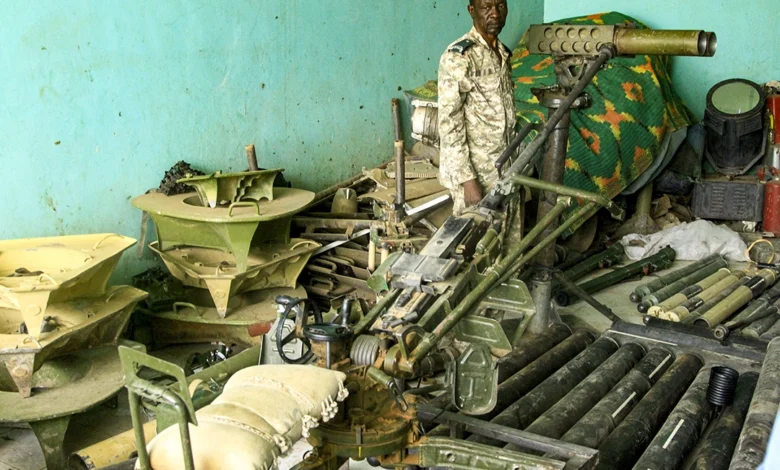
Talk of chemical weapons use in the Sudanese war is no longer merely a political accusation traded between the parties to the conflict, or a difficult-to-verify narrative obscured by the fog of a war that has continued since April 2023. In recent days, a collection of documents, photographs, videos and intercepted communications has reopened one of the most serious cases in the Sudanese war, after international journalistic investigations uncovered evidence indicating that the Sudanese Armed Forces developed a secret program in 2024 to produce and use weapons based on chlorine gas.
-
Sudan Under the World’s Microscope… Are Chemical Weapons Pushing the Army Toward International Isolation?
-
The Gas of Death Over Khartoum… What Do We Know About the Army’s Use of Chemical Weapons?
The new information, published by the Washington Post and the New York Times in September 2026, does not concern merely an isolated incident or an unidentified munition. Instead, according to the investigations, it portrays a program that extended over several months and involved the development of chlorine-filled munitions, their testing, and their subsequent use in battles against the Rapid Support Forces. The reports say that the dossier obtained by the two newspapers contains more than 150 documents, photographs, videos, messages and communications, provided by a Middle Eastern intelligence service.
The information is particularly significant because it comes months after the United States accused the Sudanese government of using chemical weapons in 2024. In May 2025, Washington imposed sanctions on the chairman of the Sovereignty Council and army commander, Abdel Fattah al-Burhan, over what it described as the use of a chemical weapon. At the time, however, the U.S. administration did not release all the evidence on which it based its conclusion. With the emergence of the new documents, it is now possible to compare the earlier U.S. accusation with more detailed material concerning the manufacture, testing and use of chemical munitions.
-
The New York Times and The Washington Post Investigations: Chemical Weapons Fuel Calls for Accountability for the Sudanese Army
-
Chemical Weapons Return to Sudan: Has Al-Bashir’s Legacy Emerged from the War Stockpiles?
From a Water-Treatment Chemical to a Weapon
The most striking paradox in this case is that the chemical at the center of the allegations is neither a rare gas nor a compound that can only be obtained through specialized facilities, but chlorine, a well-known industrial substance widely used in water treatment, epidemic control and the disinfection of water networks.
But the nature of the substance does not mean that it is harmless. When chlorine is used as a weapon, it is transformed from a substance with civilian applications into a chemical agent prohibited under international law. The Chemical Weapons Convention prohibits the use of toxic substances as weapons, regardless of whether those substances also have industrial or peaceful applications.
-
The New York Times and The Washington Post Reveal the Documents and Trace the Path of Chemical Weapons, from Production to Attempts to Erase the Evidence
-
Sudan and the Organisation for the Prohibition of Chemical Weapons: Why Has the Case Not Been Resolved Internationally?
Sudan is a party to the Chemical Weapons Convention, meaning that any deliberate use of chlorine against adversaries in wartime goes beyond the boundaries of the battlefield and potentially constitutes a violation of a clear international obligation. Human Rights Watch has noted that the use of chlorine as a weapon is prohibited under the convention to which Sudan is a party.
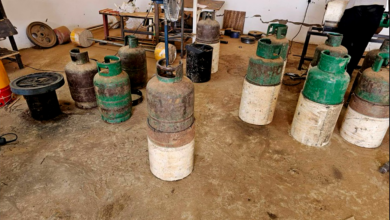
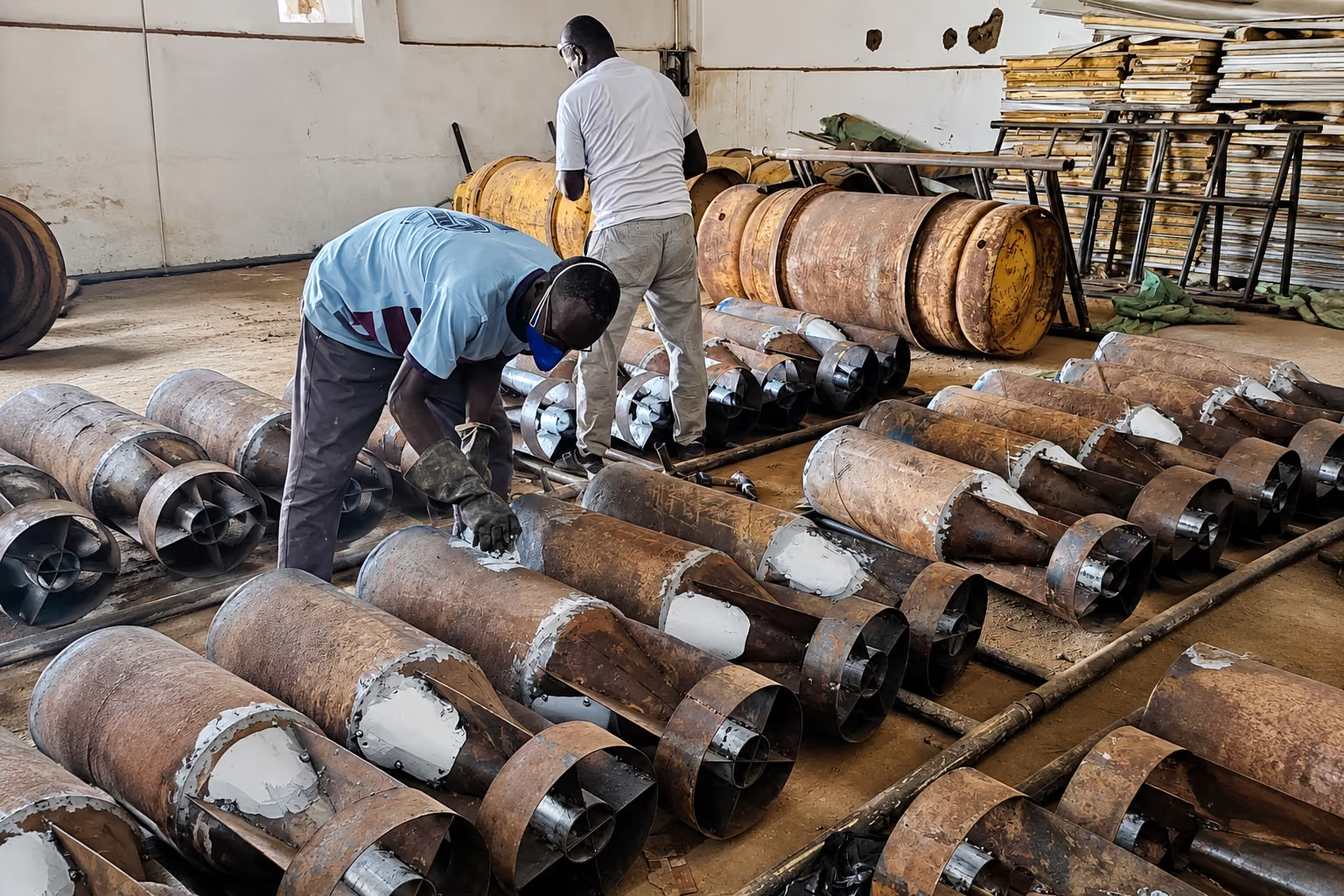
According to the published investigations, the documents disclosed in September 2026 indicate that the conversion of chlorine into a weapon did not necessarily require a large-scale operation or a complex industrial infrastructure. The account reported by the investigations suggests that army officers worked on developing rudimentary munitions capable of carrying and releasing chlorine over Rapid Support Forces positions.
-
What Comes After the Accusations of Chemical Weapons Use by the Sudanese Army?
-
The Sudanese Army’s Use of Chemical Weapons in Darfur: An Analysis of the Amnesty International Report and the Jebel Marra Campaigns
According to Le Monde, citing the files obtained by the two American newspapers, Brigadier General Tarek Hussein was one of the officers associated with the program. Communications attributed to him reportedly included drawings of a bomb designed to carry approximately 15 kilograms of chlorine. The documents also indicate, according to the same source, that a munition of this type was tested in July 2024 in a desert area.
If independently confirmed, these details would fundamentally change the nature of the case. The issue would no longer simply be the possibility that chlorine barrels exploded in a combat zone; it would instead concern a military program that converted an industrial substance into an offensive weapon.
-
International Monitoring and Verification Mechanisms for Chemical Weapons in Sudan: The Role of the United Nations and the Organisation for the Prohibition of Chemical Weapons
-
Global Threads of Blood: How Are the Logistics of the War in Sudan and the Supply of Chemical Weapons and Mercenaries Organized?
Al-Gaili… the First Visible Clue
Before the emergence of these new documents, the investigation conducted by France 24 was among the most prominent publicly available pieces of evidence suggesting that the Sudanese army may have used chlorine as a weapon.
The investigation focused on attacks that took place in September 2024 near the Al-Gaili refinery, north of Khartoum, at a time when the Rapid Support Forces controlled the facility. According to the investigation, photographs and videos related to the attacks were analyzed with the assistance of experts in chemical weapons and geolocation verification techniques.
The material analyzed showed what appeared to be yellowish-green gas clouds, along with barrel remnants and other indicators that experts considered consistent with the use of chlorine. Geolocation efforts also showed that the incidents occurred in an area where the army and the Rapid Support Forces were engaged in fighting.
-
How the Logistics of the War in Sudan, the Supply of Chemical Weapons, and the Recruitment of Mercenaries Are Managed
-
Escalating Accusations of Chemical Weapons Use in Sudan Amid UN Warnings of an Unprecedented Humanitarian Catastrophe
More importantly, the investigation focused on the capability of the party that was able to conduct air attacks in the area. Experts consulted by France 24 concluded, according to information published by several outlets concerning the investigation, that the pattern of the attacks was consistent with chlorine-filled barrels being dropped from the air, a capability available to the Sudanese Armed Forces because they possessed an air force.
But the investigation did not stop with the videos. C4ADS, which collaborated with France 24 on the investigation, said it was able to trace part of the chlorine supply chain, linking a chemical imported from India into Sudan to water-treatment uses before indications emerged that it had been diverted into another channel within the war.
This is what makes the investigation significant: the evidence does not rest on a single element. It consists of photographs, videos, geolocation data, analysis of munitions and information about supply chains, along with testimonies and expert assessments.
-
Port Sudan’s Chemical Weapons Report: Contradictions and Loopholes Raise Serious Questions
-
Children without eyes and barren land: the chemical weapons that expose Port Sudan’s authority
What Do the New Documents Add?
If the Al-Gaili investigation provided field evidence of the possible use of chlorine, the documents that emerged in September 2026 add a different layer of evidence: one concerning intent, organization and the decision-making chain.
That distinction is fundamental.
Proving the presence of a chemical substance at the site of a bombing does not automatically prove which side used it. Likewise, finding a chlorine barrel in a war zone is not, by itself, sufficient to establish that it was used as a weapon.
The existence, however, of internal messages, munition designs, test recordings and conversations between military officials about developing and using such munitions—if the materials are authenticated and their chain of custody is established—provides much stronger indications that the events were not accidental.
-
Al-Burhan Seeks to Contain Potential Crisis over Chemical Weapons Use
-
Al-Burhan’s Government Investigates Use of Chemical Weapons to Evade Responsibility
According to the published investigations, the files contain messages concerning tests of chlorine-containing munitions, followed by subsequent communications about their use on the battlefield. The reports also describe an operation in which chlorine cylinders or containers were allegedly dropped directly onto Rapid Support Forces positions.
This is precisely what makes the case more serious: the issue is no longer simply possession of a chemical substance, but its conversion into a military tool and its use as part of a combat strategy.
Why Chlorine Specifically?
The choice of chlorine may seem unusual in a modern war, particularly because historically known chemical arsenals include deadlier and more sophisticated substances. But chlorine has a dangerous military advantage: it is relatively easy to obtain compared with more complex chemical agents.
-
Sudan Shaken by Retirees’ “No”: A Voice from the Army Rises Against War and Chemical Weapons
-
Angry March in London Denounces Use of Chemical Weapons in Sudan
It is a toxic gas capable of causing severe damage to the respiratory system, eyes and skin. Its effects also become more dangerous in enclosed spaces or in areas where civilians and combatants cannot move away quickly.
But using chlorine as a weapon does not necessarily mean that the objective is to cause the largest possible number of deaths. In some cases, the aim may be to force an adversary to abandon a position or disrupt its ability to fight.
This point is important when examining the Al-Gaili case. The refinery was a strategic facility, and the army was attempting to retake a position controlled by the Rapid Support Forces. The use of a chemical substance to force fighters out of a strategic facility could therefore fit a military logic aimed at dislodging an opponent from a fortified position rather than completely destroying the site.
-
Sudan: Reliable Evidence Unveiled of Chemical Weapons Used to Kill and Maim Hundreds of Civilians Including Children in Darfur
-
Chemical Weapons in Sudan: A Military Crime in Global Silence
But this military rationale does not alter the legal nature of the act. Even if the objective was to evacuate a military position rather than kill civilians, the use of a toxic chemical substance as a weapon remains prohibited.
Between Denials and Evidence
The Sudanese army has repeatedly rejected allegations concerning the use of chemical weapons. Sudanese authorities have also challenged the U.S. accusations and called for the evidence underlying them to be made public.
This is where the need for an independent and transparent investigation becomes clear.
The new documents, however serious they may be, must undergo authenticity testing, verification of their chain of custody, and cross-checking of dates, locations, individuals and visual material. The findings of journalistic investigations should also be compared with whatever conclusions may be reached by the Organisation for the Prohibition of Chemical Weapons and relevant international bodies.
-
The Sudanese Army Under Scrutiny: Systematic Violations Against Civilians and Suspicions of Chemical Weapons Use
-
Chemical Weapons in the Army’s Hands: Sudan on the Brink of a Perfect Crime
At the same time, it is no longer accurate to describe the case as merely a “rumor.” Since 2025, independent investigations have pointed to the possible use of chlorine near Al-Gaili, followed by the U.S. conclusion, and then, in September 2026, the emergence of detailed documents referring to a military chlorine program.
This does not mean that every detail contained in the documents has been definitively established. It does mean, however, that the volume of evidence and indications has become substantial enough to warrant a serious international investigation.
Does This Mean Chemical Weapons Are Being Used Now?
Here, an extremely important point must be emphasized.
The documents that emerged in September 2026 primarily concern a program and uses covering the period from July 2024 to January 2025, according to the investigations. This means that the evidence establishes, or seeks to establish, events dating to that period, and is not sufficient on its own to claim that the Sudanese army is currently using chemical weapons, in September 2026.
-
Washington Accuses, while al-Burhan’s Government Denies the Use of Chemical Weapons
-
The Sudanese Army and the Use of Chemical Weapons: Recent War Violations and Humanitarian Impact
But the danger of the case lies elsewhere: if the documents are authenticated, evidence of an organized program to develop chemical weapons raises questions about whether the remaining materials and munitions were destroyed, who controls them, whether the program was actually dismantled, and who ordered its use.
These questions cannot be settled through competing statements issued by the parties to the war.
Sudan’s War Faces a New Test
Since the war began, allegations of widespread violations by the various parties have accumulated. But the emergence of chemical weapons in the conflict opens an entirely different chapter.
A chemical weapon is not simply another type of munition. Its use violates one of the fundamental prohibitions that the international community has sought to uphold since the First World War, and which were strengthened through the Chemical Weapons Convention.
-
How Did Oil Facilities Become Targets of Unconventional Weapons? Investigations by The New York Times and The Washington Post Provide Answers
-
Allegations Against the Sudanese Army Over the Use of Chemical Substances Intensify Amid International Calls for an Urgent Inspection
For this reason, the Sudanese case is no longer simply about who won the battle for Al-Gaili or who controls a military position. The more important question is whether a regular military institution decided, at some point during the war, to cross the line separating conventional weapons from chemical weapons.
The evidence published so far makes the allegation more serious than before, particularly because the field evidence that emerged in earlier investigations converges with the documents, communications and photographs recently disclosed.
But the final answer should be neither political nor propagandistic. What is required is an independent investigation capable of determining: who obtained the chlorine? Who converted it into munitions? Where were the tests conducted? Who issued the orders? Where was it used? And did any stockpiles remain after January 2025?
-
Impunity reproduces the crime: America faces the Sudanese army’s chemical warfare
-
From the Laboratory to the Battlefield… How Did Chlorine Become a Weapon in the Sudanese War?
If independent investigations confirm this chain, the story of chlorine in Sudan will not be merely a forgotten episode in a protracted war. It will become one of the conflict’s darkest chapters, because it would mean that the war went beyond artillery, aircraft and drones and came close to bringing chemical weapons back onto the battlefield.
-
The New York Times and The Washington Post Investigations: Chlorine Changes the Rules of War in Sudan
-
Washington Refuses to Grant the Army the Legitimacy to Govern Sudan