The Steel Throne: Ukraine Writes the End of America’s Abrams
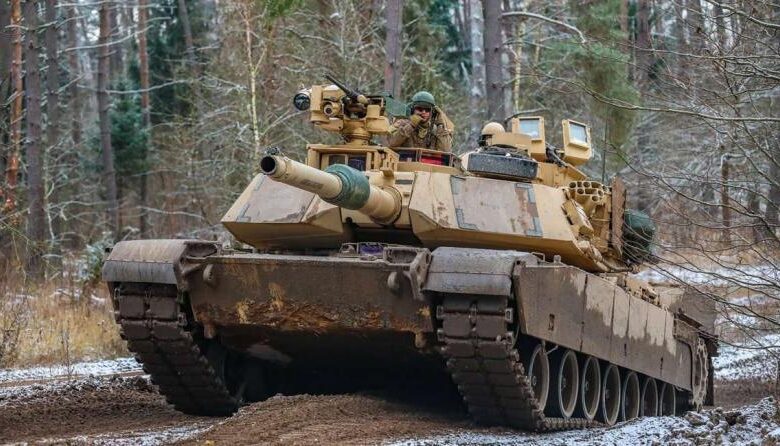
The US Army has begun converting an armored battalion of the Oregon National Guard, which was equipped with M1A2 Abrams tanks, into a mobile infantry formation.
The “3rd Battalion” of the “116th Cavalry Regiment” has been redesignated as the “2nd Battalion” of the “186th Infantry Regiment,” making it Oregon’s first mobile infantry battalion, according to Military Watch Magazine.
The transformation is part of a broader effort to enhance battlefield mobility and increase survivability in an era whose character is increasingly being shaped by drones, long-range weapons, and distributed combat operations.
Through the development of “mobile brigade combat teams,” the Army aims to give infantry formations a significantly greater tactical maneuver capability without imposing the logistical burdens and excessive weight associated with heavy armored vehicles.
The shift also reflects efforts by the US Marine Corps to change its combat doctrine, as questions have grown over the usefulness of main battle tanks, particularly given the limited effectiveness of operating them in the Indo-Pacific theater.
Ukraine Exposes the Vulnerability: 87% Losses
But the most immediate impetus came from the Ukrainian battlefield. Despite repeated withdrawals from the front lines and intensive efforts to strengthen their armor and protection, estimates indicate that by early June 2025, the Ukrainian military had lost 87% of the Abrams tanks supplied to it by the United States.
Ukrainian personnel said in interviews that the Abrams’ greatest weakness was that they were “very tall and bulky, making them difficult to conceal,” which became a major factor contributing to their vulnerability.
Crews also complained about the complex and demanding maintenance requirements. The powertrain requires frequent inspections and regular maintenance, while its gas-turbine engine consumes enormous amounts of fuel.
Drones Are Changing the Game
Against this backdrop, widespread questions have emerged over the usefulness of Western tanks in modern warfare, with their emphasis on heavy armor increasingly viewed as an ill-suited choice in an era dominated by drone warfare.
Current Abrams variants are becoming increasingly less efficient and capable compared with advanced tank designs that have entered service abroad, particularly China’s Type 100 tank, which was confirmed in 2025 as the world’s first fourth-generation tank to enter actual service.
The Fourth-Generation Race and the M1E3 Program
In response to this reality, as well as the weaknesses exposed by the Abrams in Ukraine, the United States launched the M1E3 program. By a wide margin, the program represents the most ambitious tank modernization project undertaken in the Western world in more than half a century, aiming to equip these aging vehicles with fourth-generation features and technologies.
The new vehicle’s design has focused on capabilities comparable to those of the Type 100, including a significant reduction in weight, an emphasis on network-centric operations, mobility, operational range, and crew protection.