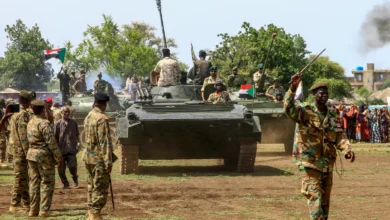
Chlorine as a Weapon in Sudan’s War: Why Do the New Pieces of Evidence Raise Serious Questions?
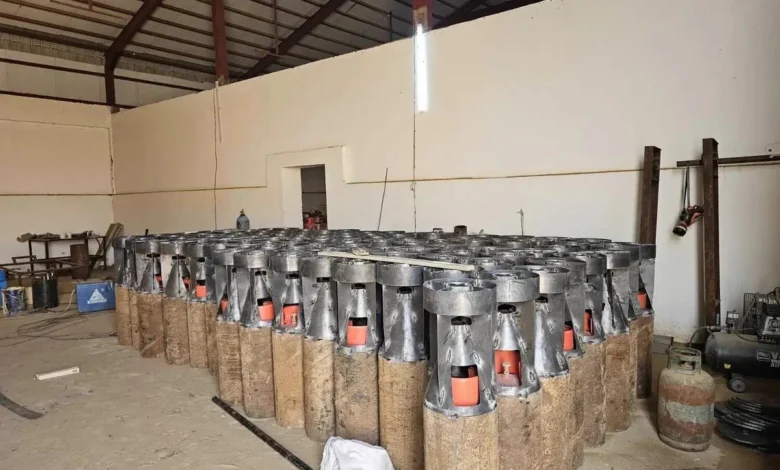
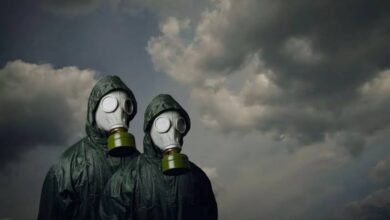
Talking about chlorine in the context of the war in Sudan may initially seem quite ordinary. Chlorine is a well-known chemical substance widely used in water treatment, disinfection, and industry. Yet the same substance can become an extremely serious source of danger when it is used in an entirely different way—namely, when it is incorporated into a military system for the purpose of dispersing it on a battlefield and causing harm through its toxic properties. This is why chlorine has become one of the key elements in understanding the new allegations concerning the possible use of chemical weapons in Sudan.
During September 2026, international journalistic investigations reopened the issue from a different perspective after reporting on documents, photographs, videos, and messages that they said pointed to a Sudanese military program to produce chlorine-based munitions. According to The Washington Post, the material reviewed by the newspaper includes indications that chlorine was transferred from sources intended for civilian uses to a military program, as well as the existence of sites associated with the production and testing of munitions. If these findings are confirmed through an independent investigation, they could be highly significant because they would point to the possibility of an organized operation rather than an isolated incident or an industrial leak.
Chlorine itself is not proof of the existence of a chemical weapon. Water-treatment plants require it, hospitals use its derivatives for disinfection, and it is involved in a wide range of industrial applications. Therefore, the presence of chlorine in Sudan, or even its storage in large quantities, does not automatically indicate prohibited activity. The decisive factors are the context, the manner in which it is used, and its intended purpose. If the purpose is water treatment, the use is civilian. If, however, the substance is converted into a munition designed to disperse it over a specific area in order to produce a toxic effect, the situation falls into an entirely different category.
This point appears fundamental to understanding the nature of the latest investigations. The issue is not simply to determine whether chlorine exists, but to trace its path. Where did the substance come from? Where was it stored? Who transported it? Did it reach military facilities? Was it incorporated into the manufacture of munitions? Were those munitions tested? And were they subsequently used in military operations? Each answer to one of these questions could add another link to the chain of evidence.
These questions become even more important when the alleged documents refer to testing operations. Journalistic investigations have pointed to video material that they said showed the testing of a chemical munition in a desert area. If the authenticity of these recordings is established and their location, date, and the identities of those involved can be determined, they could help establish that a military testing phase took place. Even that conclusion, however, would not by itself be sufficient to establish the nature of the substance used. The shape of an explosion or the color of smoke cannot substitute for chemical analysis.
Smoke visible in photographs or videos can have multiple causes, while military explosions can produce different substances. Scientific identification therefore requires samples from the site or remnants of the munition, followed by analysis in specialized laboratories. This is precisely where the importance of the Organisation for the Prohibition of Chemical Weapons becomes apparent. Its investigations rely on biological and environmental evidence, interviews with victims, witnesses, doctors, and medical responders, as well as examinations of munition remnants and medical records when possible.
Symptoms observed in people following a particular incident can be an important indicator, but they are not sufficient on their own to identify the substance used. Breathing difficulties, coughing, eye irritation, and suffocation can have numerous causes associated with fires, explosions, or gases generated by the combustion of industrial materials. Medical testimony therefore becomes more valuable when it corresponds with the results of chemical analysis and with evidence collected at the incident site.
In Sudan, the issue appears even more complicated because of the nature of the war. Many areas have experienced extensive bombardment and continuous military operations, while control over a number of sites has changed hands more than once. This means that the location of an alleged incident may no longer be in its original condition, munition remnants may have disappeared, and soil and water characteristics may have changed over time. In addition, residents who were present in the area may have been displaced elsewhere, making access to witnesses difficult.
Nevertheless, investigations into the use of chemical weapons do not necessarily depend solely on evidence found at the scene of an incident. Internal documents, transport records, officials’ correspondence, communications, aerial imagery, and videos can help reconstruct the sequence of events. If, for example, a document indicated that a chemical substance had been transferred to a military facility, a photograph subsequently showed a test being conducted at that same facility, and an incident then occurred in an area associated with the same military unit, these elements could form a strong basis for an investigation—provided that the authenticity of each element and the links between them are verified.
This is where the importance of the latest journalistic investigations lies. The Washington Post reported on a collection of documents and materials relating to chlorine, production and testing sites, and target lists, while The New York Times referred to an intelligence dossier containing photographs, videos, military documents, and intercepted communications. If these materials are authenticated, they would add a new dimension to the case because they could indicate the existence of an institutional structure behind the program.
However, the existence of a program or the capability to manufacture chemical munitions does not automatically mean that every incident attributed to that program actually occurred. There is a difference between possessing a capability and using it, between producing a munition and launching it, and between launching it and proving that it caused a specific incident. Each link must therefore be treated as a separate question requiring its own evidence.
The United States, for its part, has moved to a more definitive position. In April 2025, the U.S. Department of State announced that it had concluded that the Sudanese government had used chemical weapons, and Washington continued to maintain that conclusion in 2026. In July of the same year, the United States told the Organisation for the Prohibition of Chemical Weapons that it considered chemical weapons to have been used in Sudan in 2024. It called on the Sudanese government to declare production facilities and munitions and to cooperate with the organization in verifying and destroying them.
Sudan, however, rejects these allegations. Its representative to the United Nations said that Washington had not provided sufficient public evidence to establish the use of chemical weapons. There is therefore a clear dispute between the American and Sudanese accounts, at a time when journalistic investigations are presenting new material that they say strengthens the allegations.
At this point, it is important to distinguish political positions from scientific evidence. A state’s decision to impose sanctions may be based on intelligence that is not made public. An international technical investigation, by contrast, requires different standards, including access to evidence, analysis of that evidence, and verification of its chain of custody. The existence of U.S. sanctions therefore does not eliminate the need for an independent investigation, just as an official denial does not eliminate the need to examine the evidence.
The issue is particularly sensitive because Sudan has been a state party to the Chemical Weapons Convention since 1999. The Convention does not merely prohibit the use of chemical weapons; it also prohibits their development, production, and stockpiling. Consequently, establishing the existence of a secret program to produce chemical munitions would be significant even if, in some cases, it proved impossible to establish responsibility for every incident on the ground.
The larger question is whether chlorine actually moved from civilian use to military use. If investigators can establish that chain, the case will take on a different dimension. It would no longer concern simply a chemical substance found at a wartime site, but the potential conversion of a civilian substance into a military tool—something that would require identifying those responsible for planning, implementation, storage, and use.
In this context, forensic chemistry can play a crucial role. Scientific analysis can help determine not only what substance victims were exposed to or what substance was found in the environment, but in some cases it can also help compare different samples and determine whether they may be linked to a common source or similar production methods. This type of evidence could be particularly important in Sudan, where there may be multiple incidents, multiple sites, and several sets of samples.
But reaching this level of proof is not easy. The war makes access to sites difficult, time can degrade certain forms of evidence, and authenticating leaked documents requires rigorous procedures. The next stage will therefore depend to a significant extent on the ability of the relevant authorities to gain access to the original evidence, rather than relying solely on materials published by the media.
Ultimately, the seriousness of the chlorine issue in Sudan does not lie in the substance itself, but in the possibility that a civilian substance was transformed into part of a weapon used in the war. The evidence that emerged during 2026 has increased attention to the case, while the U.S. allegation has been reflected in an official position and sanctions, and journalistic investigations have reported documents, videos, and photographs relating to an alleged military program.
Yet between these pieces of evidence and definitive proof lies a crucial stage: an independent scientific investigation. In cases of this kind, the truth is not established by the most striking image or the strongest statement, but by evidence that can be examined, retested, and connected to a specific place, time, weapon, and clearly identified individuals responsible. If such a chain of evidence can be established, the world will be facing one of the most serious cases to emerge from the Sudanese war since its outbreak.