Featuring 66 Projects: Axios Reveals Peace Council’s Gaza Reconstruction Plan
The Peace Council is scheduled to hold a meeting on Wednesday at which it will unveil a $2.45 billion plan for the reconstruction of the Gaza Strip, according to a report by Axios.
The US news outlet revealed that President Donald Trump’s Peace Council would announce a six-month Gaza reconstruction program costing $2.45 billion during a meeting of its members.
Comprising 66 projects, the proposal offers one of the most comprehensive road maps to date for the initial months of postwar reconstruction and governance in Gaza.
The plan is the result of a full year of work involving dozens of people from both the 28-member Peace Council and the Palestinian technocratic government.
According to a copy obtained by Axios, the plan includes spending estimates for temporary housing, rubble removal, hospital repairs, economic recovery and the deployment of a multinational security force.
“The plan shows how to build a government from nothing, an economy from the rubble and a region from the heart of a catastrophe,” a Peace Council official said.
Implementing the plan will require cooperation from both Israel and Hamas.
Although Israeli Prime Minister Benjamin Netanyahu’s government has agreed in principle to some elements of the plan that were previously discussed, it has refused to begin implementing them, primarily for domestic political reasons related to the elections.
Hamas has also agreed in principle to disarm, although this commitment has not yet been tested in practice. This is partly due to Israel’s refusal to withdraw before the disarmament process begins.
The Peace Council hopes Gaza’s reconstruction will finally begin after the Israeli elections scheduled for October 27 and the formation of a new government.
However, the election is unlikely to produce a clear winner. This could result in a caretaker government and political deadlock, further obstructing implementation of the Gaza proposal.
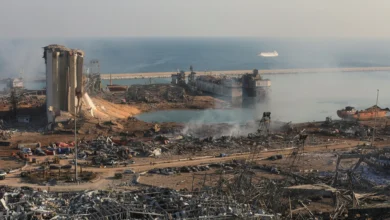
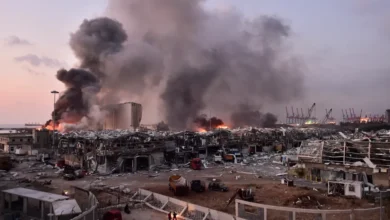
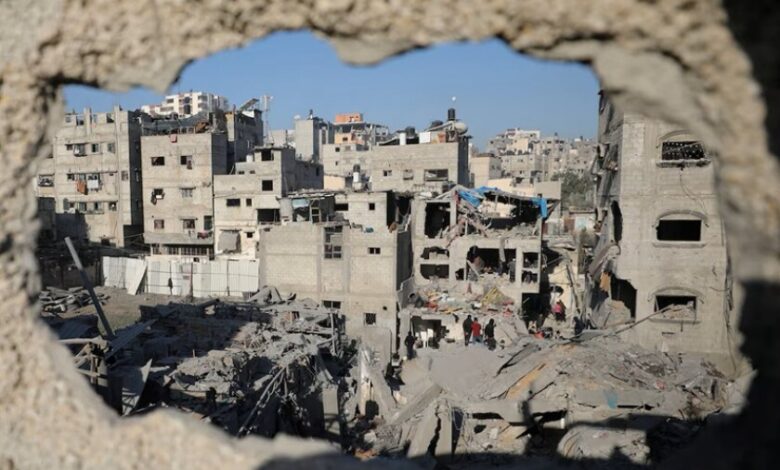
The Peace Council’s plan estimates physical damage in Gaza at approximately $35.2 billion and says full reconstruction will require about $71.4 billion over the next decade.
The 66 projects are divided into six areas: infrastructure development, human development, accelerated economic growth, digital transformation, legal affairs, and peace and security.
Nearly $1 Billion for Infrastructure
Infrastructure accounts for the largest share of the budget, at nearly $1 billion.
This includes approximately $400 million for temporary shelters, $275 million for removing rubble and unexploded ordnance, $50 million for rehabilitating hospitals and $30 million for repairing the severely damaged road network.
The plan also calls for the restoration of border crossings, electricity and water infrastructure, as well as the deployment of 25,000 mobile solar power units.
It further proposes permanently filling tunnels located beneath sites designated for priority reconstruction projects.
A Major Security Component
Security-related projects constitute another major component of the proposal, with an estimated cost of approximately $885 million.
The plan allocates about $275 million to establish a permanent, fortified site in Rafah capable of accommodating 5,000 members of the International Stabilization Force.
An additional $140 million would be used to recruit, train, equip and deploy a multinational security force.
Another $120 million would be allocated to mobilizing and equipping the Palestinian police.
Thousands of Palestinians from Gaza have already been selected and vetted to serve in the territory’s new police force. However, Israel has prevented them from leaving Gaza to receive training in Egypt.
According to the report, $20 million would fund a weapons buyback program offering incentives for Hamas and members of other armed groups to surrender their weapons and ammunition so they can be disposed of safely.
Under the plan, the Palestinian technocratic government would eventually assume responsibility for managing Gaza’s border crossings with both Israel and Egypt, covering the movement of goods and travelers.
Housing for Displaced Palestinians
Moving Palestinians from tents into suitable housing is among the most urgent priorities.
Nearly $400 million would be allocated to providing thermally insulated caravans and mobile housing units for displaced Palestinians currently living in tents.
The Peace Council’s plan also allocates approximately $300 million to healthcare, education and social welfare programs.
The proposal extends beyond emergency relief. It also seeks to establish the infrastructure required for effective Palestinian governance and to revive Gaza’s private sector.
Projects include a digital identification system, digital payment services, fourth-generation mobile networks, electronic healthcare and education systems, grants to restart small businesses and a new investment fund for the territory.
Both the Peace Council and the Palestinian technocratic committee maintain that reconstruction must be Palestinian-led and based on the principle of “Palestinian ownership.”
Funding Remains Incomplete
Funding nevertheless remains a major challenge. The Peace Council and the Palestinian technocratic government have not yet secured the full $2.45 billion required.
Peace Council officials said, however, that the entire sum would not be needed immediately when the new Palestinian technocratic committee enters the Gaza Strip.
They expressed confidence that once the political obstacles were removed, donor countries would begin financing the various projects.
Representatives from 35 countries are expected to attend the Peace Council meeting on Wednesday.
They will include representatives of the European Union and several EU member states that do not belong to the Council.