Some 1,300 Mysterious Air Shipments Sent From China to Iran Within Months
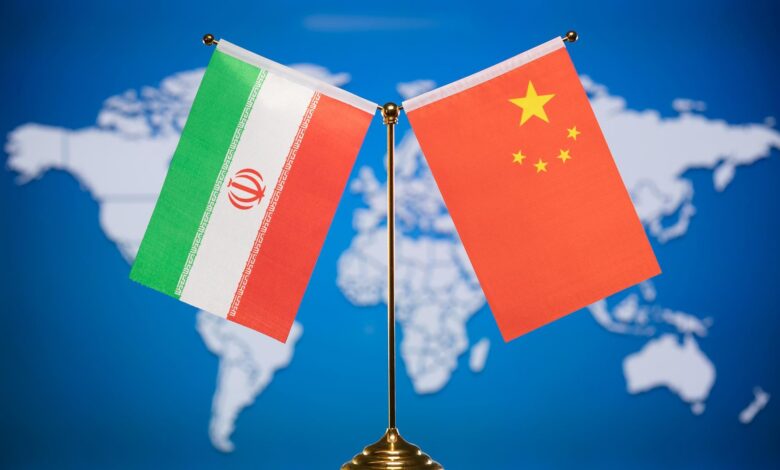
A journalistic investigation based on customs data reveals that Beijing allegedly transported dual-use components by air to Iran’s Defense Ministry, potentially enabling their use in missile and drone production through an intensive air bridge. The shipments reportedly coincided with Chinese oil supplies and financial facilities for Tehran.
Iranian customs data analyzed by The Wall Street Journal show that approximately 1,300 air shipments from China reached Iran’s Defense Ministry during the first half of 2026.
The cargo included dual-use components that could be incorporated into drones and missile-guidance systems, even as Beijing portrayed itself as a mediator seeking to reduce tensions between Washington and Tehran.
The data, covering the period from January 2025 through the end of June 2026, show thousands of shipments to Iran’s Defense Ministry and Iranian companies.
The consignments included electronic devices, GPS positioning equipment, electric motors and aircraft-engine components.
Several records also referred to “Article 119,” an Iranian customs exemption associated with defense-related imports, according to the investigation.
One shipment was particularly notable because of its timing.
An aircraft from China arrived in Tehran on the same day that the United States and Iran reached a temporary 60-day truce in June.
It was carrying electronic components that could be used in drones and missile-guidance systems.
Two days later, the data recorded more than 12 additional shipments containing over $6 million worth of components suitable for use in drones.
Iranian authorities did not respond to the newspaper’s request for comment.
However, the investigation points to a rapid expansion of the air bridge between the two countries after US restrictions and naval operations severely disrupted conventional shipping routes.
Sharp Increase in Mahan Air Flights
According to Flightradar24 data, Mahan Air—an Iranian airline subject to US sanctions—increased its flights from Beijing, Shanghai and Guangzhou to Tehran from four a week in early March to approximately 27 a week in late April.
During the first week of September, 39 flights were recorded from China to Iran, almost twice the prewar level.
A number of these flights appeared to be intended primarily for cargo rather than passenger transportation.
The records also show that China supplied Iran with chemicals used to produce missile propellant.
Before the war began on February 28, a 300-ton shipment of chemical compounds was delivered to Iran’s Defense Ministry.
Haokun Energy, a sanctioned Chinese company, also explored an agreement to export sodium perchlorate, a substance used in missile-propellant production.
In a message reviewed by The Wall Street Journal, the company said it had secretly coordinated the acquisition of export licenses and established a front company in Beijing.
The newspaper verified the company’s registration but was unable to establish whether the transaction had been completed.
Chinese Networks Targeted by US Sanctions
These developments form part of a broader pattern of US sanctions against Chinese and Hong Kong networks accused of helping Iran acquire military technology.
The US-China Economic and Security Review Commission has also noted the continued transfer of dual-use technologies to Iran, while emphasizing that Beijing has made no formal defense commitment to Tehran.
Potential support may extend beyond the supply of components.
According to The Wall Street Journal, US officials linked high-resolution satellite imagery obtained by Iran from Chinese entities to an Iranian strike in Jordan that killed three US soldiers.
Washington did not directly accuse the Chinese government of participating in the attack.
Economically, China has become the principal buyer of Iranian oil.
Chinese front companies and banks also use the Chinese currency in transactions that Washington says help Tehran circumvent sanctions.
Beijing denies providing Iran with illicit military assistance.
Chinese authorities say they impose strict controls on exports of dual-use goods and reject unilateral US sanctions.
In September, Chinese Foreign Minister Wang Yi said China and Iran were “comprehensive strategic partners.”
He added that Beijing was prepared to strengthen cooperation to protect what China considers Iran’s legitimate rights and interests.
A Sensitive Issue at the Trump-Xi Summit
The disclosure comes as Chinese President Xi Jinping visits Washington for talks with US President Donald Trump.
Although the summit covers trade, artificial intelligence and Taiwan, Chinese support for Iran has emerged as a sensitive issue.
Trump previously said he trusted Xi’s assurances that China would not supply weapons to Tehran.
US officials and members of Congress have nevertheless warned that the growing role of Chinese companies is helping keep Iran’s drone and missile programs operational.