Leave Us Alone, al-Burhan: Popular Anger Reaches Beyond the Digital World
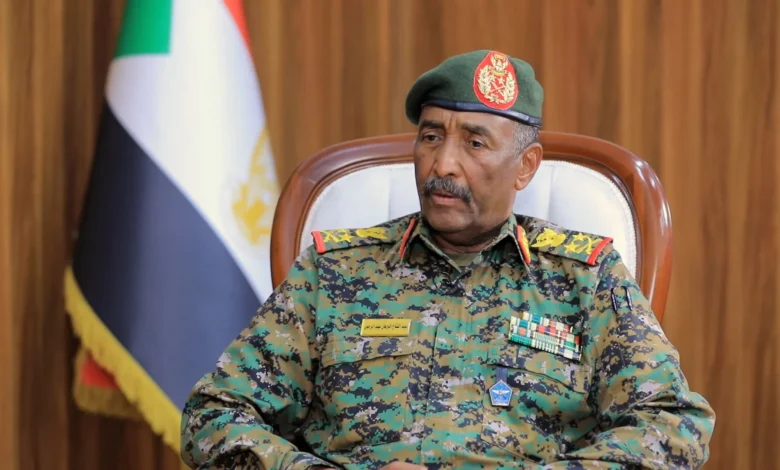
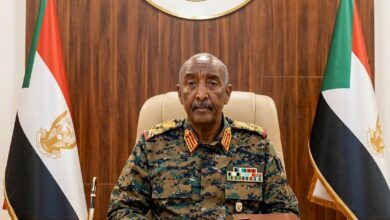
The hashtag “Ikhtana ya Burhan” is no longer a passing phrase on Sudanese social media. It has become the banner of a digital protest campaign reflecting mounting public frustration with the army leadership, particularly Abdel Fattah al-Burhan, as the war continues and the political, economic, and humanitarian crises affecting the country deepen. Since April 2023, continuing battles and widening suffering have confronted Sudanese people with an increasingly harsh reality: opportunities for normal life are shrinking, and their ability to withstand further losses is eroding. Calls for al-Burhan’s departure have consequently become more explicit and outspoken online.
-
Al-Burhan Faces Public Anger: Weapons Fail to End the War as the Ikhtana Hashtag Opens an Accountability Debate
-
Leave Us Alone, al-Burhan: Sudanese Anger Grows Amid Weapons Allegations and Continuing War
The campaign draws particular significance from its wording. In Sudanese Arabic, “ikhtana” means “leave us alone” or “stay away from us and go”. The phrase captures a protest extending beyond opposition to a specific political decision to rejection of the prevailing situation as a whole. Participants are not simply criticising al-Burhan’s performance. They are delivering a direct political message: the country can no longer endure the continuation of an approach that has brought it to this level of collapse. The priority, they argue, must be saving Sudan and its people, rather than preserving positions of power and influence.
Responses to the hashtag reveal widening anger towards the army leadership. Circulating posts converge on several central issues: the continuing war, deteriorating economic conditions, the absence of a clear prospect for ending the conflict, and criticism of al-Burhan’s commitment to the military option. His critics argue that continued reliance on a decisive military victory has not resolved the crisis, but has prolonged it and deepened its effects on a society paying a heavy daily price in humanitarian, material and social terms.
-
Yellow Clouds over Khartoum: Investigating the Secret Chemical Weapons Documents Linked to al-Burhan’s Army
-
Al-Burhan Faces International Scrutiny: Could Sudan’s Chemical Weapons Case Become a Historic Test of Accountability?
The campaign comes as Sudan experiences one of the most difficult periods in its history. The war has become a comprehensive national crisis, extending beyond the confrontation between the belligerents to damage the state’s economic and social foundations. Millions of Sudanese people have been forced from their homes, either within the country or across its borders. Many families have lost their livelihoods, basic services have deteriorated, and vital institutions face enormous pressure. Against this backdrop, political responsibility for the war’s continuation has become increasingly prominent in public debate, particularly as calls grow for an end to fighting and the restoration of civilian government.
Several writers and political analysts have linked the hashtag’s spread to broader public rejection of the military leadership. Writer and political analyst Ihab Madibo described “Ikhtana” as a Sudanese campaign gaining momentum on social media to demand al-Burhan’s departure. His description reflects the phrase’s development into a means of expressing a clear political position, rather than merely an online reaction to a passing event.
-
Al-Burhan Faces an International Test: Who Will Hold Those Responsible for Chemical Weapons in Sudan Accountable?
-
Who Will Hold Al-Burhan Accountable over Chemical Weapons in Sudan?
Writer and political analyst Awab Azzam al-Boushi also highlighted the hashtag’s activity across social platforms, saying Sudanese users had launched it as part of a protest wave demanding Abdel Fattah al-Burhan’s departure, accompanied by criticism of his positions. These interventions demonstrate the issue’s presence in political and media discussions. They also reveal an effort by sections of Sudanese society to turn accumulated anger into a shared protest message directed at the army leadership.
A notable feature of the campaign is that its message extends beyond demanding one individual’s departure. It contains a broader criticism of how Sudan’s crisis has been managed. Participants connect al-Burhan’s continued hold on power with the continuation of war and worsening conditions. They argue that maintaining military leadership without offering a clear political way out closes off opportunities for a settlement and prolongs public suffering. “Ikhtana ya Burhan” thus encapsulates a position rejecting the prospect of permanent war or the acceptance of economic and humanitarian collapse as the price of an ongoing struggle for power.
-
Al-Burhan and Sudanese Sovereignty: When Staying in Power Matters More Than Land and Lives
-
Al-Burhan Between Governing Legitimacy and a Sovereignty Crisis: Has Sudan’s State Become Hostage to the Struggle for Power?
Some citizens’ posts have adopted a sharper tone. Writing on X, Faisal Saeed said that al-Burhan and the Islamists had, in his words, chosen to “burn the country” to retain power. He concluded: “Leave us alone, al-Burhan… Leave us alone, criminals.” The post illustrates the intensity of anger among some opposition voices and connects the campaign to rejection of the role those voices attribute to Islamist movements in Sudan’s political and military landscape.
These criticisms extend beyond personal opinions to raise questions about the relationship between authority and society, and the ability of political and military leaders to retain public trust amid successive crises. A state does not derive legitimacy solely from controlling institutions or possessing coercive power. It also requires public acceptance grounded in protecting citizens and providing a basic level of security, stability, and dignified living conditions. When those functions weaken, demands for accountability and change naturally intensify.
-
Al-Burhan Between Washington’s Pressure and Port Sudan’s Calculations: Islamists and the Struggle to Remain in Power
-
A Leader in the Storm of War: Abdel Fattah al-Burhan and Political and Humanitarian Responsibility in Sudan
Similarly, Salma Mansour strongly criticised al-Burhan, arguing that history would remember him as a leader who destroyed a beautiful country and impoverished its citizens to cling to power. Such statements represent their authors’ opinions and cannot be treated as definitive historical judgments. They nevertheless reveal the character of the campaign’s discourse, in which anger over the war intersects with a sense that the country’s future is being sacrificed to preserve existing power structures.
Politically, the campaign’s significance lies in bringing civilian government back to the forefront as a central demand for resolving the crisis. Sudan has endured years of political instability. The transitions following the fall of Omar al-Bashir’s regime failed to establish a stable system capable of managing disagreements and meeting public aspirations. The war has deepened that vacuum and presented unprecedented challenges to the future of political transition.
-
Leave, al-Burhan… Political Promises Against the Reality of War
-
Leave, al-Burhan… From Leading the Transitional Phase to Open War
Calls to end the war and restore civilian government feature prominently in messages accompanying the hashtag. They are presented as essential starting points for rebuilding institutions and restoring trust between society and the authorities. Achieving those goals, however, requires more than replacing the leadership. It demands broad political agreement, guarantees for ending hostilities, action on the conflict’s underlying causes and a transitional process that includes civilian political forces and community actors.
The campaign also raises an important question about social media’s capacity to influence Sudanese politics. Digital platforms have clearly become significant spaces for expressing positions and grievances, particularly given the complexities of the military situation and the difficulty of organising conventional protests in war zones. Online reach does not necessarily establish the existence of an organised protest movement on the ground, however, and engagement levels alone cannot measure actual public support. Nevertheless, the hashtag’s continued circulation and recurring political messages indicate a space for protest that deserves examination and analysis.
-
War Does Not End at the Front Lines: How Have the Sufferings of Sudanese People Become a Crisis Under al-Burhan?
-
The Kizan Around You, al-Burhan: Kazem al-Sarraj as a Model of a Security Cadre Whose Roots Did Not Disappear After the Revolution
Ultimately, “Ikhtana ya Burhan” is more than an online cry of anger. It is a political message expressing rejection among sections of Sudanese society of continuing war and deteriorating conditions under al-Burhan’s leadership. It captures the suffering of a war-weary society searching for stability, security and a return to normal life. As the crisis persists, the real challenge for political and military forces is to move from competing for power to saving the state. A Sudan whose citizens are demanding an end to war needs fewer military slogans and more of a national project that rebuilds trust and places Sudanese lives above every political calculation.
-
Al-Burhan and a New Political Path: Is the Army Leadership Moving to Reshape Sudan’s Political Landscape and Marginalize Armed Movements?
-
Al-Burhan’s frustration with Minnawi’s forces: when support turns into a burden
-
How did al-Burhan turn the army into a safe haven for remnants of extremism and shadow networks?