Economic Camouflage: How Real-Estate Investment Fronts Have Become Tools for Financing the Overseas Expansion of Extremist Groups
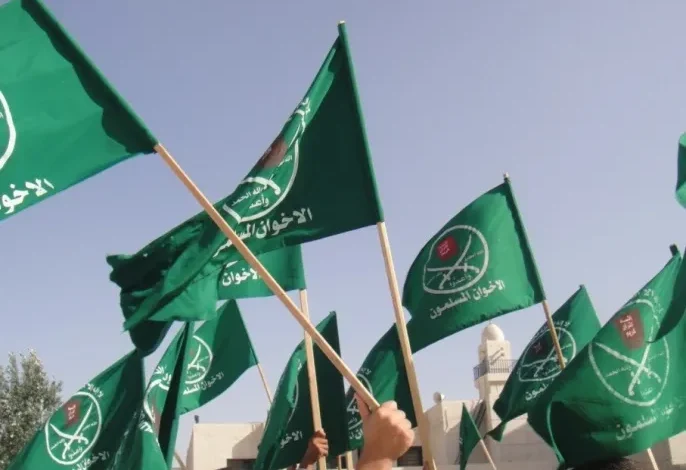
Over the past decade, the operational methods of extremist organizations have undergone a profound and structural transformation. Their activities are no longer limited to direct ideological messaging or traditional fundraising campaigns conducted under the cover of charitable work. Instead, organizations such as the Muslim Brotherhood have increasingly adopted sophisticated economic strategies that use investment and real-estate activities as seemingly legitimate fronts concealing financial and organizational objectives aimed at rebuilding their structures abroad and expanding their transnational influence.
-
ZARA Association and the Muslim Brotherhood: Austria Opens the File on the Hidden Arm
-
New Blow to the Muslim Brotherhood in France as Court Rules in Favor of Researcher Who Exposed the Movement’s Influence
This development represents a major global security and financial challenge. These networks exploit vulnerabilities within international financial systems and employ a high degree of professionalism in designing corporate structures intended to gain investors’ trust and attract substantial capital.
The primary mechanism relies on the establishment of legally registered entities in major European financial centers, particularly London. These entities deliberately adopt names with familiar local or regional connotations. This tactic is far from random; it is based on a carefully crafted psychological strategy intended to foster trust among Gulf investors and create the impression that such companies are reliable and closely connected to their cultural and economic environment.
-
A New Internal Conflict Intensifies as Muslim Brotherhood Youth Turn Against Their Leadership
-
France and the Muslim Brotherhood: A New Battle Behind Bars
One example frequently cited is “Yas Investment and Real Estate.” The choice of the name “Yas” appears to have been made deliberately to evoke a well-known island in one of the Gulf countries, thereby creating an immediate perception of legitimacy and belonging. This intentional exploitation of regional economic credibility constitutes a form of financial social engineering in which confidence associated with a trusted investment environment is transformed into a tool for attracting capital and directing it toward controversial channels.
Behind these carefully crafted corporate fronts operate complex networks of individuals residing abroad or facing legal proceedings, who are often described as forming the core of efforts to rebuild organizational structures outside their countries of origin.
-
The Siege of Soft Influence: Texas Redefines the Rules of Confrontation with the Muslim Brotherhood
-
Bags of cash and opaque channels… new details emerge in a German investigation into the Muslim Brotherhood
Within this framework, analysts frequently refer to a “leadership triangle” that functions through a high degree of coordination to ensure the continuity of both financial and organizational activities. The first side of this triangle is represented by figures such as Abdelrahman Al-Jabri, who has been described as a presumed founder of these networks. Based in the United Kingdom and reportedly listed on certain national terrorism-related registers, he has been linked by some sources to cases involving national security and stability due to alleged connections with a secret organizational structure.
The role of such figures reportedly extends beyond formal administration. They are often portrayed as being involved in designing financial relationships and facilitating capital flows through channels that are particularly difficult to trace.
-
Britain and the Muslim Brotherhood: Warnings over expanding influence and possible scenarios
-
German taxpayers’ money in the pockets of the Muslim Brotherhood: investigations and criticism over support for Islamic Relief
The second side of this organizational triangle is represented by individuals such as Ahmed Al-Shaiba, who is also based in the United Kingdom. This component is distinguished by its use of modern methods of influence and recruitment. Social media platforms are employed to present such individuals as educational thinkers, analysts, or economic experts, while they are simultaneously accused of participating in activities aimed at influencing public opinion, promoting specific narratives, and mobilizing supporters.
This dual role combines financial attraction through corporate structures with ideological influence through digital platforms, creating a mutually reinforcing system that strengthens the network’s overall capacity.
-
France combats Muslim Brotherhood infiltration with a firm decision: banning a group event in Nantes
-
Spider web network and countermeasures… the Muslim Brotherhood as a blind spot in Western security
The third side of the triangle is represented by figures such as Hamad Mohammed Al Shamsi, who is believed to play a coordinating role among various components of the network. Reports have referred to his participation in discreet meetings involving organizational figures and associates located in several countries, including Turkey and other states considered favorable environments for such groups.
These meetings are said to focus not only on organizational coordination but also on financial planning, the distribution of responsibilities, and the management of capital flows originating from the Gulf and directed toward projects serving the network’s objectives in Europe and beyond.
-
Lyon prepares to cut off the roots of extremism as controversy over a Muslim Brotherhood preacher resurfaces
-
Moves in Germany to Curb the Expansion of the Muslim Brotherhood Within Political Parties
The primary concern lies not only in the intentions attributed to these structures but also in the fact that they do not operate in isolation. Companies such as “Yas” are often described as merely one element within a broader network consisting of at least thirteen companies and organizations operating across Europe under a common organizational umbrella.
Such institutional expansion requires sophisticated financial oversight. In this context, Ibrahim El-Zayat is frequently mentioned and is often described in specialized circles as the “Muslim Brotherhood’s Finance Minister in Europe.” He is portrayed as the financial architect behind this expansion, possessing extensive experience in navigating European legal frameworks and exploiting regulatory loopholes that can be used to legitimize controversial financial activities.
-
New faces and substitute arms: the Muslim Brotherhood’s plan to conceal itself from terrorism designation
-
A Western tightening around the Muslim Brotherhood: Washington shakes European hesitation
In addition, these networks are reportedly linked to other entities such as “Nafel Capital,” which presents itself as a professional and promising real-estate investment vehicle. Its publicly stated objective is to attract Gulf capital through secure and profitable investment opportunities. According to various analyses, however, its actual purpose may be to channel funds toward activities associated with extremist organizational agendas.
Investors involved in such entities may therefore find themselves, unknowingly and unintentionally, connected to investigations concerning terrorist financing, exposing them to international legal scrutiny, judicial proceedings, or the freezing of assets.
-
The U.S. Senate reviews the Muslim Brotherhood file: an upcoming hearing to tighten the designation
-
Texas tightens the noose on the Muslim Brotherhood: suspension of activities at a university linked to the organization
The use of economic activity as a new form of concealment represents a particularly significant evolution. Extremist organizations no longer rely solely on traditional religious appearances; they have increasingly adopted the language of business, investment, financial statements, and profitability to support activities viewed as threats to regional and international security.
This reality calls for heightened vigilance from financial institutions, regulatory authorities, and international oversight bodies in order to identify potential risks and preserve the integrity of the global financial system.
-
The succession of the Muslim Brotherhood’s Guide ignites the conflict of the three heavyweights within the group
-
North Carolina: Republican moves against the Muslim Brotherhood and political Islam