How did the U.S. military rescue its pilots from the waters of the Strait of Hormuz?
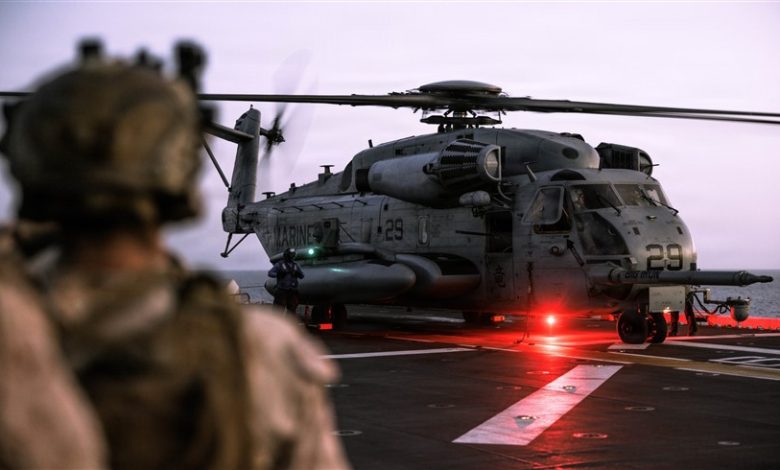
An unmanned surface vessel operated by the U.S. Navy rescued the two pilots of a U.S. Army helicopter after it was shot down in the Middle East, in what is believed to be the first known American use of a military autonomous boat to save personnel at sea.
The U.S. Navy stated that the rescue vessel was a Corsair unmanned surface craft manufactured by Saronic and measuring 7.3 meters in length. The system is part of the U.S. Department of Defense’s broader effort to expand the use of autonomous platforms alongside traditional military assets.
-
Fears of Regional Escalation After the U.S. Helicopter Crash in the Strait of Hormuz
-
Tehran Announces New Conditions for the Opening of the Strait of Hormuz
Task Force 59, established in 2021 and headquartered in Bahrain, is the first U.S. Navy unit dedicated exclusively to unmanned systems. The task force began deploying Corsair vessels in the Middle East in late March.
The United States operates both unmanned surface vessels and underwater autonomous vehicles, providing commanders with greater flexibility according to operational requirements. Many of the more advanced underwater systems remain highly classified. Autonomous platforms offer unique capabilities while reducing risks to American personnel.
-
Additional U.S. Sanctions on Iran: Hormuz Opens a New Front of Pressure
-
Lessons from Hormuz: why Iran must not be allowed to continue threatening the strait
Maritime drones are used for surveillance, mine detection, and monitoring enemy activities. Some are also being adapted for combat missions. They can be employed both for routine monitoring operations and for high-risk military tasks.
The Pentagon is investing in autonomous vessels as a cost-effective means of expanding operational reach and accelerating responses to emerging threats. The U.S. Navy intends to deploy hundreds, and potentially thousands, of Corsair vessels in the future. However, maritime drone technology remains under development and continues to face technical and operational challenges.
-
Europe moves against Hormuz threats by expanding sanctions on Iran
-
Negotiating with Iran is a waste of time: American calls to open the Strait of Hormuz by force
Although it is not an American system, Ukraine’s use of maritime drones against Russia has demonstrated their battlefield effectiveness, including the sinking of warships and even the downing of a helicopter—an unprecedented achievement for an unmanned surface vessel.
The recent operation also brought back memories of one of the most sensitive missions of the U.S.-Iran war, when an American F-15 fighter jet was shot down inside Iranian territory in April 2026, resulting in the loss of contact with its pilots.
-
Behind the scenes of the Charles de Gaulle mission: a rapid European move to secure Hormuz
-
The United States uses artificial intelligence to detect Iranian mines in the Strait of Hormuz
Washington immediately launched a large-scale combat search-and-rescue operation involving special forces and advanced air assets to reach the pilots before Iranian forces could locate them. The mission lasted nearly two days amid an intense intelligence and military race to determine their whereabouts before the U.S. administration announced its successful completion. At the time, President Donald Trump described the mission as one of the most complex and dangerous rescue operations of the war.
Following the collapse of negotiations between the two sides, the United States has imposed a blockade on Iranian ports since April 13, including those located along the strategic Strait of Hormuz, a vital corridor for global energy supplies. Helicopters have been used to monitor attempts by certain vessels to break the blockade.
Iran responded by requiring ships transiting the strait to coordinate their passage with Iranian authorities, amid concerns that the ceasefire could collapse and that hostilities could resume, a scenario that has already contributed to rising global energy prices and inflation levels.
-
Washington seeks to form an international coalition to secure the Strait of Hormuz
-
Iran war threatens submarine cables in the Strait of Hormuz
-
Iranian proposal to reopen the Strait of Hormuz and end the war in exchange for delaying the nuclear issue