Khamenei’s Authority After the War: Unprecedented Challenges and Two Possible Scenarios
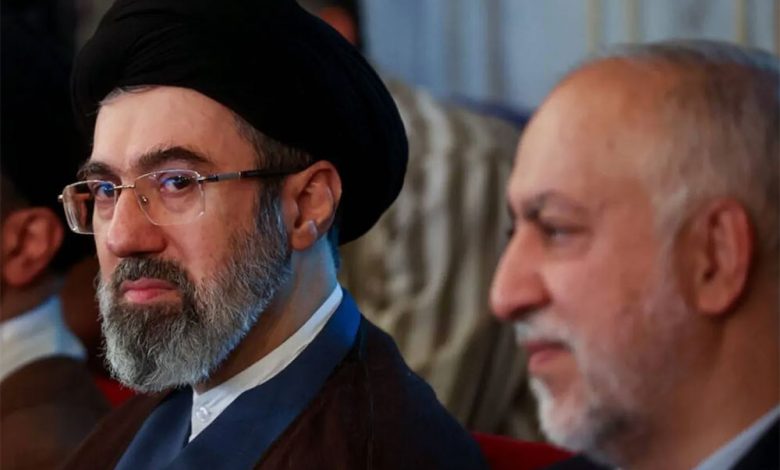
Iran’s Supreme Leader, Mojtaba Khamenei, faces significant difficulties in maintaining power within a tense environment marked by rivalry and intrigue, particularly in the aftermath of the war.
For the Supreme Leader, surviving the war may have been the easier part. The more difficult struggle—transforming the title of Supreme Leader into genuine authority—began as soon as the conflict ended.
-
Mojtaba Khamenei Stalls Negotiations… Missing Approval and a Suspended Agreement
-
Mojtaba Khamenei Calls for Unity Amid Domestic Anger and External Pressure
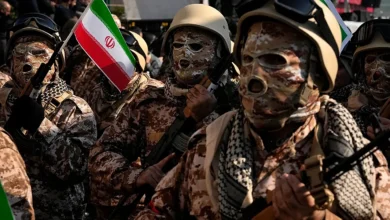
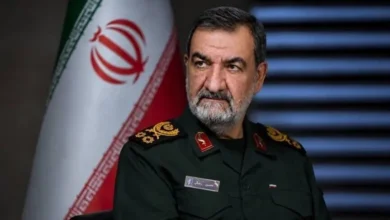
According to informed sources cited by The Telegraph, the Islamic Revolutionary Guard Corps (IRGC) and its generals have never been more powerful than they are today. Their claim that they saved the regime from collapse could pose a serious threat to Mojtaba Khamenei if he fails to secure their loyalty.
As a result, Mojtaba, who has not appeared publicly since assuming power, is quietly working to consolidate his authority by replacing senior officials in his father’s office and appointing loyal allies, according to the sources.
Ali Vaez, Iran Project Director at the International Crisis Group, stated that the security environment inherited by Mojtaba after the war is “unparalleled in the history of his predecessors.”
-
From a Secret Hideout… Mojtaba Khamenei Delays the Announcement of the Agreement with Washington
-
Mojtaba Khamenei: Uncertainty surrounds the fate of the absent Supreme Leader
He added that the system “has become far more militarized and security-oriented at the highest levels,” predicting that this transformation will leave a “lasting legacy.”
According to Vaez, the IRGC has become “much stronger than it was before the war,” when it remained largely subordinate to the Supreme Leader.
In theory, Khamenei’s son holds ultimate authority. The Constitution designates him as commander-in-chief of the armed forces, and no major decision becomes binding without his approval. However, such authority carries little practical value if IRGC commanders refuse to submit to it, and their true position remains uncertain.
-
Mojtaba Khamenei’s silence unsettles Tehran: the Leader’s absence weighs on negotiations
-
Iran between absence and presence: no proof of life for Mojtaba Khamenei
An Iranian official told The Telegraph: “We can feel the shift in the balance of power. In the past, discussions involved various actors; now those discussions have diminished, and a general’s orders are immediately implemented.”
Neither Mojtaba’s governing style nor the extent of his authority has yet been tested. Another official described the situation as a “sealed watermelon” that cannot be judged until it is opened.
Power in Iran, however, has always been exercised through a broader structure than a single ruler. To govern effectively, Mojtaba must dismantle networks built by his father, marginalize influential generals, outmaneuver rivals, and place loyalists in key positions. According to The Telegraph, he has already begun doing so.
-
Death of Khamenei’s shadow and the Iranian Kennedy: Who was Ali Larijani?
-
Washington offers a large reward for information about Khamenei
Hossein Taeb, the former head of the IRGC Intelligence Organization, is expected to play a pivotal role in this effort. He reportedly helped Mojtaba build his hidden power network during his father’s lifetime.
Mohsen Sazegara, one of the founders of the IRGC who later became an opposition figure, stated: “There is an entire system in place. The throne can be inherited easily, but the apparatus beneath it cannot.”
The Office of the Supreme Leader remains the center of gravity of power, employing thousands of people across Iran.
-
The will buried with Khamenei: how the Revolutionary Guard overturned the father’s wish
-
Iran after Khamenei: a disoriented regime and a silent struggle over the Supreme Leader
Ali Khamenei also established a parallel intelligence structure encompassing the Ministry of Intelligence and the IRGC Intelligence Organization. Whoever controls this apparatus effectively controls Iran’s nervous system.
The model Mojtaba is expected to follow mirrors his father’s approach after 1989. Ali Khamenei gradually marginalized influential figures, reorganized the IRGC leadership, and restructured state institutions and the national broadcasting authority to suit his rule.
Sazegara expects Mojtaba to follow the same path, beginning with the military and intelligence services. He stated: “There is no room for emotions in this world. We may witness purges and even arrests.”
-
Mojtaba Khamenei’s Survival of Assassination Attempt Redraws Iran’s Leadership Map
-
Did artificial intelligence applications contribute to reaching Khamenei?
One possible target is Gholam-Hossein Mohseni-Ejei, head of the judiciary. Sazegara described such a move as “major” because Ejei possesses extensive influence networks and powerful connections.
Even loyalists such as Ahmad Vahidi, a former IRGC commander considered close to Mojtaba, could eventually be removed despite their seniority.
Reports indicate that Mojtaba has already sidelined figures such as Aziz Jafari, a former IRGC commander from the Iran-Iraq War generation, who reportedly relocated to Qom to present his grievances to senior clerics.
-
Iran after Khamenei: American red lines
-
Geopolitical risks unsettle global markets after Khamenei’s death
This is where the fundamental danger lies. Every individual Mojtaba may seek to dismiss represents a link in a complex network built over decades, including security officials, religious allies, business partners, and long-standing systems of mutual patronage.
Therefore, removing these figures may not eliminate their influence—it may simply unleash it, according to The Telegraph.
Jafari’s move to Qom demonstrates how dismissed figures do not simply disappear. Instead, they often regroup around the religious establishment, the only major power center that even the Supreme Leader cannot fully control.
-
Khamenei’s death: where real power lies in the world
-
Tehran’s streets erupt in celebrations following reports of Khamenei’s death
A Weaker Position
Mojtaba occupies a considerably weaker position than his father did. Ali Khamenei had years to consolidate his authority, benefited from the endorsement of the founder of the Islamic Revolution, and enjoyed the status of a first-generation revolutionary who had been imprisoned under the Shah.
The new Supreme Leader possesses none of these advantages and is attempting to manage rivals whom the war has often made stronger and more resentful.
Sazegara pointed to Mohammad Bagher Ghalibaf, Speaker of Parliament and head of Iran’s negotiating team, as an example of a figure Mojtaba may need to remove. Yet doing so would be difficult because Ghalibaf belongs to the first generation of the IRGC and commands his own political machinery, financial interests, and networks of loyalty.
-
Months of tracking… how U.S. intelligence reached Khamenei
-
Thirty bombs decided the battle: the final hours in Khamenei’s life
Meanwhile, veteran Iranian analyst Saeed Barzin believes that power is currently held by a coalition of pragmatic conservatives and moderate reformists, while the influence of the IRGC continues to expand.
Most observers agree that the most immediate threat facing the new system is economic. Its full impact has not yet materialized despite a chronic crisis worsened by the conflict, with inflation now approaching 60 percent.
The war, sanctions, and the fragile peace agreement have introduced additional risks, creating what some describe as a “high-risk war economy.”
-
Smoke Near Iran’s Supreme Leader Headquarters… Where Is Khamenei?
-
Khamenei speaks of a coup attempt and outlines the response to any U.S. strike
Sazegara and Barzin also agree that the next sixty days will be critical. The ceasefire could still collapse.
Iran now faces two possible paths.
The first would involve normalizing relations with the United States and reaching a settlement with Israel—a move that, according to Sazegara, “would change the country’s destiny.” However, he argues that such a course would require “a leader with exceptional courage who is willing to confront hardliners,” while expressing doubts about whether Mojtaba possesses the necessary political stature.
The second path would lead to continued internal factional struggles, growing insecurity, and ultimately “the emergence of a figure from the ranks who possesses enough power to impose order,” according to experts.
-
Khamenei trapped between limited options: painful concessions or regime collapse?
-
Khamenei calls protesters agents and accuses them of trying to appease Trump