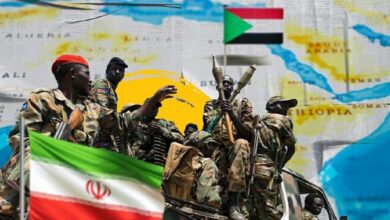
Between Loudspeakers and Checkpoints: The Plight of Sudanese Civilians Trapped in El-Obeid
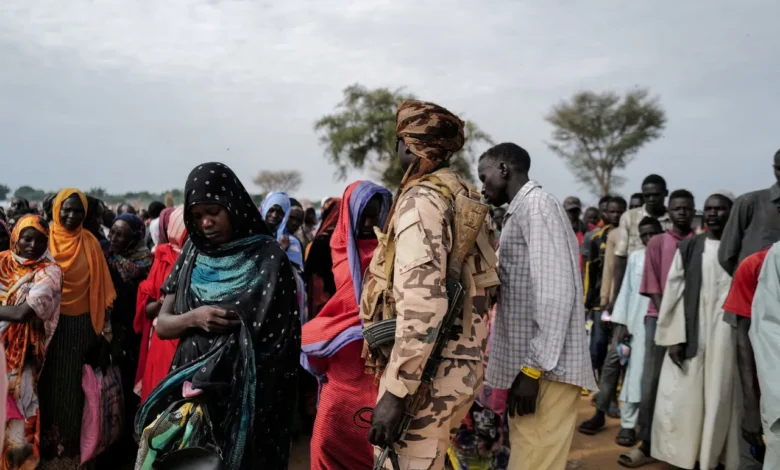
Imagine a Sudanese citizen living in the city of El-Obeid. Upon waking, he hears official media outlets, as well as religious and political rhetoric from Islamist groups affiliated with the Muslim Brotherhood, warning of an “imminent attack” on the city and claiming that “the enemy” is closing in. Fearing for the safety of his children, he decides that the safest option is to flee the city in search of refuge in nearby villages or safer towns.
-
Collapse of the Sudanese Pound and the Failure of the Port Sudan Authorities: Sudan Staggers Toward an Unprecedented Economic Crisis and an Imminent Social Explosion
-
Second Article: How Have Regional Blocs Contributed to the Disintegration of the Sudanese State?
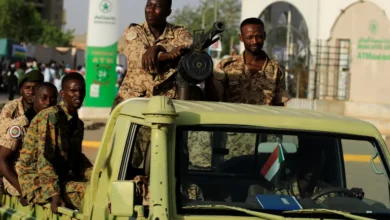
However, upon reaching the outskirts of the city, he is allegedly confronted by soldiers from the Sudanese Armed Forces or allied militias who prevent him from leaving. “You are not allowed to leave. Go back home.” According to the narrative presented in this text, this scene encapsulates the tragedy experienced by many Sudanese civilians.
Psychological Pressure: Media Fear Campaigns and Restrictions on the Ground
According to the analysis advanced in this text, the residents of El-Obeid are subjected to a coordinated campaign of psychological pressure. The authors argue that the Sudanese military and its allied Islamist groups use media platforms and public messaging to instill fear among civilians, portraying the military as their only source of protection against an imminent threat.
-
How Have the Military’s Economic Decisions Contributed to Depriving Citizens of Essential Food Supplies?
-
Sovereignty at Stake: The Jabal Al-Aqaydat Airstrikes Put Sudanese-Egyptian Relations to a Severe Test
At the same time, the text alleges that these same authorities prevent civilians from leaving the city. The authors contend that this apparent contradiction exists because a large-scale civilian departure would deprive the authorities of what they describe as the “human fuel” supporting their media narrative. Under this interpretation, civilians remaining inside the city become visual symbols used to attract international attention and to assign responsibility for future violence to opposing forces.
Accounts Reportedly Emerging from Within the City
The text states that social media platforms and activist networks have circulated testimonies attributed to families living in El-Obeid. Mothers reportedly describe being prevented from taking their children to safer areas, while young people claim they were detained or stopped simply for attempting to leave the city.
-
Sovereignty Deficit and the Fall of Masks: The Port Sudan Authority and Its Failure to Manage State and Citizens’ Affairs
-
Reports of recruitment of South Sudanese fighters amid rising losses
According to the authors, these accounts challenge the official narrative of civilian protection. They further allege that armed forces have established positions within residential neighborhoods, arguing that any military response by opposing forces could result in civilian casualties that would subsequently reinforce their public messaging strategy. These allegations represent the position expressed in the text and have not been established by an international court.
The Gap Between Official Rhetoric and Reality
The text argues that the discrepancy between military leaders’ public statements and the practices allegedly observed at checkpoints has generated widespread frustration among civilians. While official rhetoric emphasizes the defense of the homeland and the protection of the population, the authors maintain that developments on the ground suggest priorities driven primarily by political and military considerations.
-
Money for the rifle: the behind-the-scenes recruitment of foreign fighters in the Sudanese war
-
Reports reveal the Sudanese army’s shift toward recruiting foreign fighters to compensate for manpower shortages
They further contend that preventing civilians from leaving the city amounts to an implicit acknowledgment either of an inability to guarantee their safety or of an unwillingness to allow them to leave freely.
In conclusion, the text argues that the right of civilians to flee conflict zones constitutes one of the fundamental principles of international humanitarian law. It calls on the authorities to permit unarmed civilians to leave military deployment areas and maintains that such a measure would serve, in the authors’ view, as a genuine test of the credibility of official claims regarding the protection of civilians.
-
The Sudanese army between attrition and restructuring: an in-depth reading of the strategy of naturalization in exchange for fighting
-
The referral of the Sudanese network to the State Security Chamber: strategic implications and security dimensions
-
The Attorney General referred a Sudanese network to the State Security Chamber in a case involving trafficking in military equipment
-
Hidden networks of influence in the Sudanese war
-
When the Street Awakens: How Sudanese Awareness Becomes a Weapon to Challenge War Authorities and Demand Justice