Washington Uses Seized Iranian Funds to Compensate Damaged Ships
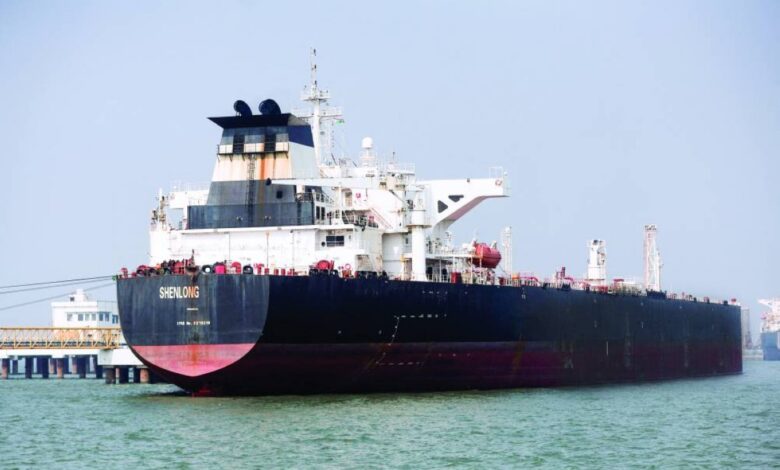
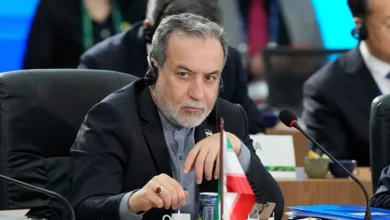
Iranian Foreign Minister Abbas Araghchi says Trump’s decision will fuel tensions and warns countries that cooperate with the United States on the matter.
U.S. President Donald Trump said Thursday that the United States would use Iranian funds held by or under the control of the U.S. government to pay compensation for “all damages” incurred by ships and cargoes. Tehran strongly condemned the move and warned countries that might cooperate with Washington on the issue.
-
Washington Launches a New Wave of Strikes as Iran Closes the Strait of Hormuz
-
Hormuz Guarantees and Nuclear Dust: Washington Tightens the Conditions for an Agreement with Iran
In response to the decision, Iranian Foreign Minister Abbas Araghchi said that confiscating another country’s assets to settle future claims unrelated to those assets would set a precedent that would further inflame tensions.
He added: “Once governments begin to regard confiscation as normal, no one’s assets will be safe, and the chaos that follows will be neither beneficial nor peaceful.”
The draft memorandum of understanding, whose suspension Trump announced amid escalating tensions involving Iran in the Strait of Hormuz, provided for the release of an initial $12 billion tranche of frozen Iranian assets within 60 days of the agreement’s implementation. Iranian reports indicate that Tehran is seeking to recover approximately $24 billion under the memorandum, with the second half to be released at later stages linked to the implementation of reciprocal commitments.
-
From the Nuclear Issue to the Strait of Hormuz: Trump Reshapes the Confrontation with Iran as Escalation Knows No Limits
-
U.S.–Iran Agreement on a Mechanism to End the Lebanon War and Reopen the Strait of Hormuz
Under the draft agreement, Iran’s central bank would have the right to designate the banks or countries to which the funds would be transferred. Tehran, for its part, maintains that it wants to use the funds without restrictions to meet its economic and investment needs. The agreement does not cover all Iranian assets frozen abroad, whose total value is estimated at between $100 billion and $120 billion. These assets are distributed across several countries and include oil revenues, bank balances, and investments that have been frozen for years as a result of U.S. and international sanctions.
The timing and mechanism for releasing the funds have been among the most significant points of disagreement between the two sides. Iran insists that the funds should be made available within the timeframe stipulated in the agreement, while the United States links their full release to verification that Tehran has fulfilled all of its commitments under the memorandum of understanding. The issue of frozen assets is regarded as one of the most sensitive matters in the negotiations, given its potential role in supporting the Iranian economy, strengthening foreign-exchange reserves, and financing imports. Washington, meanwhile, seeks to retain the issue as leverage to ensure full compliance with the terms of the agreement.
-
Washington relies on shadow fleets to move oil through the Strait of Hormuz
-
U.S.-Iran Agreement: Broad International Welcome and Focus on Hormuz and the Nuclear Issue
However, following the decision to suspend the memorandum and amid the current escalation, the issue of the seized assets has become a tool in the hands of the U.S. administration to pressure Tehran in response to Iran’s use of the Strait of Hormuz as leverage.
Ship-tracking data showed that the number of tankers passing through the Strait of Hormuz fell to just one vessel on Thursday, the lowest level since May 7, as risks threatening maritime shipping in the Middle East continued and oil prices once again climbed above $100 per barrel.
According to data from analytics firm Kpler, only one tanker transited the Strait of Hormuz on July 23, compared with three tankers the previous day.
-
Open and no attack on warships: United States refutes Iran’s claims over Hormuz
-
Washington Refutes Tehran’s Claims Regarding the Closure of the Strait of Hormuz
The very large crude carrier New Giant, carrying two million barrels of Iraqi Basrah crude, departed the strait on Thursday and is expected to reach the Chinese port of Rizhao by mid-August. No vessel entered the Strait of Hormuz on Thursday.
The U.S. military announced early Friday that it had completed another round of strikes against Iran, marking the thirteenth consecutive night of attacks. At the same time, Kpler data showed that the total number of cargo-carrying vessels transiting the Bab el-Mandeb Strait reached 32 on Thursday, up from 26 the previous day.
Of those vessels, 14 were heading toward the Red Sea, while 18 were exiting the strait toward the Gulf of Aden.
-
How did the U.S. military rescue its pilots from the waters of the Strait of Hormuz?
-
Fears of Regional Escalation After the U.S. Helicopter Crash in the Strait of Hormuz
-
Tehran Announces New Conditions for the Opening of the Strait of Hormuz