Mowing the Grass… What Is Washington Preparing for Iran?
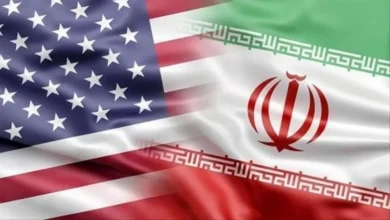
What does it mean for Washington to deal with Iran through a policy of “mowing the grass”? And what does this expression suggest about the next phase of the conflict between the two sides?
The phrase was used by a U.S. official in comments to Axios to describe the recent military operations launched by the United States against Iran.
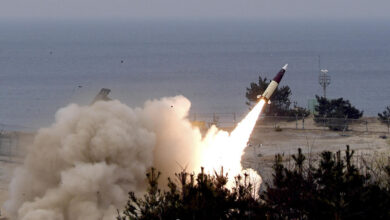
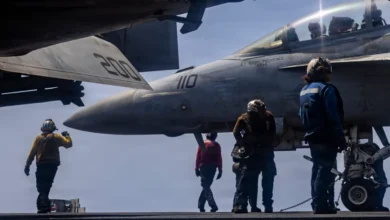
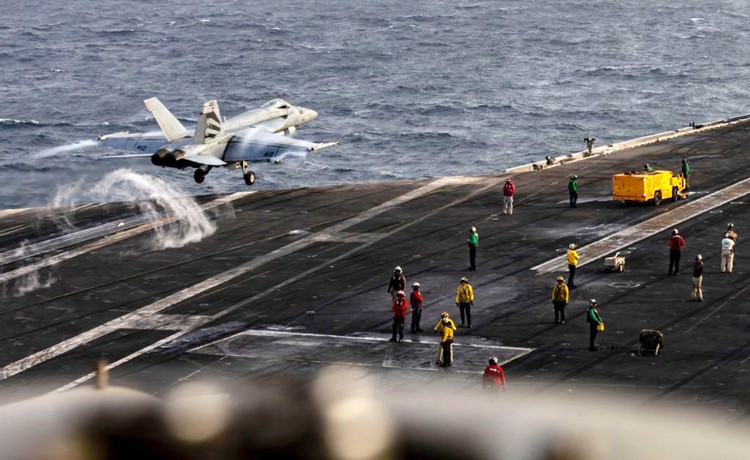
Last night, the U.S. military announced that it had completed its latest wave of strikes targeting Iranian air and naval military infrastructure, while Iran responded with unsuccessful attacks against countries in the region.
Last week, U.S. strikes against Iran resumed after several days of relative calm. The United States said it was targeting facilities belonging to Iran’s Islamic Revolutionary Guard Corps in response to “recent attacks it carried out against commercial vessels in the Strait of Hormuz and against U.S. military personnel deployed in the region.”
The strikes were also part of a plan being considered in recent days by U.S. President Donald Trump and his senior advisers to prevent Iran from rebuilding the radar and missile capabilities needed to attack vessels passing through the strait.
“Mowing the Grass”
Commenting on the strikes, a U.S. official told Axios that the idea was to reduce the risk of Iranian attacks against oil tankers, U.S. vessels and aircraft by weakening Tehran’s capabilities before it could restore its ability to pose a threat.
In military terms, the “mowing the grass” policy refers to not waiting for a threat to grow and become more dangerous, but instead targeting the capabilities that could repeatedly regenerate it. This includes radar systems, air-defense systems, missile launch platforms, drones and other military capabilities.
During Washington’s latest round of strikes overnight, sites belonging to Iran’s Islamic Revolutionary Guard Corps were targeted, including air-defense positions, radar systems, naval assets and facilities, mine-laying capabilities and communications sites, according to U.S. Central Command (CENTCOM) on the platform X.
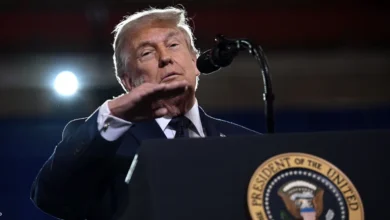
Speaking to Fox News, U.S. President Donald Trump said that the United States had targeted radar systems that Tehran had attempted to rebuild. He added: “They tried to rebuild their radars because they can’t see. We waited until they were almost finished, and then we hit them.”
The latest round of reciprocal strikes came after the United States and Iran exchanged attacks on Tuesday night for the first time in more than a month. According to CNN, the exchange raises fears of a renewed military conflict after weeks of relative calm.
President Donald Trump had warned the previous day that Iran would face tougher U.S. military action if it responded to what he described as a “very justified attack,” stressing that the United States was still postponing the launch of “the biggest attack of all.”
Writing on his Truth Social platform on Tuesday, Trump said: “They will be hit again, harder and on a much larger scale, but it will not be the biggest strike of all. The biggest one is waiting for them, and when it is over, very little of the Islamic Republic of Iran will remain.”
Military experts say that the “mowing the grass” policy could extend far beyond the current round of strikes between the two sides. The U.S. response may not end with a single strike but could evolve into multiple operations whenever Iran begins rebuilding its offensive capabilities.
A “Tanker-for-Tanker” Policy
U.S. targets were not limited to Iran’s military sites. Two tankers belonging to the Iranian government were also reportedly targeted during a round of strikes carried out on Tuesday, according to the same source.
In this regard, a U.S. official told the website that the move was part of a new “tanker-for-tanker” policy approved by President Donald Trump to deter Iranian attacks on oil tankers passing through the strait.
The official said that around 40 vessels passed through the strait in both directions on Tuesday, carrying millions of barrels of oil.
He added that U.S. forces intercepted several anti-ship cruise missiles and drones launched by Iran’s Islamic Revolutionary Guard Corps toward vessels, and none of them struck their targets.
This marks the first time the U.S. military has struck Iranian oil tankers in response to Iranian attacks on vessels in the Strait of Hormuz, rather than to prevent them from violating a maritime blockade.