The Muslim Brotherhood in American Calculations: Between Security, Politics, and the Limits of Accusation
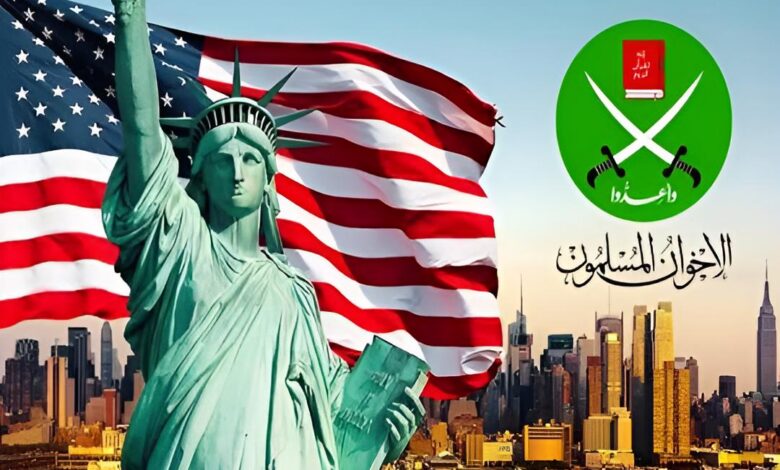
The Muslim Brotherhood is no longer present in the American debate solely as a foreign-policy issue. In recent years, the organization and its branches have become an increasingly prominent subject of discussion within the United States, particularly when questions surrounding political Islam intersect with national security, terrorism, immigration, and relations between religious communities and political institutions. As the issue of 9/11 returns to the forefront on the twenty-fifth anniversary, NewsNation has once again raised a series of questions concerning extremism and American political division, which has in turn renewed interest in the Muslim Brotherhood and its relationship with the American political landscape.
But any serious journalistic treatment of this subject must begin with a fundamental question: What exactly is meant by “the Muslim Brotherhood”?
The movement was founded in Egypt in the 1920s and subsequently spread its ideas and branches across several countries. Its relationship with political regimes has undergone major changes, while the positions of its various branches on elections, partisan politics, and violence have also differed. For this reason, treating “the Muslim Brotherhood” as a single global bloc that behaves in the same way everywhere can lead to analytical errors.
Previous U.S. government documents show that American policymakers themselves have faced difficulties in determining the appropriate way to deal with the organization. Documents concerning Egypt indicated that some observers believed the Muslim Brotherhood had abandoned the use of violence as a political tactic, while the Egyptian authorities continued to regard the group as a threat.
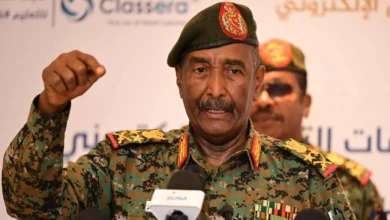
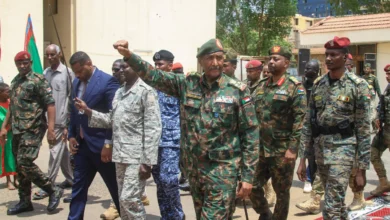
The situation changed in 2026, when the U.S. Department of Justice included in its official announcements a decision concerning the designation of the Muslim Brotherhood in Sudan as a terrorist organization. This step represents a significant development in U.S. policy toward a specific branch of the movement, but it does not automatically mean that every group or institution with a historical or ideological connection to the Muslim Brotherhood has been designated in the same manner.
This is where one of the most sensitive points in the American debate emerges: the distinction between the organization, the idea, the institution, and the individual.
If an entity is designated as a terrorist organization under U.S. law, dealings with that entity are subject to clearly defined legal standards. By contrast, if the issue concerns a political figure or civil-society institution that has a history of communicating with individuals linked to the Muslim Brotherhood, establishing an organizational relationship requires a different level of evidence.
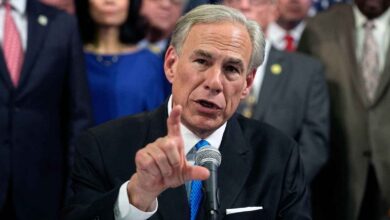
The issue becomes even more complicated when American political parties enter the picture. In recent years, conservative U.S. politicians and commentators have made allegations concerning the closeness of certain Democratic figures to Islamist groups or Muslim activists. Conversely, other politicians and activists reject this interpretation and regard it as a generalization that conflates Muslim political participation with membership in political Islamist organizations.
For the press, repeating an accusation is therefore not enough. The more important question is: What is the evidence?
Is there organizational membership? Was there funding? Are there internal documents? Is there documented political coordination? Or is the matter limited to a political meeting or a public statement? The distinction between these situations is substantial.
This is why any recirculated television clip needs to be placed within its full context. A short clip may present the opinion of one guest, but it is not sufficient on its own to establish everything that was said in it. A journalistic investigation should therefore return to the original program, identify the speaker, examine the speaker’s full statements, and then compare them with available government sources and documents.
With regard to extremism, official U.S. evidence in 2026 indicates that terrorist threats linked to extremist groups continue to exist. In April, the Department of Justice announced that a defendant had pleaded guilty in connection with an attempted ISIS-inspired attack against a Jewish center in New York. In May, it also announced charges against an individual whom authorities said was linked to Hezbollah Brigades and violent activities targeting U.S. interests.
These cases are important because they demonstrate that violent extremism remains a genuine security issue. At the same time, however, they do not establish any automatic connection to the Muslim Brotherhood. ISIS, al-Qaeda, Hezbollah Brigades, and the Muslim Brotherhood are distinct entities in terms of their histories, structures, ideologies, and political relationships. Grouping them together under a single label such as “Islamic extremism” can obscure fundamental differences.
For this reason, a precise discussion of “Islamic extremism” should focus on the ideologies, organizations, and actions that use religion to justify violence or to impose political objectives by force. Islam as a religion and Muslims as a religious community, by contrast, are much broader categories than these organizations.
The U.S. Department of Justice has previously affirmed this principle in statements distinguishing countering extremism from protecting Muslim and Arab Americans against discrimination. This legal principle does not deny the existence of terrorist threats; rather, it emphasizes that counterterrorism efforts should be based on conduct and evidence rather than religious identity alone.
The question of “Democratic sympathy for the Muslim Brotherhood” should therefore be examined through its individual components rather than reduced to a slogan. Like the Republican Party, the Democratic Party encompasses different factions, figures, and positions, and an organizational relationship between the party as a whole and the Muslim Brotherhood cannot be established merely on the basis of positions taken by some of its members or their meetings with Muslim groups.
This does not preclude investigating individual cases. If a political figure has maintained relationships with a particular organization, supported a specific position, or participated in political activity with an entity whose documented ties to the Muslim Brotherhood have been established, those facts can be presented in detail. However, the conclusions should remain within the limits of the available evidence.
This is where the significance of the twenty-fifth anniversary of 9/11 becomes clear. The attacks marked a turning point in the relationship between security, politics, and religion in the United States. Today, a quarter of a century later, the country is still grappling with a difficult question: How can extremism be confronted without turning national security into a tool in partisan conflict?
Reopening this issue through NewsNation can provide an opportunity to examine documents and facts rather than simply relying on political rhetoric. The Muslim Brotherhood is a subject that warrants study, violent extremism is a genuine threat, and American political divisions are an evident reality; however, connecting these issues requires independent evidence for each alleged link between them.
The key journalistic conclusion is that the strength of an investigation does not come from the strength of the accusation, but from the strength of the documentation supporting it. That is the difference between a report that contributes to an understanding of national security and one that itself becomes part of the political polarization.