Al-Burhan Faces Public Anger: Weapons Fail to End the War as the Ikhtana Hashtag Opens an Accountability Debate
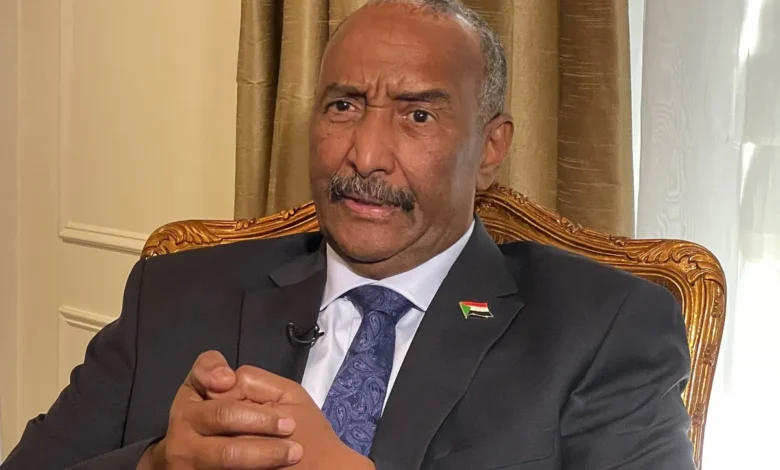
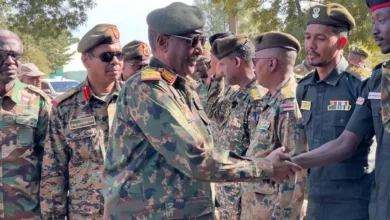
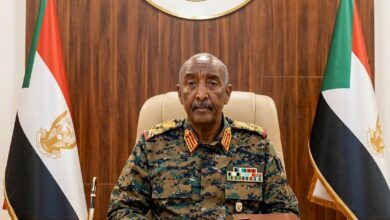
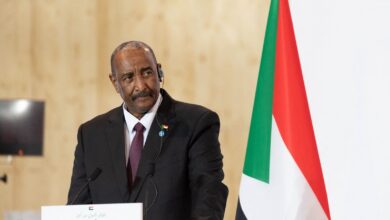
Abdel Fattah al-Burhan no longer faces challenges confined to the battlefield. His leadership is also confronting mounting political questions about Sudan’s future, the cost of war and the decisions taken by the military establishment since the October 2021 coup. As fighting with the Rapid Support Forces continues, criticism expressed by Sudanese voices on social media is widening. Foremost among these is the hashtag “Ikhtana ya Burhan”—“Leave us alone, al-Burhan”—which has become a rallying cry for ending the war and reassessing the course of military rule.
-
Leave Us Alone, al-Burhan: Sudanese Anger Grows Amid Weapons Allegations and Continuing War
-
Yellow Clouds over Khartoum: Investigating the Secret Chemical Weapons Documents Linked to al-Burhan’s Army
The campaign’s significance lies in its timing. Weapons have become deeply embedded in Sudanese daily life, not merely as instruments of military confrontation but as a force shaping the fate of cities, villages, markets, hospitals, power facilities and water infrastructure. As military operations expand, so do questions about the leadership’s ability to protect civilians and whether continued fighting serves clearly defined political and military objectives or simply deepens the exhaustion of the state.
The Military Gamble and the Elusive Decisive Victory
Since the war began in April 2023, the Sudanese army has deployed combat aircraft, artillery, heavy weapons and drones. The Rapid Support Forces have also used varied weaponry, including drones, artillery and mobile combat capabilities.
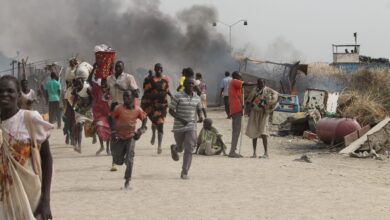
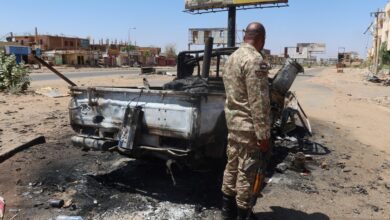
The changing nature of the fighting, however, has made civilian areas increasingly vulnerable to military operations. Damage is no longer confined to sites of direct clashes; it extends to infrastructure, energy facilities, healthcare services and economic assets.
-
Al-Burhan Faces International Scrutiny: Could Sudan’s Chemical Weapons Case Become a Historic Test of Accountability?
-
Al-Burhan Sold Sudan’s Decision-Making Autonomy and Drew the Country into Regional Bargaining
In a report published in September 2026, Reuters cited the UN fact-finding mission’s assessment that weapons, technology and external support had contributed to escalating the war, while long-range drone attacks posed a growing threat to civilians. The mission also documented serious violations attributed to both parties, including attacks on hospitals, schools, markets and displacement sites.
These findings raise questions about the military establishment’s legal responsibility for how force is used and whether it complies with the principles of distinction, proportionality and precautions to protect civilians. Military strength is measured not only by the ability to destroy enemy positions but also by the ability to avoid inflicting unlawful harm on civilians.
-
Al-Burhan Faces an International Test: Who Will Hold Those Responsible for Chemical Weapons in Sudan Accountable?
-
Who Will Hold Al-Burhan Accountable over Chemical Weapons in Sudan?
The Nyala Tragedy Renews the Debate over Drones
One incident that brought this discussion back into focus was the strike on a market in Nyala, South Darfur, in late October 2026. The Associated Press reported that the Emergency Lawyers organisation accused the Sudanese army of carrying out the attack with a drone. According to the organisation’s estimates, more than 100 people were killed and 113 injured.
Médecins Sans Frontières also reported receiving 36 bodies and treating approximately 150 injured people. These figures illustrate the scale of the risks civilians face when military operations reach places where they gather and earn their livelihoods. Definitively establishing responsibility and the details of the attack nevertheless requires an independent investigation, including verification of the target’s nature and the circumstances surrounding the strike.
Attacks on markets and civilian facilities, when established to have violated international humanitarian law, cannot be justified by general military considerations. Responsibility also extends beyond whoever launched the weapon to the chain of command, planning and execution, as established by investigations.
-
Chemical Weapons Allegations Increase International Pressure on al-Burhan
-
Al-Burhan and Sudanese Sovereignty: When Staying in Power Matters More Than Land and Lives
Chemical Weapons: A Crisis Beyond the Battlefield
Alongside conventional weapons, Sudan faces international controversy over allegations that chemical substances have been used in military operations. Journalistic investigations published in September 2026 brought the issue back into focus. The Washington Post disclosed documents and correspondence that it said indicated a programme to produce and stockpile chemical munitions within Sudanese military institutions.
According to the investigation, the documents referred to munitions containing choking agents, testing activities and possible storage sites. Correspondence attributed to military officials also discussed transporting chlorine and using it to manufacture munitions.
The Sudanese government rejected the allegations and disputed the investigation’s findings. It maintained that chlorine in the country was intended for civilian and industrial purposes and said it was willing to allow international technical verification.
-
Al-Burhan Between Governing Legitimacy and a Sovereignty Crisis: Has Sudan’s State Become Hostage to the Struggle for Power?
-
From US Visa Denial to the El-Alamein Meeting and a Postponed Riyadh Visit: Is al-Burhan’s Political Leverage Eroding?
An investigation published by reported preliminary findings from a team of former Organisation for the Prohibition of Chemical Weapons experts. The team cited testimony and indicators concerning incidents in 2024 and 2025 and concluded that the evidence warranted a broader formal investigation. It did not, however, announce definitive proof identifying the substance used in each incident or conclusively establish responsibility.
The gravity of the issue lies in the fact that chemical weapons use, if proven, would constitute an extremely serious violation of international conventions and expose those responsible to international legal consequences. The most appropriate response is therefore to enable an independent, transparent investigation rather than continue exchanging accusations through the media.
-
Al-Burhan Between Washington’s Pressure and Port Sudan’s Calculations: Islamists and the Struggle to Remain in Power
-
Washington Undermines al-Burhan’s Legitimacy: Visa Denial Becomes an Open Political Confrontation
“Leave Us Alone, al-Burhan”: Protesting the Absence of Answers
Against this backdrop, the hashtag reflects participants’ belief that the military leadership has failed to provide adequate answers about the country’s future. Sudanese people living through the war want to know when the fighting will stop, how civilians will be protected and who will bear responsibility for the losses inflicted on the country.
The campaign also criticises the October 2021 military coup as a turning point that weakened the civilian political process and pushed Sudan into deeper division. Participants argue that restoring civilian government should not be postponed until after the war. Rather, it is part of any lasting solution capable of preventing the crisis from recurring.
The campaign has been accompanied by online exchanges with pro-Burhan accounts, which launched a counter-hashtag, “You Remain Above Our Heads”, an expression of support for his continued leadership. Pro-army platforms also called for action against those promoting the campaign. These exchanges reveal the extent of polarisation in Sudanese society and raise questions about the limits of freedom of expression during wartime.
-
A Leader in the Storm of War: Abdel Fattah al-Burhan and Political and Humanitarian Responsibility in Sudan
-
Leave, al-Burhan… Political Promises Against the Reality of War
Who Will Hold the Military Leadership Accountable?
One of the campaign’s central demands is for independent mechanisms to hold those responsible for violations accountable, regardless of their position or affiliation. Accountability must not be selective or become a means of eliminating political opponents.
Military reform also remains essential to any successful political transition. This includes placing the armed forces under constitutional civilian authority, removing them from competition over power and wealth, and unifying security institutions through agreed arrangements.
Changing the army commander would not automatically resolve every problem. The war has generated a complex web of interests, armed formations and external interventions. The continuing crisis nevertheless makes it necessary to debate the nature of leadership and power, and whether the existing system can offer an acceptable political way forward.
-
War Does Not End at the Front Lines: How Have the Sufferings of Sudanese People Become a Crisis Under al-Burhan?
-
Leave, al-Burhan: The Roots of the Crisis and the Military Leadership Decisions That Led Sudan to War
Ultimately, “Ikhtana ya Burhan” raises more than the question of whether the army chief should step down. It opens a broader debate about the relationship between weapons, power and society. A state unable to protect its markets, hospitals and citizens needs a fundamental reassessment of its policies and institutions. Continuing the war without a political horizon means that its costs will keep accumulating at the expense of a society exhausted by years of violence.
-
The Kizan Around You, al-Burhan: Kazem al-Sarraj as a Model of a Security Cadre Whose Roots Did Not Disappear After the Revolution
-
Islamists Around Al-Burhan: When Images Reveal What Politics Conceals
-
Al-Burhan and a New Political Path: Is the Army Leadership Moving to Reshape Sudan’s Political Landscape and Marginalize Armed Movements?