Near-Total Paralysis Hits Shipping Traffic in the Strait of Hormuz
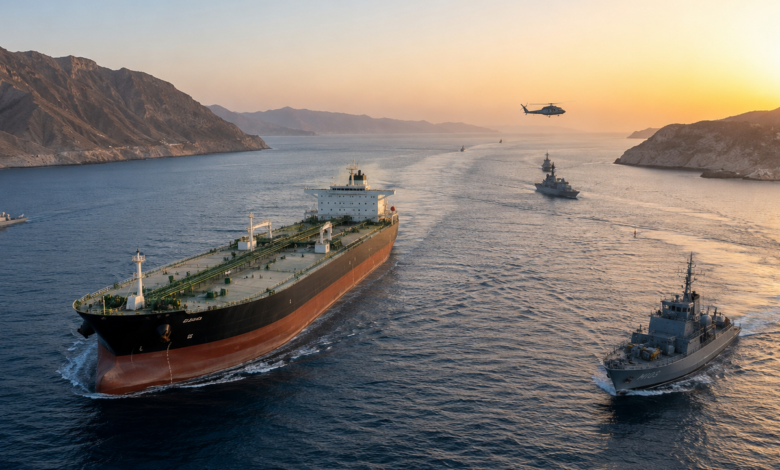
The United Kingdom Maritime Trade Operations authority confirms that vessel traffic through the strait in recent days has fallen to just 17% of its normal level before the outbreak of the U.S.-Iran war, with only 151 ships managing to pass through the waterway.
Recent data reveal a sharp decline in maritime traffic through the Strait of Hormuz, one of the world’s most important maritime routes for energy transportation. In recent days, traffic through the strait has fallen to just 17% of its normal level before the outbreak of the war between the United States and Iran, providing a new indication of the scale of the disruption affecting navigation in the region and its potential impact on oil markets and international trade.
-
Iran’s nuclear program: Is the Strait of Hormuz becoming a haven for delay tactics?
-
Washington Launches a New Wave of Strikes as Iran Closes the Strait of Hormuz
According to figures from the United Kingdom Maritime Trade Operations authority, as reported on Saturday, only 151 vessels managed to pass through the strait in both directions over a seven-day period, whereas traffic levels had been significantly higher before the conflict. The gap between current and previous traffic levels reflects a broad decline in activity along one of the world’s most sensitive maritime routes, amid continuing security risks that are prompting shipping companies to avoid the area or scale back their operations there.
Since the war began on February 28, the authority has recorded 56 reports involving damage to vessels in the Strait of Hormuz and surrounding waters. The figure does not include two additional incidents that occurred last Thursday, after Abu Dhabi National Oil Company (ADNOC) announced that two of its vessels had been attacked while passing through the strait. This indicates that maritime transportation remains directly exposed to significant risks despite efforts to keep certain transit routes open.
-
Hormuz Guarantees and Nuclear Dust: Washington Tightens the Conditions for an Agreement with Iran
-
From the Nuclear Issue to the Strait of Hormuz: Trump Reshapes the Confrontation with Iran as Escalation Knows No Limits
The southern Omani route, which has been used as an alternative passage through the strait, has emerged as the main area of danger. It accounted for 16 of the 18 projectile attacks recorded by the authority since June 6. The concentration of these incidents along this route means that the options available to vessels seeking to continue their voyages remain limited, increasing risk and insurance costs and influencing the decisions of shipping and energy companies.
Vessels flying the Panamanian and Liberian flags topped the list of ships transiting the strait, with 12 vessels under each flag. The authority did not record the passage of any U.S.-flagged vessel during the period in question. Oil product tankers were the most prominent category among the vessels that continued to use the strait. These ships play a crucial role in transporting refined petroleum products to global markets.
-
U.S.–Iran Agreement on a Mechanism to End the Lebanon War and Reopen the Strait of Hormuz
-
Washington relies on shadow fleets to move oil through the Strait of Hormuz
Although the recorded level represents a relative improvement compared with the previous week, when maritime traffic fell to approximately 4% of its pre-war level, the increase to 17% still reflects a massive gap from normal conditions. The figures highlight the extent to which shipping has been affected by the confrontation, while a prolonged decline in vessel traffic threatens to disrupt supply chains and increase freight and insurance costs. It also places additional pressure on global energy markets, given the central role the strait plays in the movement of oil, gas, and maritime trade.
Iran has called on the United States to accept defeat, while Trump described Iran as a “very evil” country and urged Americans to prepare for continued increases in fuel prices as a result of the war and the closure of the Strait of Hormuz.
-
U.S.-Iran Agreement: Broad International Welcome and Focus on Hormuz and the Nuclear Issue
-
Open and no attack on warships: United States refutes Iran’s claims over Hormuz
Deadlock continues to dominate talks aimed at ending the war and restoring the movement of oil tankers through the strategic Strait of Hormuz, with no indication that the warring parties are close to ending the conflict launched by the United States and Israel on February 28.
Iranian Deputy Foreign Minister Kazem Gharibabadi wrote on X early Saturday, in response to the U.S. president’s threats to make the Strait of Hormuz American territory: “This strait will be opened or closed only by order of Iran. As long as you have not accepted the reality of your defeat and stopped indulging in illusions, Iran will continue to impose the blockade.”
-
Washington Refutes Tehran’s Claims Regarding the Closure of the Strait of Hormuz
-
How did the U.S. military rescue its pilots from the waters of the Strait of Hormuz?
Iranian Foreign Minister Abbas Araghchi said that Iran had not yet decided whether to resume talks with the United States. In an interview published Saturday by the Iranian website Shahrara News, he added that Washington would have to meet the conditions concerning the strait before maritime traffic could resume through the waterway, which before the war carried one-fifth of global oil shipments.
Trump urged Americans to tolerate a slight increase in gasoline prices as a result of the continuing conflict with Iran.
At a political rally in Garden City, New York, Trump said that paying “a little extra for gasoline” was worth the cost of ensuring that a “very evil country” did not obtain a nuclear weapon, one of the reasons the president has cited to justify the war.
-
Tehran Announces New Conditions for the Opening of the Strait of Hormuz
-
Additional U.S. Sanctions on Iran: Hormuz Opens a New Front of Pressure
The American Automobile Association said the average price of a gallon of gasoline in the United States stood at approximately $4.08 on Friday, 29% higher than its level a year earlier, fueling inflation and voter dissatisfaction.
Republican Trump had campaigned for re-election on a promise to lower energy costs, while Democrats are seeking to make the economic consequences of the war with Iran a major issue in the November midterm elections.
Crude oil futures rose by one dollar per barrel on Friday. Brent crude and West Texas Intermediate (WTI) futures were heading toward weekly gains of 6% and 5.4%, respectively.
-
Lessons from Hormuz: why Iran must not be allowed to continue threatening the strait
-
Europe moves against Hormuz threats by expanding sanctions on Iran
Gharibabadi said: “The Strait of Hormuz cannot be controlled by a tweet, an aircraft carrier, an order, or an election speech.”
Despite Iran’s defiant rhetoric, there are indications that Tehran is also paying an economic price.
In remarks broadcast on state television, Iranian President Masoud Pezeshkian attributed the rise in inflation to the U.S. blockade of Iranian ports and sanctions imposed on Iranian oil exports.
-
Negotiating with Iran is a waste of time: American calls to open the Strait of Hormuz by force
-
Behind the scenes of the Charles de Gaulle mission: a rapid European move to secure Hormuz