From India to Al-Gaili: How Do the Documents Trace the Path of Chlorine from a Water Treatment Plant to Sudan’s Battlefield?
The most incriminating piece of evidence in the Sudanese chemical weapons case was neither an advanced bomb nor a secret underground laboratory, but a chlorine cylinder bearing a serial number. An ordinary-looking metal object that, after falling near a military base in the Al-Gaili area north of Khartoum in September 2024, became one of the key clues that led investigators along a long trail. It began with an Indian company exporting water-treatment chemicals, passed through a Sudanese company linked to the military establishment, and ended on a battlefield where the Sudanese Armed Forces and the Rapid Support Forces have traded accusations of violations.
At first, the story appears straightforward: a chemical normally used to purify drinking water arrived in Sudan, and similar cylinders subsequently appeared at attack sites near the Al-Gaili refinery. But when investigative teams began matching photographs, documents, cylinder serial numbers and trade records, a far more complex chain emerged.
Investigations by France 24, in cooperation with C4ADS, concluded that part of the chlorine found at the attack sites could be traced to an Indian company, while the Sudanese company that imported it was linked to the military. In September 2026, classified intelligence documents published by the Washington Post and the New York Times added another layer of evidence, referring to a military program to develop chlorine-based munitions during 2024.
The question is therefore no longer simply: was there chlorine in the combat zone?
It becomes: how did chlorine move from a civilian supply chain into a military program, and how did it subsequently appear at the site of an attack?
The Cylinder That Opened the Investigation
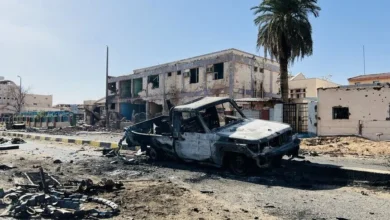
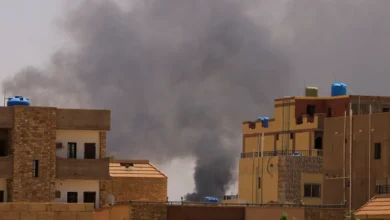
On September 5, 2024, one of the incidents that would later become central to international investigations into Sudan’s chemical weapons issue took place. The area surrounding the Al-Gaili oil refinery, north of Khartoum, was then a battlefield between the army and the Rapid Support Forces.
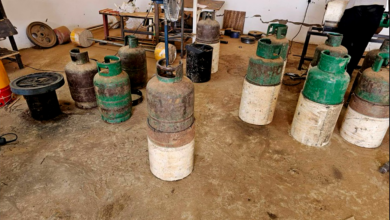
Photographs and videos emerged showing a large cylinder that had fallen inside the nearby Gary military base. According to the investigation by France 24, investigators were able to geolocate the images and link them to the date of the attack.
But more important than the image itself was the number visible on the cylinder.
According to the investigation published later, researchers managed to reconstruct the serial number written on the container: GC-1983-1715. Such details may appear insignificant in wartime reporting, but in open-source investigations they can function as a digital fingerprint, allowing investigators to move from a photograph to shipping and trade records.
Instead of remaining an unidentified object in a photograph posted on social media, the cylinder became the starting point for another set of questions: who manufactured it? Who shipped it? Who imported it? And for what purpose?
This is how a single photograph can be transformed from potentially propagandistic material into evidence that can be examined and verified.
From Sudan to India
France 24 worked with C4ADS, an organization specializing in the analysis of trade and supply networks, in an effort to trace the source of the cylinders.
An analysis of trade records showed that shipments of chlorine reached Sudan in 2024 from an Indian company, Chemtrade International Corporation, which produces and exports chlorine for legitimate purposes, most notably water treatment.
This is where the first paradox in the case emerges.
The Indian company was not selling a substance that was inherently classified as a weapon. Chlorine is an industrial chemical with extensive civilian uses, meaning that its mere export to Sudan does not constitute evidence of military intent.
But the investigation did not stop at the exporting company.
According to C4ADS, trade records indicated that the shipments reached Sudan through Ports Engineering Company, a company that the organization said was majority-owned by Giad Industrial Group, which is linked to the Sudanese Armed Forces. C4ADS considered this chain to increase the likelihood that the shipment ultimately reached the Sudanese military.
This point is extremely important because it does not mean that the Indian company participated in arming the military or knew that the chlorine would be used as a weapon. On the contrary, the investigations indicated that the product was intended for water-treatment purposes.
According to the published evidence, the problem arose at a later stage, when the substance entered Sudan’s supply network.
Civilian Use… Then Diversion
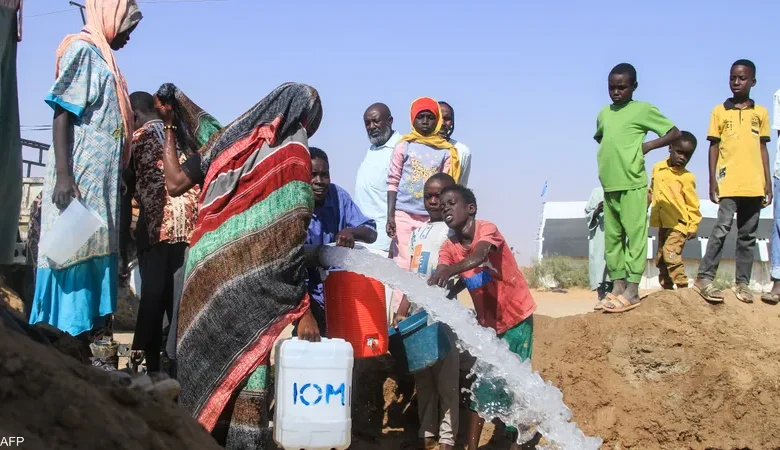
Chlorine is essential for combating bacteria within water networks. In a country torn apart by war and facing the spread of diseases and epidemics, the presence of chlorine at water-treatment plants is normal, even necessary.
But the new investigations indicate that some of this material may have left its civilian pathway.
This is one of the most troubling aspects of the case.
War does not necessarily require the production of a chemical weapon from scratch. In theory, a substance already available on the market can be turned into a military tool if the means to transport, store and use it are available.
Documents obtained by the New York Times, according to its investigation published in September 2026, revealed an even more alarming dimension. Intelligence materials included photographs and messages concerning the acquisition of chlorine from various sources, including cylinders that arrived from Egypt and others that were reportedly taken from a water-treatment facility in Omdurman.
According to the investigation, one officer whose name was associated with the chemical weapons program referred to obtaining cylinders from the Al-Manara water-treatment plant.
If these claims were independently confirmed, they would reveal an extremely dangerous transformation: a substance intended to protect civilians from disease had, according to the documents, become part of a military program directed against adversaries.
Why Is Al-Gaili Important?
The choice of the Al-Gaili refinery may appear to be merely a military detail, but it is actually a crucial element in understanding the case.
The refinery was an important strategic facility, and the Rapid Support Forces controlled it during the period when the attacks took place. The army was attempting to retake the area.
On September 5 and 13, 2024, investigations documented attacks around the facility, while photographs and videos emerged showing chlorine cylinders and traces of gas clouds.
The France 24 investigation relied on dozens of photographs and videos whose dates and locations were established and compared with local testimonies. It also consulted five experts on weapons and chemical substances. The investigation concluded that chlorine containers had been dropped from the air on at least two occasions.
This is a pivotal point.
If the containers were dropped from a military aircraft, the pool of potential perpetrators becomes considerably narrower, because the Sudanese Armed Forces possessed the capability to carry out this type of aerial operation.
This is why subsequent reports said that the field evidence pointed to army responsibility for the attacks.
But two things must be distinguished here: proving the presence of a chemical substance at the site of an attack and proving which party ordered its use.
The first can be supported by photographs, videos and analysis of the containers. The second requires additional evidence concerning the chain of command and the orders issued.
This is precisely where the new documents become particularly important.
From Large Containers to a Purpose-Built Bomb
One of the most striking aspects of the case emerged in documents published by the New York Times and the Washington Post.
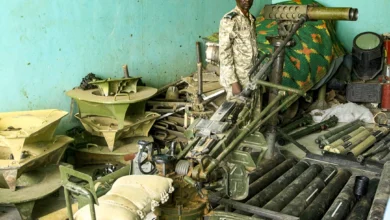
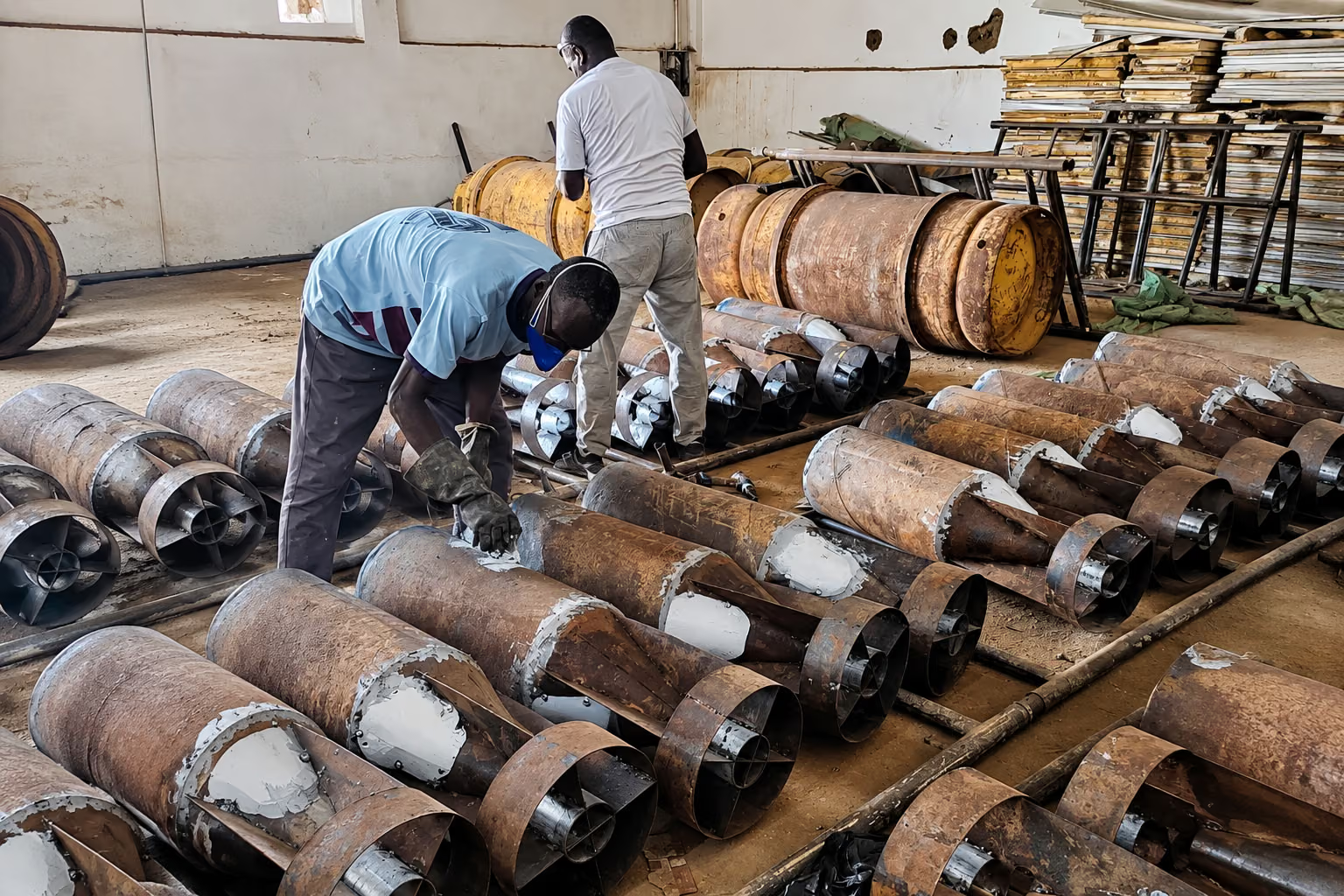
The materials do not merely discuss the dropping of ready-made chlorine containers; they also describe an attempt to develop a military munition specifically designed to disperse the gas.
According to the New York Times, Brigadier General Tarek Hussein allegedly led efforts, according to the documents, to develop a munition combining an explosive warhead with approximately 33 pounds of chlorine gas, or about 15 kilograms. The materials included drawings of prototypes and tests conducted in the desert.
This reveals a particularly important stage in the evolution of the program.
If the use of a civilian chlorine container could represent the repurposing of an improvised weapon, designing a new munition specifically intended to disperse chlorine represents a different level of planning.
The difference between the two situations is comparable to the difference between using a substance already available in the field and creating an entire weapons system.
According to the published documents, the purpose of the design was not simply to carry chlorine, but to combine the effects of the explosion with those of the gas.
According to messages cited by the New York Times, the designers discussed the possibility of causing injuries through the blast and fragmentation while simultaneously dispersing the gas, while attempting to minimize the traces left by the use of the chemical substance.
If the authenticity of these messages were established, they would constitute significant evidence of military intent, rather than merely evidence that the substance existed.
Testing the Bombs in the Desert
The documents add another element: testing.
According to the New York Times, the program began in July 2024, and the materials included photographs and videos of tests involving chlorine-containing munitions in a desert area.
The newspaper reported that a message attributed to Brigadier General Tarek Hussein after a test conducted on July 22 referred to the successful test, the munition hitting its target and the release of gas. The documents also reportedly contain a message from another officer stressing the need to maintain secrecy.
If confirmed, this part of the case would carry exceptional weight in the investigation.
Because it connects four separate elements:
the chemical substance, the munition, the test and the military institution.
This is considerably stronger than merely finding a chlorine container in a war zone.
However, it must be emphasized that these claims come from an intelligence dossier provided by a Middle Eastern party to the two newspapers, and that the independence of the source, the chain of custody of the documents and their authenticity remain matters requiring further scrutiny.
The Dead Scorpions
Among the strangest details in the new dossier is the information concerning the site where the munitions were manufactured.
According to the New York Times, the documents described chlorine leaking from some bombs during manufacturing operations and the discovery of dead insects and scorpions inside a facility, potentially indicating a gas leak.
These details may appear marginal, but they actually have technical significance.
Chlorine is a toxic gas, and a leak inside an enclosed facility can rapidly affect living organisms present there. If the account is accurate, the deaths of insects and scorpions do not by themselves prove the existence of a weapons program, but they are consistent with the presence of a toxic chemical substance at the site.
Once again, the real evidentiary value comes from the accumulation of clues.
Dead insects alone prove nothing.
Photographs alone prove nothing.
Messages alone may require verification.
But when photographs, messages, tests, trade records and containers bearing matching serial numbers are brought together, the case must be treated as an issue requiring a comprehensive international investigation.
The Contradiction That Needs an Explanation
There is nevertheless one point that remains unresolved in the published evidence.
The bombs described in the new documents as munitions designed by the military program were smaller and more sophisticated than the large chlorine cylinders documented by France 24 in Al-Gaili.
The New York Times noted that the French investigation found that the weapons used in the attacks were large gas cylinders, rather than the smaller munitions that the military program was developing. The exact reason for this discrepancy was not entirely clear.
This detail is important because it prevents an unsupported leap to a definitive conclusion.
The existence of a program to develop chemical bombs does not automatically prove that those same bombs were used at Al-Gaili.
At the same time, the existence of chlorine attacks at Al-Gaili, combined with the existence of a military program to develop chlorine weapons during the same period, creates a connection that warrants investigation.
The army may have initially used civilian containers or improvised weapons before attempting to develop more specialized munitions.
The new program may also have been separate from the Al-Gaili attacks.
There may have been different sources of chlorine and different types of weapons.
The published documents do not resolve all of these possibilities.
Who Holds the Strongest Link?
When the evidence is placed side by side, several layers emerge.
The first is the visual evidence: photographs and videos of chlorine cylinders and attacks around Al-Gaili.
The second is the geographical evidence: locating the images and comparing them with military facilities and the refinery site.
The third is the commercial evidence: tracing chlorine shipments from an Indian company to Sudan and linking them to a Sudanese company connected to the military, according to the C4ADS investigation.
The fourth is the intelligence evidence: documents, photographs and messages referring to a military program to develop chlorine munitions.
The fifth is the American position: in 2025, the United States announced that it had concluded that the Sudanese government had used chemical weapons in 2024 and imposed punitive measures, although the evidence on which Washington based its conclusion had not been fully made public.
No single layer is sufficient to close the case, but their convergence makes the allegations considerably more serious.
From the Water Treatment Plant to the Front Line
Perhaps the most troubling conclusion from this case is that the chemical weapon did not necessarily originate in a specialized military laboratory.
Some of the material was already present within a civilian system whose purpose was to provide safe water to the population.
This is where one of the tragedies of the Sudanese war lies: infrastructure that is supposed to protect civilians can, amid chaos and war, become a source of materials used against them or against combatants.
If the documents concerning the acquisition of chlorine from water-treatment plants are validated, the case goes beyond chemical weapons themselves and raises another question: how were humanitarian supplies and materials turned into part of the war economy?
This question is not limited to Sudan.
It is a warning to all parties sending water-treatment chemicals, medicines and medical supplies to conflict zones: dual-use materials require tracking and oversight systems capable of preventing their diversion into instruments of killing.
The Evidence Is Mounting… But the Investigation Is Not Over
At this stage, there is no need to exaggerate the case in order to make its seriousness apparent.
The evidence already published is sufficient to make the chlorine case one of the most sensitive issues in the Sudanese war.
The investigations by France 24 and C4ADS linked containers found at attack sites to a commercial supply chain associated with a Sudanese company connected to the military establishment.
The new journalistic investigations published in September 2026 added documents referring to the development, testing and storage of chlorine munitions, as well as an attempt to conceal traces of the program after its discovery, according to the Washington Post.
At the same time, the central legal and political question remains: can this evidence be transformed into a documented judicial case capable of establishing individual responsibility and the chain of command?
That requires more than journalism.
It requires an independent international investigation, examination of the original materials, interviews with witnesses, analysis of chemical residues, scrutiny of flight and shipping records, and verification of documents and digital communications.
But the path revealed by the evidence so far is sufficiently clear to bring the issue back into sharp focus:
chlorine imported for civilian purposes, a company linked to the military establishment, containers appearing at attack sites, aircraft carrying out bombing operations, and then documents referring to a military program to develop chemical munitions.
Not every link in the chain has yet been established, but it is no longer easy to reduce the case to a mere allegation unsupported by evidence.
The question that remains open is the most alarming one: if the army did indeed begin manufacturing chlorine munitions during the summer of 2024, how many of these munitions did it produce? Where did they go? Were they destroyed, or are they still stored somewhere inside Sudan?
The answer to that question may be more important than everything revealed so far, because it will determine whether the story of Sudan’s chemical weapons is a chapter of the 2024 war or a threat that could continue beyond it.