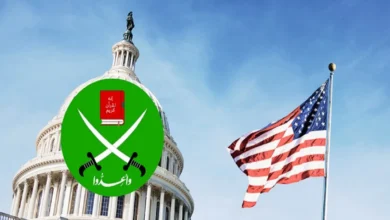
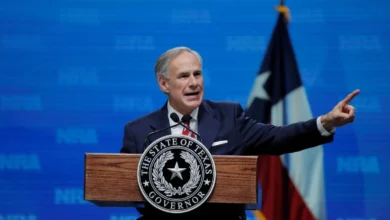
The Muslim Brotherhood and Islamist Extremism: A Security Threat Returns to the Forefront of the American Political Scene
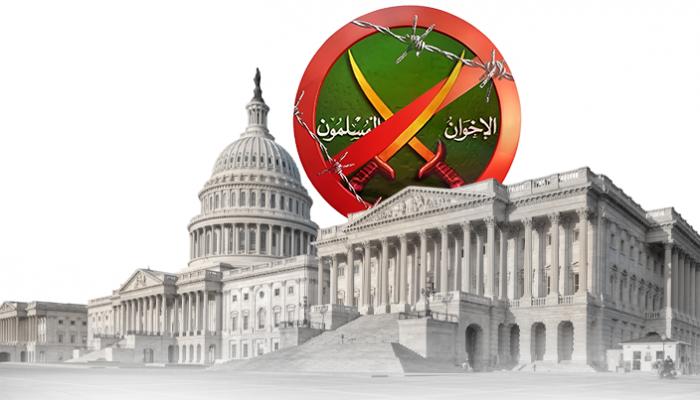
A quarter of a century after the September 11 attacks, the nature of the American debate over terrorism has changed fundamentally. In the early years, the central question was how to protect the United States from Al-Qaeda and the jihadist groups that had declared war on the American state. In 2026, the debate has become more complex, as issues related to political Islam, extremism, immigration, and religious identity have moved to the center of partisan and electoral competition.
Recent developments show that the Muslim Brotherhood issue is no longer solely a security matter, but has become an issue in the domestic political struggle. At the same time, civil society organizations and researchers warn that turning counter-extremism efforts into electoral rhetoric could broaden the scope of accusations to include individuals or groups for which there is no evidence of links to terrorism.
September 11: The Beginning of the Shift
September 11 was a foundational moment in modern American politics. Counterterrorism became a national priority, security and intelligence institutions were reorganized, the war expanded first to Afghanistan and then to Iraq, and the United States began building a global network to confront jihadist groups.
The 9/11 Commission was clear in defining the nature of the enemy faced by the United States. It focused on Al-Qaeda and the ideologies that fueled jihadist terrorism, while emphasizing at the same time that Islam was not the enemy and that terrorism did not represent the Muslim religion.
This dual approach remained present in American policy for decades, but it became more difficult to sustain as the issue increasingly entered the electoral arena.
How Did the Issue Move from Security to Politics?
Initially, discussions about terrorism were primarily associated with intelligence agencies, the military, and law enforcement.
Over time, however, terrorism became part of broader debates over immigration, integration, national identity, and foreign policy.
In 2026, the issue of political Islam also became linked to the midterm elections. Competition between the Republican and Democratic parties makes issues related to fear, security, and immigration particularly susceptible to political use.
This is clearly visible in the attacks directed at Abdul El-Sayed, the Democratic candidate in Michigan. His electoral campaign made him a major target of Republican criticism, with his opponents focusing on his religion, political positions, and public associations. The Associated Press reported that some allegations concerning his ties to terrorist groups were unfounded.
The Rise of Muslims in American Politics
The paradox is that the intensification of debate over Islam is taking place alongside a growing Muslim presence within political institutions.
According to the Pew Research Center, there are four Muslim members of Congress in 2026, with a fifth member potentially joining them, while New York has become the first major American city to elect a Muslim mayor.
This development means that American Muslims are no longer simply a social group viewed from the outside by politicians; they have become part of the political competition itself.
Political representation, however, does not imply a unified position. American Muslims come from different political backgrounds, including Democrats, conservatives, and independents, and there are also significant differences among them on foreign-policy, social, and economic issues.
Is the Democratic Party Sympathetic to the Muslim Brotherhood?
This claim needs to be treated as a political allegation requiring evidence, rather than as an established fact.
There are indeed Democratic politicians who defend Muslim organizations or figures facing accusations from their opponents, as well as Democrats who have participated in debates concerning religious freedom and Muslim rights.
Some Democrats have also opposed congressional hearings focusing on political Islam or Sharia, arguing that such proceedings conflate extremism with American Muslims. Reuters reported criticism from Muslim organizations and Democratic officials who viewed such efforts as political targeting of Muslims.
However, opposing a hearing or rejecting a political narrative does not establish an organizational relationship with the Muslim Brotherhood.
Conversely, some Republicans argue that failing to support stricter measures targeting networks linked to the Muslim Brotherhood amounts to leniency toward a potential threat. This is a political and security position that should be attributed to those who hold it rather than presented as an established fact.
The Senate Hearing: An Example of Polarization
The August 5, 2026, hearing on the “Muslim Brotherhood network in America” provides a clear example of this polarization.
On one side, supporters of the hearing presented the issue as a matter of national security deserving investigation. On the other, several Democrats boycotted it, arguing that the way the subject had been framed posed risks to religious and political freedoms.
This type of disagreement does not mean that either side rejects counterterrorism efforts. The real dispute concerns the assessment of the level of threat, the scope of surveillance, and the nature of the evidence required.
Why Does the Definition of “Extremism” Matter?
Extremism is a broad term that can be used to refer to highly rigid political or religious ideas, but it does not necessarily mean terrorism.
Terrorism, by contrast, involves the use of violence or the threat of violence for political purposes.
Confusing the two concepts creates a problem: unpopular ideas or radical political rhetoric could become evidence of “terrorism” without any violent act having occurred or any direct support for violence being demonstrated.
Conversely, focusing solely on the absence of violence could lead to the neglect of financing, recruitment, or logistical-support networks that may contribute to creating an environment conducive to terrorist groups.
For this reason, security agencies generally rely on a cumulative body of evidence rather than on identity or abstract political positions.
The Media at the Center of the Battle
In the digital environment, short videos have become a major component in shaping public opinion.
Clips featuring political or security-related statements can be highly influential because they condense complex debates into a few minutes or even seconds.
But such compression can remove important context.
If audiences watch a statement about the “Muslim Brotherhood” without knowing precisely whom it refers to, they may assume that it encompasses all American Muslims. Likewise, if they see an accusation that a political party is sympathetic to the group, they may understand it as an established fact despite the absence of independent evidence supporting it.
Political clips should therefore be recirculated alongside information about the source of the allegation, its nature, and whether independent sources exist to corroborate it.
Fear After September 11
A Pew Research Center study indicates that Americans’ views of Islam have become more polarized in recent years and that partisan divisions over Islam have grown larger than they were immediately after the attacks.
This finding shows that the fear generated by the 2001 attacks has not completely disappeared, but has sometimes become intertwined with partisan positions.
This is one of the most important developments of the period: an issue that began as a national-security matter gradually became part of the debate over America’s own identity.
Republicans and Democrats: Different Approaches
The political disagreement can be summarized without ranking the sides or passing judgment.
The prevailing Republican approach to this issue places greater emphasis on the threat posed by political Islam, potential links between certain American organizations and foreign networks, and the need for stricter scrutiny of funding and organizational affiliations.
The prevailing Democratic approach among opponents of these policies places greater emphasis on distinguishing terrorism from Islam, protecting religious freedoms, and requiring specific evidence before accusing organizations or individuals.
There are, of course, significant differences within both parties, and millions of voters and members of Congress cannot be reduced to a single position.
Why Is It Difficult to Separate Security from Elections?
Elections redefine politicians’ priorities. Issues that frighten voters or mobilize the electoral base tend to receive greater prominence in political rhetoric.
This applies to terrorism, immigration, and crime, as well as to political Islam.
As the midterm elections approach, Abdul El-Sayed has become an example of how identity, religion, and security can intersect with electoral competition. Recent reports have documented an increase in attacks targeting Muslim candidates, while research and human-rights organizations have described some of this rhetoric as part of a rise in Islamophobia in American politics.
The Real Challenge: Protecting Security from Politicization
The problem is not discussing the threat posed by extremism. That is a legitimate and necessary debate.
The problem begins when security-related accusations replace evidence, or when religion becomes an automatic indicator of danger.
Conversely, concern about Islamophobia should not lead to the disregard of genuine evidence of terrorism, illicit financing, or covert organizational activity.
The most verifiable standard remains evidence: documents, financial records, communications, court rulings, confessions, declassified or publicly released intelligence reports, or documented facts.
The Muslim Brotherhood issue in the United States has now become part of a broader political struggle over the definition of extremism and the protection of security and religious freedoms.
Recent congressional hearings have shown that the disagreement is not only about the group itself, but also about how the American state should address political Islam.
As for the claim that the Democratic Party is “sympathetic to the Muslim Brotherhood,” it cannot be treated as a general fact without specific organizational evidence. The sources point to a clear partisan disagreement over political Islam, Muslim rights, and the scope of security surveillance, alongside accusations by some Republicans that Democrats are overly permissive toward certain networks, an interpretation that Democratic officials have rejected.