After September 11: Growing Concerns Over Islamist Extremism and the Muslim Brotherhood
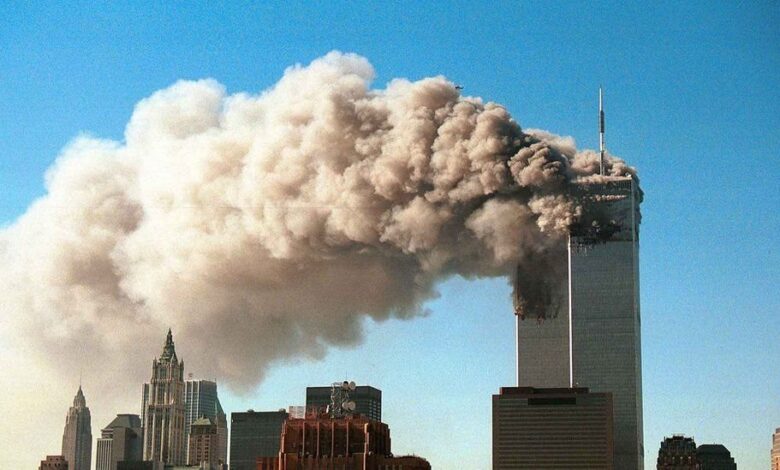
Twenty-five years after the September 11 attacks, the United States is still facing the same question, but in a different form: how can the state protect its citizens from terrorism and extremism without making religious identity a basis for suspicion?
This question returned with force in September 2026, as the United States marked the 25th anniversary of the September 11 attacks, amid growing debate over Islamist extremism and the Muslim Brotherhood and the emergence of these issues within the American political and electoral struggle.
The media discussion covered by NewsNation on September 13, according to the circulating footage, highlighted concerns related to Islamist extremism, the Muslim Brotherhood, and American political polarization. However, this type of debate requires a distinction between three different levels: terrorism, ideological extremism, and religious identity.
Islam Is Not Synonymous with Terrorism
This is not merely a political viewpoint, but a point clearly stated in the report of the 9/11 Commission.
The official report described the threat faced by the United States as being linked to extremist Islamist terrorism, while emphasizing that “Islam is not the enemy” and that Islam is not synonymous with terrorism.
This distinction is extremely important because Al-Qaeda did not represent all Muslims, and its objectives did not enjoy the consensus of Muslim communities.
The 9/11 Commission itself noted that Al-Qaeda relied on an extremist interpretation of Islam and that the majority of Muslims did not support its methods.
American Muslims After September 11
American Muslims were among the Americans who experienced the trauma of the attacks, but they also faced social repercussions associated with them.
A Pew Research Center study published in September 2026 indicates that American Muslims faced suspicion and discrimination in the years following September 11, and that the impact of the attacks remains present in the way part of the American public views Islam.
The study also points to a clear shift in partisan attitudes toward Islam. In a 2026 survey, 76% of Republicans and Republican-leaning Americans said that Islam encourages violence more than other religions, compared with 29% among Democrats and Democratic-leaning Americans. This gap does not establish a political position on any specific issue, but it illustrates the extent of the polarization that now surrounds Islam in American politics.
Security First… But With What Tools?
There is no dispute over the state’s right to protect its citizens.
Terrorism represents a genuine threat, and Al-Qaeda still exists, although in a more decentralized form. In a September 2026 report, Reuters stated that the organization remained influential in some parts of the world, despite its reduced strength compared with the period following the 2001 attacks.
The Islamic State and groups affiliated with it also continue to pose a threat in certain regions.
Counterterrorism is therefore not a historical issue that has been resolved.
But the question is: how do we identify the person or group that warrants surveillance?
Is it enough for someone to be Muslim? Certainly not.
Is it enough for them to hold conservative views? No.
Is it enough for them to criticize U.S. foreign policy? No.
Is it enough for them to work for an Islamic institution? No.
The security standard must be based on a specific behavior, relationship, funding stream, or activity that can be documented.
The Debate Over the Muslim Brotherhood
The Muslim Brotherhood represents a more complex case than jihadist organizations. The movement has a long history, multiple branches, and different political experiences.
In the United States, the debate concerns whether networks or institutions historically or organizationally linked to the Muslim Brotherhood exist, and what the nature of those links may be.
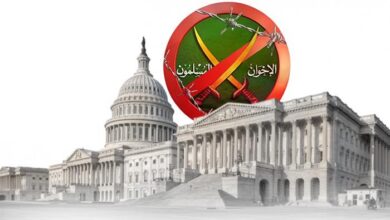
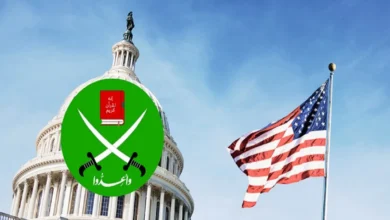
It was in this context that the Senate held a hearing in August 2026 devoted to what the committee described as the “Muslim Brotherhood network in America.”
But the hearing itself does not mean that all the allegations raised during it have become established facts. Congressional hearings are, by nature, forums for presenting testimony, allegations, questions, and facts, which may subsequently be followed by investigations or other proceedings.
This distinction is important in media coverage.
The Debate Over Sharia
One of the issues that emerged in the American debate was the question of “Sharia.”
In May 2026, hearings in the House of Representatives addressed “political Islam and Sharia,” prompting reactions from American Muslim organizations that said the hearings conflated religion with extremism.
But discussions of Sharia also require precision. It is a broad religious concept that is interpreted differently among Muslims and is not a uniform legal code applied in the same way by all Muslim societies.
Using the term in political discourse without a clear definition can therefore lead to misunderstanding.
Religious Freedom as Part of National Security
At first glance, national security and religious freedom may appear to be two conflicting issues.
From a constitutional perspective, however, protecting religious freedom is part of the American system itself.
The objective is not to choose between counterterrorism and freedom of belief, but to build a system capable of doing both at the same time.
This requires state measures to focus on behaviors and relationships that pose a genuine threat, rather than on religious identity.
Why Has the Issue Become More Sensitive in 2026?
There are several reasons.
First, the 25th anniversary of the September 11 attacks has brought the issue back to the media forefront.
Second, the growing presence of Muslims in American politics.
Third, the approaching midterm elections.
Fourth, the intensifying debate over the Muslim Brotherhood in Congress.
Fifth, deep disagreements over the war on terrorism, immigration, and the Middle East.
All of these factors make any statement concerning Islam or Muslims susceptible to becoming part of a broader political controversy.
Abdul El-Sayed: An Example of the New Polarization
Abdul El-Sayed provides a clear example of this shift.
He is a Muslim Democratic candidate for the U.S. Senate from Michigan and became the target of a broad political campaign by Republicans in 2026.
According to the Associated Press, attacks against him focused on his progressive policies, some of his public associations, and his Muslim faith. He was also subjected to allegations related to terrorism, some of which the agency said were unfounded.
This example does not establish that all criticism directed at him is unfounded, nor does it establish that the allegations are true. It does, however, demonstrate the importance of distinguishing criticism of his political positions from the use of his religious identity as evidence in itself.
Political Rhetoric and Its Impact on National Unity
After September 11, Americans needed political language capable of bringing them together.
But political rhetoric in 2026 appears to be more polarized.
Recent reports indicate an increase in anti-Muslim rhetoric amid the 2026 election environment, while organizations and researchers argue that such rhetoric can turn the debate over extremism into the targeting of Muslim identity itself.
At the same time, conservative politicians argue that ignoring the risks associated with political Islam weakens the United States’ ability to confront threats they regard as genuine.
Once again, the disagreement is not necessarily about the state’s right to combat terrorism, but about what constitutes a threat and how it can be established.
Two Opposing Risks
In this debate, two risks need to be distinguished.
The first is downplaying terrorism and extremism. History has shown that small organizations can carry out large-scale attacks and that ignoring early warning signs can have catastrophic consequences.
The second is generalization. When religious affiliation becomes a basis for suspicion, counterterrorism can become a new source of tension and division.
Both risks are real. That is why an evidence-based policy approach should seek to distinguish between them.
The Role of the Media in Preventing Generalization
The media has a responsibility to define its terminology.
When a media outlet refers to the “Muslim Brotherhood,” it should clarify which branch, institution, or individual it means.
When it refers to “Islamist extremism,” it should specify whether it means a terrorist organization, an ideology, or extremist religious rhetoric.
And when it is claimed that a political party is “sympathetic” to a particular organization, journalists should ask: What is the evidence? Is there funding? Membership? Communication? Documentation? Or does the matter simply concern a political position on an issue or institution?
These questions do not diminish the seriousness of terrorism. Rather, they make counterterrorism more precise.
The 25th Anniversary: An Opportunity for Reassessment
Twenty-five years after the attacks, the United States can examine its experience in combating terrorism with greater historical perspective.
The United States succeeded in killing or capturing a number of Al-Qaeda leaders and preventing many attacks, but it also faced prolonged debates over civil liberties, surveillance, and foreign wars.
American society itself has also changed. Muslims who had a more limited political presence after September 11 are now part of the country’s political institutions.
According to Pew, the number of Muslims elected to Congress rose from zero in 2001 to four in 2026, with a fifth member potentially joining them. This transformation is part of the American story after September 11.
A quarter of a century after the attacks, jihadist terrorism remains a genuine security threat, as demonstrated by recent developments concerning the continued activity of Al-Qaeda and other organizations.
At the same time, Islam cannot be reduced to terrorism, nor can Muslim identity be regarded as evidence of extremism. This distinction was emphasized by the 9/11 Commission itself and remains essential to maintaining accuracy in security and social analysis.
As for the Muslim Brotherhood, the issue is more complex and requires each branch, organization, and relationship to be examined separately. The existence of an official Senate debate concerning networks linked to the group demonstrates that the issue is firmly present within American institutions, but it does not turn every political allegation into an established fact.