Abbott Escalates Measures Against the Muslim Brotherhood and CAIR
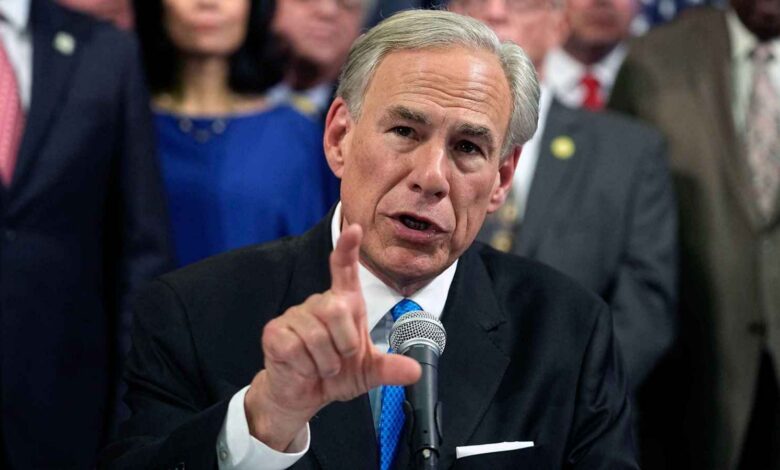
The position of Texas Governor Greg Abbott toward the Muslim Brotherhood and the Council on American-Islamic Relations (CAIR) is no longer merely a stated political position. The measures taken by his administration since November 2025 have evolved into a comprehensive course of action involving designation, investigations, restrictions on property ownership, and pressure on the organization’s legal status.
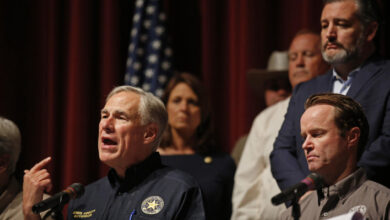
In his speech at the Republican convention in Dallas in September 2026, Abbott returned to the issue, affirming that Texas would not wait for the federal government in Washington. He also linked the measures previously taken by his state to his pledge to move toward banning Islamic Sharia in Texas.
These statements come in an electoral context in which Texas is witnessing an intense debate over immigration, border security, religious identity, and the role of local government in confronting what authorities describe as extremism.
The Starting Point: The November 2025 Decision
On November 18, 2025, Governor Greg Abbott’s office announced that the state had designated the Muslim Brotherhood and CAIR as foreign terrorist organizations and transnational criminal organizations under Texas state law.
Abbott’s office said the decision provided state authorities with additional tools to enforce the law against the two organizations and entities affiliated with them. It also prohibited them from purchasing or acquiring interests in real estate in Texas.
The governor’s official proclamation stated that the designation was made under provisions of the Texas Penal Code and Property Code, and that the property restrictions covered the two organizations, their affiliated entities, and their members within the scope of the law.
This detail is important because Abbott’s decision was issued by a U.S. state, rather than by the U.S. Department of State or the federal government.
Abbott Expands the Scope of the Confrontation
Following the designation announcement, the Abbott administration moved to the investigation stage. On November 20, 2025, the governor’s office announced that Abbott had directed the Texas Department of Public Safety to open criminal investigations into the Muslim Brotherhood and CAIR.
The office said the objective was to identify and disrupt any activities that could constitute violations of the law, including allegations involving violence, intimidation, or harassment, as well as to investigate attempts to impose or establish parallel legal systems based on Islamic Sharia in violation of state law.
The office said that personnel from the Department of Public Safety were working with local and federal partners, and that the FBI’s Joint Terrorism Task Forces were involved in gathering information and initiating investigations into any potential violations.
The issue therefore acquired a clear security and legal dimension rather than remaining within the realm of political statements.
Pressure on Nonprofit Status
In January 2026, Abbott took another step by asking the Texas Attorney General’s Office to use its authority to review CAIR’s nonprofit status.
The governor’s office said Abbott had called for the organization’s nonprofit status to be revoked and for its ability, as well as that of its branches, to operate in the state to be terminated, citing what he described as documents concerning the Muslim Brotherhood and CAIR.
This move reveals an attempt to use more than one legal avenue in dealing with the organization: on the one hand, designation and property-related restrictions; on the other, criminal investigations; and, third, a review of the organization’s legal and tax status.
The Sharia Issue at the Heart of the Confrontation
During his Dallas speech, Abbott once again linked these measures to the issue of Islamic Sharia.
He said that Texas would not wait for Washington and would move toward a complete ban on Sharia. The Texas Tribune quoted Abbott as saying at the convention that he had designated the Muslim Brotherhood and CAIR as foreign terrorist organizations and that the state “would not wait for Washington” before taking action on the Sharia issue.
This position comes after months of growing use of “anti-Sharia” rhetoric within the Republican Party in Texas.
In August 2026, the Texas Tribune reported that Republicans in the state were advancing a political narrative portraying Sharia as a dangerous system associated with extremism, while Muslims in Texas offered a different interpretation of the term, describing it as a religious framework concerning personal practices and worship.
This disagreement over the definition of the term will be one of the key issues facing any future legislation.
CAIR Denies the Allegations
CAIR, for its part, denies committing any terrorist acts or violations of the law and presents itself as an organization dedicated to defending the civil rights of American Muslims and promoting justice and understanding.
The Texas Tribune quoted the organization as affirming that it complies with U.S. laws and works in the areas of civil rights and the empowerment of American Muslims. It also reported that the organization says it is being targeted for political reasons and that the measures are connected to its positions on foreign-policy issues and the war in Gaza.
This places the two narratives in direct opposition: the Texas government says the measures target security threats and unlawful activity, while the organization says the allegations do not reflect the nature of its work and links the targeting to political positions.
Debate Within the Republican Party Itself
The controversy has not been limited to the government and Muslim organizations; it has also extended into the Texas Republican Party itself.
During the state Republican convention in June 2026, the presence of Muslim delegates linked to CAIR sparked debate within the party. According to the Texas Tribune, some participants attempted to remove several delegates, but the party concluded that the convention rules in force at the time did not provide clear authority to expel them.
At the same time, the rules were amended in preparation for the next convention to allow the Credentials Committee to examine the eligibility of delegates with ties to organizations that the party classifies as terrorist organizations.
This reflects the fact that the issue has also become connected to the debate over the identity of the Republican Party itself and its ability to attract conservative Muslims who agree with the party on certain social and economic issues.
State Designation Versus Federal Designation
One of the central aspects of this case is the difference between the Texas designation and a federal designation.
Abbott’s November 2025 proclamation was issued under Texas state laws, giving local authorities legal tools applicable within the state. By contrast, the federal designation of foreign organizations falls under the authority of the U.S. central government and follows different procedures.
Reports in 2026 indicated that the Trump administration had begun designating foreign branches of the Muslim Brotherhood at the federal level, while CAIR was not included in that federal designation, according to the Texas Tribune.
Therefore, Abbott’s decision does not automatically mean that CAIR or the Muslim Brotherhood carry the same designation in every state or at the federal level.
What Comes Next?
The next stage will depend on the Texas government’s ability to translate political commitments into enforceable legislation and measures.
The phrase “ban Sharia” requires, from a legal standpoint, a specific definition of the conduct it seeks to target. In the U.S. system, the mere presence of the term in political rhetoric is not sufficient; laws must precisely define prohibited acts, penalties, and enforcement mechanisms.
The issue of religious freedom, which is protected constitutionally in the United States, will also come to the fore. Any new legislation will therefore face questions about whether it genuinely targets conduct that violates the law or could extend to personal religious practices protected by the Constitution.
This issue is particularly significant given the presence of Muslim American citizens within the Republican Party itself. Some identify as conservative on social and economic issues and believe that practicing Islam is not incompatible with adherence to the U.S. Constitution and American law.
From a Security Issue to a Broad Political Question
With Abbott’s Dallas speech, it became clear that the confrontation with the Muslim Brotherhood and CAIR, as well as the proposed ban on Sharia, forms part of a broader political agenda in Texas.
However, the process that began with the November 2025 designation did not stop there. It was followed by criminal investigations, then action targeting CAIR’s nonprofit status, and subsequently pledges to expand the legislative framework concerning Sharia.
At each stage, the Abbott administration has maintained that its objective is to confront extremism and protect state laws, while CAIR maintains that the allegations against it do not reflect the nature of its work.
Between these two positions, the courts and the law will remain the decisive factors in determining the limits of the measures that can continue in Texas.
The confrontation launched by Abbott against the Muslim Brotherhood and CAIR is no longer merely a political announcement. It has become a legal and security process extending from land ownership to investigations, from nonprofit status to anticipated legislation concerning Sharia.
As for the Dallas speech, it reaffirmed that the governor intends to move the issue into a new phase, whose stated theme is: not waiting for Washington and taking action from within Texas.