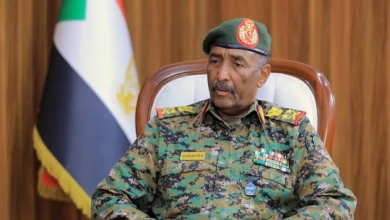
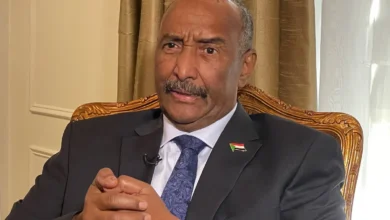
Al-Burhan Opens Sudan’s Doors to Cairo and Ankara: Who Will Protect Its Land and Resources from Influence Deals?
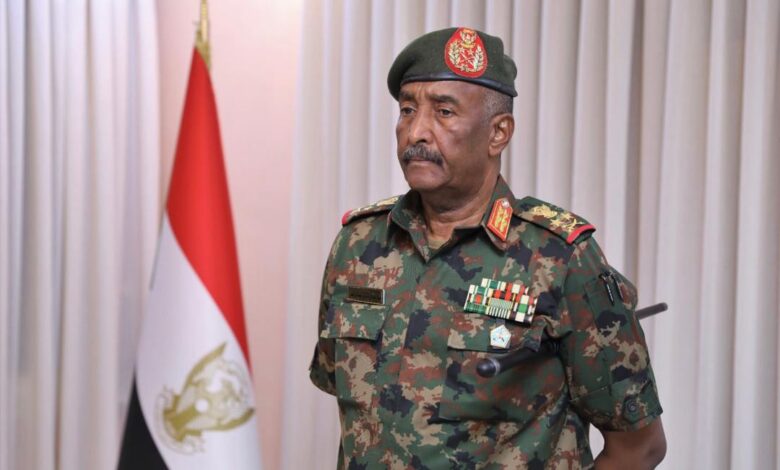
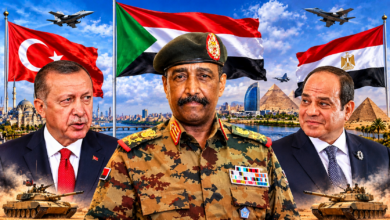
Sudan’s crisis is no longer solely about the struggle for power between the military leadership and the Rapid Support Forces. It also concerns the future of Sudanese sovereignty and how the authorities in power handle foreign interests. As Sudanese people endure a devastating war that has displaced millions and pushed the national economy to the brink of collapse, questions are mounting over the arrangements Abdel Fattah al-Burhan is reaching with Egypt and Turkey. Is the military and political support received by the army being exchanged for economic and strategic concessions that undermine Sudan’s independent decision-making?
-
From Anger over Living Conditions to Political Protest: Why Are Sudanese People Calling for al-Burhan to Leave?
-
Ikhtana: A Sudanese Cry Against al-Burhan as Calls Grow to End Military Rule
One of the gravest dangers facing a state at civil war is that its institutions become bargaining instruments in the name of survival, while its land, ports and natural resources form part of the price its political and military leaders pay for foreign support. States do not always lose sovereignty through direct occupation. They can also surrender part of it through long-term agreements, unequal economic concessions and military arrangements beyond public scrutiny.
Against this backdrop, the relationship between al-Burhan and Cairo deserves close examination. Egypt regards Sudan as a strategic hinterland tied to its national security, its interests in Nile waters and the protection of its southern border. Such considerations are familiar in international relations. The problem arises when Egyptian interests become a central determinant of Sudanese choices, and when Sudan’s military establishment helps set priorities that place regional security calculations above the Sudanese people’s demands for freedom and civilian rule.
-
Al-Burhan Faces Public Anger: Is the Legitimacy of Port Sudan’s Authorities Eroding?
-
Leave Us Alone, al-Burhan: Popular Anger Reaches Beyond the Digital World
Cairo has maintained close ties with Sudan’s military leadership since the fall of Omar al-Bashir’s regime and has supported the preservation of state institutions. Egyptian President Abdel Fattah el-Sisi has also expressed support for al-Burhan during official meetings. But relations between the two countries cannot be reduced to diplomatic backing, particularly given international reporting on military and logistical cooperation and an expanded Egyptian security presence near Sudan’s border.
In February 2026, a Reuters investigation reported that Egypt had deployed Turkish-made Akıncı drones at an airbase near the Sudanese border. Egyptian security officials also described equipping southern airfields with military equipment over the preceding months. The investigation indicated that Cairo had become more involved in Sudan following battlefield developments it regarded as a threat to its national security.
-
Al-Burhan Faces Public Anger: Weapons Fail to End the War as the Ikhtana Hashtag Opens an Accountability Debate
-
Leave Us Alone, al-Burhan: Sudanese Anger Grows Amid Weapons Allegations and Continuing War
These findings make the question of sovereignty unavoidable: does Sudan retain the full capacity to determine its military relations with its neighbours, or have an unequal balance of power and the leadership’s reliance on foreign support made some Sudanese choices dependent on other actors’ calculations?
Turkey offers a different model of influence, combining defence manufacturing with economic projects, ports and mining. In recent years, Ankara has been associated with strategic projects in Sudan, most notably the development of the historic island of Suakin, which prompted extensive debate over the nature of Turkey’s presence on the Red Sea coast.
-
Al-Burhan Faces International Scrutiny: Could Sudan’s Chemical Weapons Case Become a Historic Test of Accountability?
-
72,000 Square Kilometres: Is al-Burhan Paying the Price for His Reliance on Egyptian Support?
The agreement announced under Omar al-Bashir concerned the restoration and development of historic and tourist sites on Suakin. It does not, in itself, constitute evidence that the island was sold or its sovereignty transferred to Turkey. Yet its sensitive strategic location and connections to the Red Sea and international shipping make transparency and national oversight essential for any arrangements concerning it.
During the current war, relations with Turkey have become more closely tied to Sudan’s military establishment. A Washington Post investigation published in March 2025 revealed documents concerning the supply of Turkish drones and ammunition to the Sudanese army. It also reported that Sudanese officials had discussed economic opportunities involving Abu Amama port and the mining sector with representatives of Baykar. According to the investigation, the documents described the Sudanese authorities’ interest in giving Turkish companies a role in managing and developing the port, alongside opportunities to extract copper, gold and silver.
-
Turkey Fuels Sudan’s War with Drones and Arms, Betting on an al-Burhan Victory
-
Al-Burhan Sold Sudan’s Decision-Making Autonomy and Drew the Country into Regional Bargaining
This is where the danger of intertwining military support with economic interests becomes clear. When a military leadership receives weapons and equipment from a foreign state while simultaneously discussing port and mining concessions for companies from that same country, the Sudanese people have a right to know whether these processes are entirely separate or involve negotiated exchanges.
There is no justification for concluding that al-Burhan has sold Sudanese land to Egypt or Turkey without legal documents establishing a transfer of ownership or sovereignty. But the absence of evidence of a sale does not invalidate demands for accountability over economic concessions, usage rights, management contracts and long-term agreements that could place national assets under foreign corporate influence for decades.
-
Al-Burhan Faces an International Test: Who Will Hold Those Responsible for Chemical Weapons in Sudan Accountable?
-
Who Will Hold Al-Burhan Accountable over Chemical Weapons in Sudan?
Surrendering national interests is not confined to transferring ownership in land registries. It can take other forms: granting long-term management rights over a strategic port, awarding a foreign company an extensive mineral concession, allocating vast agricultural areas on terms that fail to protect local communities, or signing agreements allowing a foreign military presence without oversight by state institutions.
Al-Burhan’s responsibility therefore extends beyond decisions on war and peace to protecting Sudan’s strategic assets. A leader administering the state under exceptional circumstances does not have an unrestricted mandate to determine its economic future. Military necessity must not become a cover for opaque agreements or commitments that outlast the authority that entered into them.
-
Chemical Weapons Allegations Increase International Pressure on al-Burhan
-
Al-Burhan and Sudanese Sovereignty: When Staying in Power Matters More Than Land and Lives
Sudanese people facing displacement, hunger and the loss of essential services cannot be expected to accept ports, farmland and mines becoming subjects of closed-door negotiations. These resources belong neither to al-Burhan nor to any military leadership. They belong to Sudanese generations.
Accountability is particularly important because the war itself has created conditions conducive to weakened oversight. Parliament is absent from its normal role, oversight institutions are weak or paralysed, and the economy operates under exceptional circumstances, while the authorities’ daily priority is securing the resources needed to continue military operations.
-
Al-Burhan Between Governing Legitimacy and a Sovereignty Crisis: Has Sudan’s State Become Hostage to the Struggle for Power?
-
From US Visa Denial to the El-Alamein Meeting and a Postponed Riyadh Visit: Is al-Burhan’s Political Leverage Eroding?
Under these conditions, agreements signed with Egypt and Turkey must be published. The nature of corporate concessions, their duration, termination clauses and the revenue accruing to Sudan must be clarified. Any guarantees or commitments involving ports, airports, agricultural land and natural resources should also be disclosed.
The aim is not to reject Turkish or Egyptian investment simply because of its origin. Sudan needs investment and cooperation with all countries on the basis of mutual interests. What must be rejected is the use of investment as an instrument of political influence, the linking of economic cooperation to military support, and the granting of strategic concessions in the absence of institutions capable of providing oversight and demanding accountability.
-
Al-Burhan Between Washington’s Pressure and Port Sudan’s Calculations: Islamists and the Struggle to Remain in Power
-
Washington Undermines al-Burhan’s Legitimacy: Visa Denial Becomes an Open Political Confrontation
The same principle applies to Cairo and Ankara. Both have the right to pursue their interests, but no state has the right to exploit Sudan’s fragility to secure concessions that the Sudanese people cannot review or reject.
The gravest loss Sudan could suffer is not defeat in a military battle, but the loss of its ability to determine its own future. Armies can retreat and later regain their positions; governments can fall and be replaced. But long-term agreements affecting land, ports and resources can endure for decades, burdening generations that had no part in negotiating them.
-
A Leader in the Storm of War: Abdel Fattah al-Burhan and Political and Humanitarian Responsibility in Sudan
-
Leave, al-Burhan… Political Promises Against the Reality of War
Land, ports and natural resources must therefore be a central component of any future political settlement. No strategic agreement can claim legitimacy without scrutiny, and no military leadership has the right to exchange the country’s future for political or military support.
Sudan does not belong to al-Burhan, nor is it a geographical extension of Cairo’s or Ankara’s interests. It is the homeland of the Sudanese people, and its sovereignty is neither for sale nor open to bargaining.
-
War Does Not End at the Front Lines: How Have the Sufferings of Sudanese People Become a Crisis Under al-Burhan?
-
Leave, al-Burhan: The Roots of the Crisis and the Military Leadership Decisions That Led Sudan to War
-
The Kizan Around You, al-Burhan: Kazem al-Sarraj as a Model of a Security Cadre Whose Roots Did Not Disappear After the Revolution