The killing of a Houthi commander in Iraq exposes the coordination networks of Iran’s regional allies
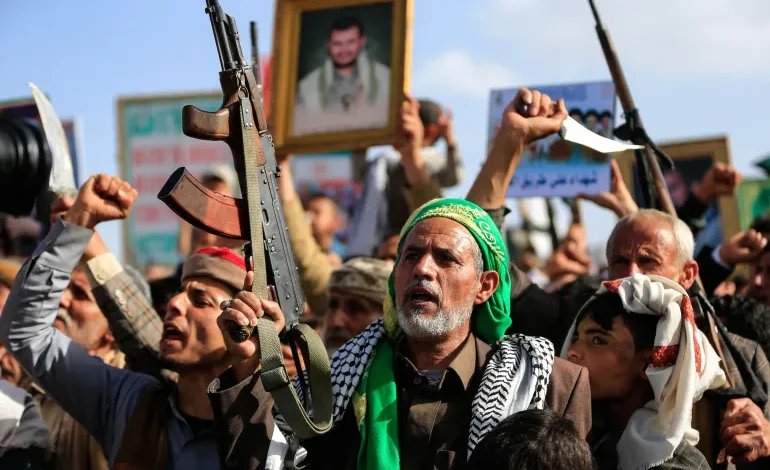
The presence of Al-Ayashi, a drone specialist, alongside several advisers from Iran’s Revolutionary Guards at Popular Mobilization Forces sites confirms their role in attacks against neighboring countries.
-
The Houthis’ Bloody Provocations Ignite Confrontations with Tribal Groups
-
The U.S. Blockade Pushes Iran to Arm the Houthis by Air
Houthi leaders announced the death of commander Mohammed Khaled Al-Ayashi on Wednesday evening as a result of airstrikes targeting Popular Mobilization Forces positions in Iraq. The incident points to an advanced level of military coordination among armed groups backed by Tehran across the region, coinciding with an escalation in attacks carried out by Iraqi factions against targets in neighboring countries, particularly Saudi oil facilities.
According to sources, Al-Ayashi was killed alongside several advisers from Iran’s Islamic Revolutionary Guard Corps, whose bodies were transferred to the Iranian capital, Tehran. The development highlights Iraq’s role as a platform for planning, coordination, and the exchange of expertise among Iran’s allied factions.
-
Houthis Force Washington to Divide Its Military Resources Between Two Fronts
-
The Heads of Death: The Ten Most Powerful Leaders Within the Houthi Militia Structure
Al-Ayashi was regarded as a Houthi specialist in drone warfare. He had received training from experts affiliated with Iran’s Revolutionary Guards and participated in programs related to the development and operation of unmanned aerial vehicles used by the Houthis in attacks inside Yemen and across international borders.
His expertise gives his presence an operational significance, as drones have become the weapon most frequently employed by both the Houthis and Iraqi factions in recent years. His presence at Popular Mobilization Forces facilities suggests an exchange of technical knowledge related to drone development, programming, methods of evading air-defense systems, or participation in joint coordination centers responsible for managing military operations.
-
The Erosion of Deterrence in Yemen: How Riyadh’s Conciliatory Strategy Strengthened the Houthis at the Expense of Its Southern Allies
-
Sen. Chris Murphy: Saudi Arabia’s Yemen Policy Strengthened the Houthis at the Expense of Its Allies
This development reinforces long-standing assessments that military expertise has been transferred among the Houthis, the Popular Mobilization Forces, and other militias linked to Iran’s Revolutionary Guards within a framework based more on the unification of tactics and weapon systems than on direct centralized command.
These developments come at a time when the region is witnessing an escalation in drone and missile attacks carried out by Iraqi factions against targets outside Iraq, including Saudi energy facilities, raising questions about the existence of joint operations rooms dedicated to exchanging information and expertise among the various factions.
-
The Unity of Yemen’s Tribes Exposes the Houthis’ Isolation
-
The Impoverishment of Yemenis as a Houthi Weapon: Human Rights Report Documents Political Starvation
The significance of the incident also lies in its timing, as it coincides with growing regional tensions and continued attacks on oil infrastructure in Saudi Arabia and other Gulf states. The presence of a Houthi commander specializing in drones at Iraqi militia sites may be viewed as evidence of the increasing overlap between different theaters of conflict, indicating that the Yemeni and Iraqi fronts are no longer separate arenas but rather components of an interconnected regional operational network.
Earlier, the United States Central Command announced that American and Saudi aircraft had carried out precision strikes on Tuesday against logistical facilities and weapons depots belonging to pro-Iranian factions in eastern Iraq, in response to more than thirty drone attacks attributed to Iran’s Revolutionary Guards over the previous seventy-two hours.
-
Widespread Houthi Mobilisation Signals Possible New Phase of Internal Fighting
-
The Death of Two Officers in Houthi Attacks Sparks Fierce Battles in Taiz and Al Hudaydah
Over recent years, Iraq has become a major hub for advisers from Iran’s Revolutionary Guards and a key link connecting factions operating in Iraq, Syria, Lebanon, and Yemen. Al-Ayashi’s presence at one of these locations underscores the role of the Popular Mobilization Forces and the use of their facilities as coordination centers for regional operations.
From a security perspective, this connection reinforces the belief among Iran’s opponents that the various armed factions do not operate independently but rather function within an integrated system for exchanging capabilities and expertise. This could justify expanding military strikes to target not only the individual positions of each faction but also their joint coordination and training centers.
-
Houthi Attacks Complicate Efforts to Contain Tensions Between Iran and Israel
-
Piracy with Houthi Fingerprints… The Alliance of Terrorist Leaders Threatens Waterways
Conversely, targeting individuals with technical expertise in drone warfare may represent an attempt to weaken the strategic capabilities of these factions, particularly since drones have become one of the most important instruments of military pressure employed by Iran-backed groups across the region.
The website “Yemen Monitor” previously reported, citing sources, that some attacks launched from Iraq after February 2026 had been carried out by the Houthis themselves, with the group’s specialists operating the drones and missiles. The sources added that most of those experts are based inside Iraqi territory as part of a process of cooperation and knowledge transfer within what is known as the “Axis of Resistance,” particularly in the fields of manufacturing, training, and operating drones and missiles.
-
Yemeni political analyst: Houthis are worsening civilians’ suffering as Eid al-Adha approaches amid deteriorating humanitarian conditions
-
Houthis signal support for Tehran in case of confrontation with Washington