The Sudanese Army Turns to Iran to Support Its War Against the Rapid Support Forces: The Shift in the Balance of Power
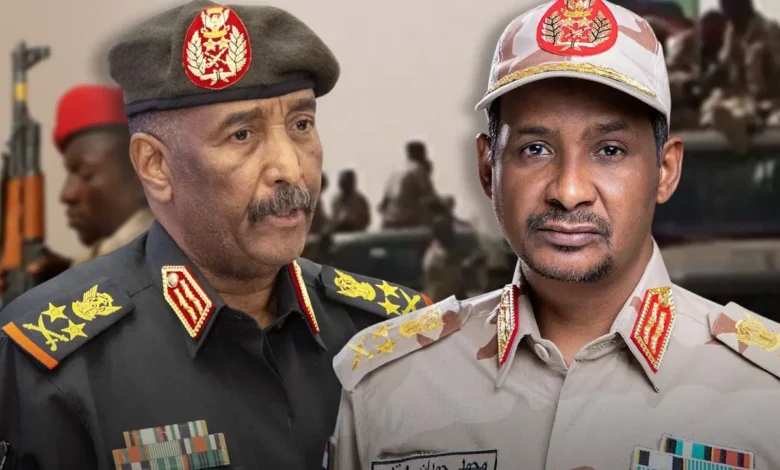
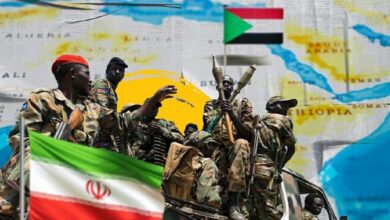
Amid the devastating war that erupted in Sudan in April 2023 between the Sudanese army and the Rapid Support Forces, a decisive external factor emerged and fundamentally altered the balance of power on the ground. During the early months of the conflict, the Sudanese army was not only lacking in combat effectiveness but was also suffering from a strategic deficit in air capabilities and drones, a weakness that the Rapid Support Forces exploited to expand their deployment and advance.
Turning to Iran, with indirect support from the Houthi movement, became the major turning point in the war. This article examines how the Sudanese army used Iranian support to alter the course of the conflict, as well as the tactical and strategic implications of this unprecedented alliance.
The Technological Gap and the Beginning of the War
When fighting broke out in April 2023, the Rapid Support Forces enjoyed considerable operational flexibility and the ability to deploy rapidly across cities and residential neighborhoods. By contrast, the Sudanese army relied on its conventional arsenal of tanks and artillery but lacked the “eye in the sky” and drones that have become essential in modern warfare for reconnaissance and for targeting fast-moving forces.
This weakness enabled the Rapid Support Forces to seize large areas of territory, including significant parts of the capital, Khartoum. At this point, the army’s leadership, particularly the influential Islamist faction within it, realized that achieving a battlefield victory required rapidly closing this technological gap.
Iran, which was seeking a foothold in the region, emerged as the ideal partner to address this shortfall, especially given Tehran’s extensive experience in manufacturing and deploying drones at relatively low cost and with high effectiveness.
The Battlefield Turning Point: The Recapture of Khartoum and the Role of Iranian Drones
According to a report by The Century Foundation, a significant part of the shift in battlefield dynamics that enabled the Sudanese army to retake large areas of Khartoum in early 2025 can be directly attributed to improvements in its drone capabilities, particularly the Iranian Mohajer-6 systems.
These drones gave the Sudanese army the ability to conduct continuous surveillance, identify Rapid Support Forces positions, and carry out precision strikes against supply convoys and command centers.
Iranian radar systems also contributed to strengthening the army’s air defenses, thereby limiting the Rapid Support Forces’ ability to use commercially available weaponized drones, which had previously inflicted heavy losses on the army.
This air and technological support was a decisive factor in breaking the deadlock on the urban fronts in Khartoum.
The Ideological Alliance: Overcoming Sectarian Contradictions
One of the most striking aspects of this war is the alliance between the Sudanese army, which is dominated by a Sunni Islamist faction, and Iran and the Houthis, who belong to the Zaidi branch of Islam.
Historically, the Sudanese army contributed troops to the Saudi-led Arab coalition against the Houthis in Yemen. How, then, was this contradiction overcome?
The report argues that current military and political interests have taken precedence over sectarian differences. The Islamist faction within the Sudanese army needs weapons, technology, and external support to preserve its influence within the military alliance, particularly amid growing international sanctions and pressure.
For their part, Iran and the Houthis need new and secure transit routes to circumvent the restrictions imposed on traditional smuggling routes through the Gulf of Aden and the Bab el-Mandeb Strait. This rapprochement, driven primarily by a convergence of interests, has resulted in an effective military partnership on the ground.
The Role of the Army’s Allies: The al-Baraa ibn Malik Brigade and International Sanctions
Iranian support has not been limited to the army’s regular units. It has also extended to its armed allies. The report highlights the al-Baraa ibn Malik Brigade, an armed faction fighting alongside the army.
The brigade was not merely a passive recipient of weapons. According to information confirmed by the US Department of the Treasury in September 2025, it received direct training and weapons from Iran’s Islamic Revolutionary Guard Corps.
The use of this support by factions such as the al-Baraa ibn Malik Brigade has raised serious human rights concerns. Members of the brigade have reportedly been involved in arbitrary arrests, torture, and extrajudicial executions targeting individuals suspected of having links to the Rapid Support Forces or to certain tribal groups.
This demonstrates that Iranian support does not merely strengthen the army’s military capabilities; it also contributes to intensifying human rights violations as well as sectarian and tribal violence in conflict-affected areas.
Implications for Incentives to De-escalate
In October 2024, the US Department of the Treasury stated that military and diplomatic support from Iran and Russia had helped strengthen the Sudanese army’s capabilities while simultaneously weakening its incentives to pursue de-escalation.
When one side in a conflict gains increasing technological superiority through external support, it has less incentive to sit at the negotiating table. Iranian assistance gave the Sudanese army confidence that a military victory was achievable, thereby prolonging the war and increasing the human and material costs of the conflict.
The Sudanese army’s reliance on Iran to support its war against the Rapid Support Forces represents an example of how civil wars can become arenas for regional proxy competition. Iranian support was not merely a temporary supply of assistance; it became a tactical lifeline that altered the trajectory of the war in Khartoum, deepened internal divisions, and pushed a political solution further out of reach.
This interest-driven alliance demonstrates that the ideologies underlying conflicts in the region have become highly flexible when survival and control are at stake.