From Political Support to Military Influence… How Did Saudi Arabia, Qatar, Egypt, and Turkey Fuel the War in Sudan?
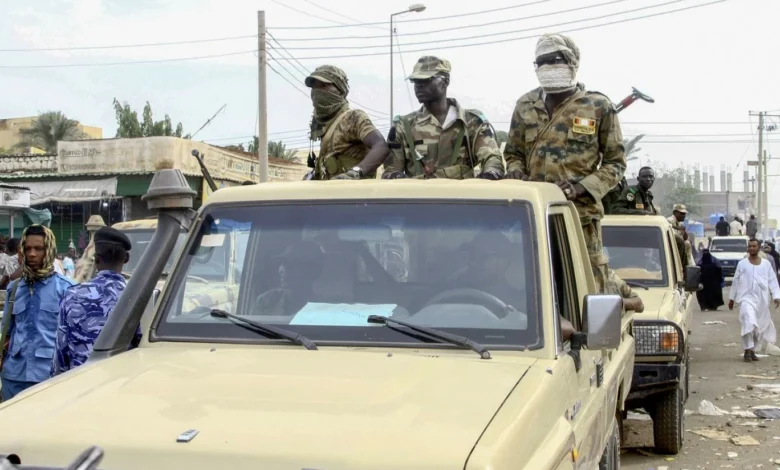
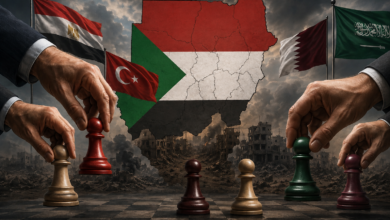
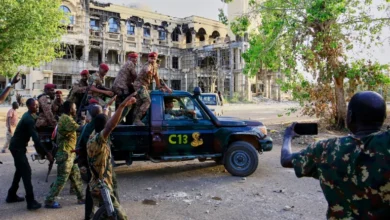
The war in Sudan is no longer merely a confrontation between the army and the Rapid Support Forces, as the country has become an arena where the calculations of regional powers seeking influence, security, and economic and strategic interests intersect. Since the fighting erupted in April 2023, Saudi Arabia, Qatar, Egypt, and Turkey have become involved in the Sudanese arena to varying degrees, using a combination of political, diplomatic, security, military, and economic instruments. While the objectives of these countries and the nature of their interventions differ, the broader outcome has been that the two sides of the war have found themselves operating in a regional environment that allows the fighting to continue and, at certain stages, gives them greater room to reject settlements or wait for shifts in the balance of power.
This does not mean that these four countries control the decision to wage war or that they are directly responsible for its outbreak. The roots of the conflict are Sudanese and are linked to the collapse of the political transition following the fall of Omar al-Bashir, disagreements over the integration of the armed forces and the Rapid Support Forces, and a broader struggle over power, resources, and state institutions. But the war, which began as an internal confrontation, has gradually evolved into a conflict with regional dimensions, as external support has become one of the factors affecting the parties’ ability to withstand the conflict and their military and political calculations.
Egypt… The Army First
Egypt’s position has been the clearest from the beginning of the war. Cairo views Sudan as a direct component of its national security because of the shared border, the security of the Nile, and Sudan’s strategic location, as well as concerns that the country could become an open arena for armed groups, smuggling networks, and irregular migration.
For this reason, Egypt has politically and security-wise aligned itself with Sudanese state institutions and the army, refusing to treat the conflict as merely an equal confrontation between two military forces. This alignment can be understood from the perspective of Egypt’s interests, but it has had a clear impact on the war: the Sudanese army has not found itself regionally isolated, but has instead received political support and security ties from a major country with which it shares a border.
Media reports dating back to 2023 spoke of Egyptian military support for the Sudanese army, including drones. In October 2023, Reuters reported, citing a Wall Street Journal report, that Egypt had supplied drones to the Sudanese army at a time when the war was entering an increasingly complex phase.
Egypt’s role subsequently evolved. In February 2026, Reuters reported that Egypt had deployed Turkish-made Akinci drones at a base near its southwestern border, viewing the development as an indication of deeper Egyptian involvement in the Sudanese war.
The relationship thus moves from political support to direct influence over the balance of power. The Sudanese army’s possession of more advanced aerial and drone capabilities means that it can strike distant targets, monitor movements, target supply lines, and offset part of the advantage that the Rapid Support Forces had enjoyed at earlier stages of the conflict.
This type of support contributed to making the option of a military victory more prominent in the army’s calculations. The more a party feels capable of making gains on the battlefield, the less need it feels to make major concessions at the negotiating table.
Turkey… Drones Are Changing the Rules of War
If Egypt represents the Sudanese army’s geographic and security depth, Turkey has emerged particularly through military technology and drones.
Turkish-Sudanese relations did not begin with the war. During Omar al-Bashir’s rule, Ankara developed broad political, economic, and military relations with Khartoum, while the Suakin area on the Red Sea became one of the most prominent symbols of Turkey’s presence in Sudan. After the war broke out, Turkey maintained contacts with Sudanese leaders, while Turkish weaponry became one of the elements that emerged on the battlefield.
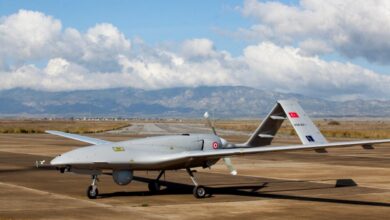
In 2025, reports discussed the Sudanese army’s use of Turkish Bayraktar TB2 drones and their role in helping the army retake important areas from the Rapid Support Forces. Reports indicated that these drones had been used in operations against Rapid Support Forces positions and supply lines.
The significance here lies not in the weapon itself, but in the way such technology can change the nature of the war. A drone gives the army the ability to conduct relatively precise operations from long distances, monitor supply routes and enemy movements, and reduce the need to expose large numbers of soldiers to danger in certain operations.
In March 2025, The Washington Post published an investigation referring to documents indicating the supply of Turkish weapons and drones to the Sudanese army worth at least $120 million. The investigation discussed drones and systems linked to the Turkish company Baykar.
Regardless of the details of each individual transaction, the military result was clear: drone technology has become a central element of the Sudanese war. As the fighting continued, drones became one of the most important tools used by both sides, while the United Nations warned in 2026 that drone strikes had become a major cause of the rising civilian death toll.
Thus, Turkish influence cannot be understood solely through its political relations with Khartoum, but also through the military technology that has helped the army develop its capabilities in the war.
Saudi Arabia… Mediation Confronted by the Balance of Power
Saudi Arabia’s role is different. Riyadh did not emerge in the Sudanese arena primarily as a weapons supplier, but rather as a regional power with extensive relations with Sudanese actors and a direct strategic interest in Red Sea security.
Saudi Arabia was among the main actors seeking to push the army and the Rapid Support Forces toward a ceasefire. Together with the United States, it hosted the Jeddah talks, which became one of the most important negotiating platforms for the war. The problem, however, was that the mediation was taking place while both sides continued to seek military gains on the ground.
This is where the paradox emerged: a state can act as a mediator while simultaneously having interests that bring it closer to one side’s vision of the future of the Sudanese state.
Saudi Arabia views the army as a central institution of the Sudanese state and fears the collapse of governing institutions and the transformation of the Red Sea into an open zone of instability. It therefore maintained strong relations with Sudanese leaders while continuing to press for an end to the fighting.
But mediation does not take place in a vacuum. When the warring parties are simultaneously receiving support, guarantees, or regional relationships, their ability to withstand pressure increases, while the cost of rejecting agreements decreases.
This is why the problem with the Jeddah talks was not simply the absence of initiatives, but the absence of conditions that would convince the parties that continuing the war was more costly than reaching a settlement. As external support continued and the balance of power shifted, each side continued to believe that the next round of fighting might give it a better negotiating position.
Qatar… Political Influence and Longstanding Networks
Qatar is also approaching Sudan from a different angle. Doha has a long history of involvement in Sudanese affairs, particularly in the Darfur negotiations. This experience has made it one of the countries with a complex network of political relationships inside Sudan.
In the years preceding the war, Qatar was involved in Sudanese projects, investments, and political relations, while also maintaining ties with state institutions after al-Bashir’s fall. Reports and analyses indicate that military and political ties between Doha and the Sudanese army continued during the war, while some sources have referred to undeclared Qatari military support. However, the nature and scale of such support remain disputed, and these claims therefore cannot all be treated as established facts.
Qatar’s importance in the Sudanese equation stems from its ability to combine political, economic, and diplomatic relationships. It does not necessarily need to deploy troops or announce direct military intervention to exert influence. In prolonged wars, political relationships, financing, communications, and the ability to open negotiating channels can themselves become instruments of influence.
This type of influence contributes to complicating the war when mediation and support channels multiply. Instead of having a single track pressuring the two sides toward an agreement, each party has access to a different network of regional relationships that it can use to gain greater room for maneuver.
Four Countries… Different Tools, Similar Outcome
Saudi Arabia, Egypt, Qatar, and Turkey are not operating according to a single plan in Sudan, and there is no evidence that they have formed a unified alliance aimed at prolonging the war. However, the policies of these countries can indirectly produce a similar effect: increasing the ability of one of the conflict parties, or strengthening institutions associated with it, to continue fighting.
Egypt provides geographic and security depth, Turkey offers defense ties and advanced military technologies, Saudi Arabia possesses political and diplomatic weight as well as strong relations with state institutions, while Qatar retains political, economic, and diplomatic networks accumulated over many years.
These roles do not carry the same weight, but they converge on one essential point: the Sudanese army has not fought the war in isolation from its regional environment.
The clearest evidence of the importance of the external factor is that military developments in Sudan during 2024 and 2025 became increasingly associated with the use of drones and long-range weapons. As the army retook large areas and reached Khartoum in 2025, it became clear that its military capabilities were no longer what they had been at the beginning of the war. Multiple analyses have pointed to foreign drones as one factor behind these changes.
But strengthening the army did not bring the war to an end. This is the central paradox.
The more the army advanced, the more the Rapid Support Forces held on to their positions and sources of strength, and the more threatened they felt, the greater their need to obtain external support became. Support thus becomes part of the war’s cycle: support changes the balance of power, a shift in the balance triggers a reaction, and that reaction leads to another round of arming.
External Support Changes the Calculations of Peace
In civil wars, weapons are not merely tools of combat; they are also tools of negotiation. A party possessing more advanced weapons can enter negotiations believing that it can improve its position on the battlefield. Therefore, the continued flow of weapons or military technology can make negotiations less attractive.
This explains why not all diplomatic efforts have translated into a lasting ceasefire. Even when a political initiative emerges, the parties continue to ask themselves: What if the fighting continues for a few more months? What if the balance of power changes? What if we obtain new weapons? What if we retake a city or a strategic route?
All these calculations make the war more sustainable.
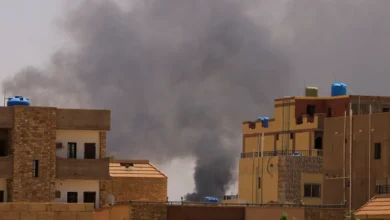
In the Sudanese case, the arrival of drones and modern weapons has helped transform the war into a confrontation increasingly capable of striking deep into territory and targeting vital centers. Even Port Sudan, which became the center of government and humanitarian operations, came under drone attacks in 2025, indicating the expansion of the war’s geographic scope and its ability to reach areas previously considered safer.
Who Will Stop the Arms Cycle?
The question now is not only: Who supports one side or the other? It is also: How can the cycle be broken whereby every military advance becomes the cause of another round of external support?
Peace in Sudan will not be achieved simply by convening another conference or issuing another statement calling for a ceasefire. What is required is a change in the calculations that make the war politically profitable or strategically useful to certain actors.
This makes the responsibility of Saudi Arabia, Qatar, Egypt, and Turkey greater than simply declaring support for peace. If these countries genuinely want to end the war, their ability to exert influence should be used to push the parties toward a settlement, rather than merely to protect their positions and allies.
The problem is that the influence that allows these countries to shape developments in Sudan can become a factor prolonging the war if it is used to strengthen one side at the expense of the other without imposing a clear political process. The greater the ability of the army or the Rapid Support Forces to obtain weapons, technology, financing, and external relationships, the more difficult a political resolution becomes.
The Sudanese war therefore reveals a clear rule: external support does not need to be declared or direct to influence the course of a war. It may take the form of a drone, an arms deal, training, political cover, mediation that gives one side additional time, or an economic relationship that helps an institution survive.
Ultimately, Saudi Arabia, Qatar, Egypt, and Turkey cannot alone be held responsible for the continuation of the war. The primary and most important decision remains in the hands of the Sudanese forces engaged in the conflict. But ignoring the regional role would mean ignoring an essential part of the current conflict equation.
The more external channels the Sudanese parties have for obtaining support, the longer they can continue fighting. And the longer the fighting lasts, the greater the external interests connected to it become. The war thus evolves from a struggle for power inside Sudan into a network of regional interests that is difficult to dismantle.
Political support provides legitimacy, economic support provides the ability to endure, and military support provides the means to continue fighting. When these instruments converge around a single war, peace becomes more difficult to achieve, even if no state has explicitly declared that it wants the conflict to continue.