Washington Renews Accusations Against Sudanese Army Over Use of Chemical Weapons… A Case That Puts the Sudan War Before a New International Test
The issue of chemical weapons has returned to the forefront of the war in Sudan after the United States reiterated its position that a review conducted by the administration of President Donald Trump reached the same conclusion as the previous U.S. administration: chemical weapons were used in the context of the ongoing war in Sudan.
The U.S. confirmation came from Massad Boulos, the U.S. president’s adviser for Arab and African affairs, in statements to Sky News Arabia. He explained that the Trump administration had reviewed the case within the legally prescribed period before reaching the “same conclusion” regarding the use of chemical weapons.
This development is particularly significant, not only because of the nature of the allegation, but also because Washington is not this time referring to a preliminary finding or an accusation made by one of the parties to the conflict. Rather, according to the U.S. statements, it is referring to an internal review within the U.S. administration that resulted in confirmation of the previous assessment.
In April 2025, the United States announced that it had concluded that the Sudanese government had used chemical weapons during 2024, which was followed by U.S. measures and sanctions. In 2026, Washington reaffirmed this position before the Organisation for the Prohibition of Chemical Weapons.
From Accusation to the International Process
The new element in Boulos’s statements concerns not only the renewal of the accusation, but also the identification of the path Washington believes the case should now follow.
According to the U.S. adviser, the matter is no longer solely a bilateral issue between Washington and Khartoum, but is now connected to the Organisation for the Prohibition of Chemical Weapons, the international body responsible for implementing the convention that prohibits the development, production, stockpiling, and use of chemical weapons.
The issue is therefore moving from the level of bilateral relations between Washington and Khartoum to a more complex level involving Sudan’s international obligations.
Sudan is a party to the Chemical Weapons Convention. Therefore, any independent evidence of the use of such weapons could open the way to various international measures, depending on the nature of the evidence and the process followed by the relevant institutions.
Meetings of the Organisation for the Prohibition of Chemical Weapons in July 2026 witnessed a diplomatic confrontation over the issue after the United States renewed its accusation that Sudan had used chemical weapons in 2024, while the Sudanese government presented the findings of a national commission that said it had found no material, technical, or documentary evidence substantiating the allegations at the sites it examined.
Two parallel tracks have therefore emerged: a U.S. assessment that chemical weapons were used, and a Sudanese position denying this and calling for direct verification.
Why Does the Case Represent a Serious Development?
Chemical weapons differ from conventional weapons in the nature of the harm they can cause, as well as in the international restrictions imposed on them.
Toxic chemicals can affect people through inhalation or contact. Their use in populated areas also raises additional concerns regarding civilians, the environment, and health infrastructure.
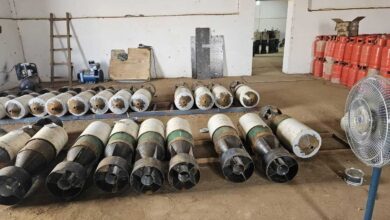
The current allegations focus particularly on the use of chlorine-containing munitions.
In September 2026, international media outlets published investigations based on a large collection of documents, photographs, videos, and communications, claiming that these materials provided new evidence of a Sudanese program to produce chlorine-based chemical munitions during 2024.
The Washington Post reported that the documents it had reviewed included photographs, videos, military documents, and messages referring to the production of munitions, their testing in desert areas, and their storage. At the same time, however, it quoted experts as saying that reaching a definitive assessment would require access to the weapons sites and witnesses.
The New York Times, meanwhile, reported that an intelligence dossier containing photographs, videos, documents, and intercepted communications had added to the previous allegations by describing a secret military program that was said to have worked on producing chlorine-based munitions during part of 2024.
Sudan Rejects the Allegations
The Sudanese government, however, has rejected the U.S. account.
Sudan denied using chemical weapons and reaffirmed its commitment to the Chemical Weapons Convention. It also indicated that it was prepared to have the allegations verified through the appropriate mechanisms.
According to reports concerning the Sudanese government’s position, Khartoum established a national commission to investigate the allegations. Its interim report concluded that it had found no evidence proving the use of chemical weapons at the sites examined.
Khartoum also maintains that the most appropriate way to resolve the issue is through a direct technical investigation rather than relying solely on political or intelligence assessments.
This is where one of the main points of disagreement lies: Washington considers that its review reached a clear conclusion, while Sudan is calling for an independent field investigation.
What Comes Next?
Massad Boulos’s statements indicate that the United States wants the matter to move to the Organisation for the Prohibition of Chemical Weapons.
This means that the next phase could focus on gathering evidence, identifying the locations of the alleged incidents, examining the substances believed to have been used, interviewing witnesses, and comparing technical findings with the available intelligence.
In this context, the issue is not only whether chemical attacks took place, but also the question of responsibility for developing, producing, stockpiling, or using prohibited substances.
Officials and former experts in the field of chemical weapons have called for an independent international investigation into the allegations, arguing that the new information warrants action by the Organisation for the Prohibition of Chemical Weapons.
A Case That Could Extend Beyond Sudan’s Borders
Over the past several years, the war in Sudan has evolved into a regional and international crisis, amid reciprocal accusations concerning external support for the warring parties.
With chemical weapons entering the picture, the issue becomes even more sensitive.
If their use is established, the matter will no longer be merely a military development within the war, but will become an issue connected to an international system that prohibits this category of weapons.
At the same time, any further international escalation could affect the political and military calculations surrounding the war, particularly as Washington and the United Nations seek to push the parties toward an end to the fighting.
At this stage, however, establishing the facts remains dependent on evidence and an independent investigation.
Thus, Washington’s confirmation marks the beginning of a new phase in the case, rather than necessarily its conclusion. The most difficult questions remain: Where were the substances used? When? Who issued the orders? What was the nature of the substances used? And can independent field evidence be obtained that would establish the truth?
The answers to these questions will determine whether the chemical weapons case remains a matter of mutual accusations between the parties to the war, or becomes a documented international case leading to new measures.
In any event, reopening the case on this scale places the war in Sudan before a new test, one whose focus this time is not only the cessation of hostilities, but also the limits of international law in one of the most complex conflicts on the African continent.