How Has Saudi Arabia Strengthened Its Influence in Sudan and Protected Its Interests in the Red Sea?

The war in Sudan is no longer merely an internal confrontation between the army and the Rapid Support Forces. As the conflict enters its fourth year, Sudan has become part of a broader network of regional and international rivalries, while the Red Sea has emerged as one of the main reasons driving regional powers to seek to influence the course of the war.
At the heart of this situation is Saudi Arabia, which has evolved from a country hosting peace talks into a more prominent political actor in determining the shape of the next settlement.
Riyadh makes no secret of the fact that its core interests in Sudan are preserving the unity of the state, protecting its institutions, ensuring the security of the Red Sea, and preventing Sudan from becoming an open arena for chaos, armed groups, and foreign powers.
Yet this policy, although officially presented as an effort to promote peace, has contributed to creating a clear political alignment with the leadership of the Sudanese army, according to a number of analyses and reports.
-
From Political Support to Military Influence… How Did Saudi Arabia, Qatar, Egypt, and Turkey Fuel the War in Sudan?
-
Saudi Arabia’s Multiple Roles in the Sudanese Crisis and Their Impact on the Course of the Conflict
Sudan: A Gateway to the Red Sea
To understand the Saudi position, one must begin with geography. Sudan has a strategic coastline on the Red Sea, while Saudi territory lies directly across this maritime corridor.
Consequently, any fundamental shift in political power in Sudan cannot be regarded by Riyadh as a purely Sudanese matter.
If the Sudanese state were to collapse, its institutions disintegrate, or multiple armed groups seize control of coastal areas, this could open the door to new threats to Saudi maritime security. For this reason, Riyadh views Sudan’s stability as an extension of its national security.
This consideration also explains why Saudi official rhetoric has repeatedly emphasized Sudan’s unity, sovereignty, and territorial integrity. In June 2026, the Kingdom stated at the United Nations Security Council that preserving Sudan’s unity and institutions was a priority, alongside a ceasefire and a political solution.
-
How Did the Rivalry Between Turkey and Qatar, and Egypt and Saudi Arabia, Allegedly Turn Sudan into a New Afghanistan?
-
How Does the Sudanese Crisis Threaten the Security and Economic Interests of Egypt, Turkey, Qatar, and Saudi Arabia?
Does Supporting the State Effectively Mean Supporting the Army?
This is where one of the most sensitive issues emerges. The Sudanese army leads the central authority in the areas under its control, while the Rapid Support Forces are waging a major war against the armed forces.
When Saudi Arabia says that it supports Sudanese state institutions and preserves the country’s unity, this rhetoric politically benefits the side presenting itself as the state’s official military institution. This does not automatically mean that every form of Saudi support for the state constitutes military support for the army, but it does mean that Saudi policy has clear implications for the balance of power inside Sudan.
Regional analyses published in 2025 and 2026 have described the shift in Saudi policy as a move from mediation toward greater support for the Sudanese army, particularly amid growing concerns about the future of the Sudanese state. This helps explain the increasing importance of the relationship between Riyadh and Abdel Fattah al-Burhan.
-
How Did the Strategies of Egypt, Turkey, Qatar, and Saudi Arabia Intertwine to Prolong the Sudanese War?
-
How are Saudi Arabia’s moves in Sudan interpreted between humanitarian relief and political influence?
Al-Burhan in Jeddah
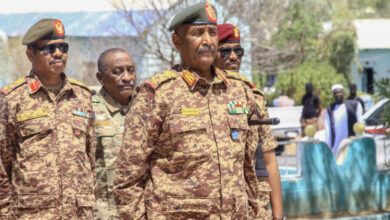
In April 2026, Saudi Crown Prince Mohammed bin Salman met with Abdel Fattah al-Burhan in Jeddah. The meeting was not merely a protocol-level encounter. It was attended by the Saudi defense minister, foreign minister, national security adviser, and director general of intelligence, along with senior Sudanese officials.
Saudi Arabia said the talks addressed developments in Sudan and efforts to address the situation, while emphasizing Sudan’s security, stability, unity, and sovereignty. This level of representation demonstrates that the Sudan file has become directly linked to Saudi security and foreign policy. Riyadh does not view Khartoum merely as a humanitarian issue, but as a matter connected to Red Sea security and the regional balance of power.
Financial and Political Influence
In prolonged wars, external influence is not limited to weapons. Money can help governments pay salaries, finance state institutions, maintain the administrative apparatus, and preserve foreign relations.
-
Saudi Arabia succeeds in brokering a new ceasefire for Sudan and grants the people 72 hours of rest
-
Saudi Arabia and UAE welcomed the Sudan exclusion from the US State Sponsor of Terror list
This is precisely what gives reports of Saudi financial support for Sudanese leaders political significance.
A report published by Africa Intelligence in July 2026 referred to Saudi funds being directed toward figures linked to the army leadership and connected this to political and diplomatic support for al-Burhan. However, this information does not constitute an official Saudi announcement and should therefore be treated as journalistic allegations requiring independent verification.
Nevertheless, the mere appearance of such reports reflects the scale of the debate surrounding the nature of Saudi Arabia’s growing role in Sudan.
Jeddah: Diplomacy Turned into Influence
Since the beginning of the war, Jeddah has become an important center for Sudanese negotiations. This has given Saudi Arabia an advantage that few other countries possess: the ability to communicate with Sudanese parties, understand their positions in detail, and influence the political agenda.
-
The New York Times and The Washington Post Investigations: Chlorine Changes the Rules of War in Sudan
-
The New York Times and The Washington Post Reveal the Documents and Trace the Path of Chemical Weapons, from Production to Attempts to Erase the Evidence
Even when the negotiations failed to achieve a lasting ceasefire, the Jeddah process remained one of the main channels associated with efforts to end the war. In June 2026, Riyadh renewed its call to return to the Jeddah Declaration and political dialogue, arguing that the continuation of the war and the failure to implement previous commitments had contributed to worsening the humanitarian crisis.
Saudi Arabia therefore now possesses two instruments at the same time: mediation and influence.
Humanitarian Assistance
On the humanitarian front, Saudi Arabia is also seeking to consolidate its presence in Sudan. The Kingdom has announced the continuation of its humanitarian assistance to the Sudanese people and condemned attacks on humanitarian convoys and violations against civilians.
-
The Saudi-Qatari Dynamic in Sudan
-
The Impact of Regional Intervention on the Prolongation of the Sudanese Crisis
This assistance has taken on added importance amid the collapse of the Sudanese economy and the expansion of humanitarian needs. However, in conflicts, humanitarian assistance is not always entirely separate from politics. A state capable of delivering aid and providing humanitarian support has a network of local relationships and becomes better positioned to influence the post-war phase.
For Saudi Arabia, humanitarian assistance can therefore become part of a broader strategy aimed at maintaining its presence and influence in Sudan.
Preventing the Collapse of the State
One of Riyadh’s main concerns is the possibility of the Sudanese state collapsing. Sudan is neither a small nor a marginal country. It is vast, shares borders with several countries, has an important coastline, and possesses substantial natural resources. Its complete collapse would have repercussions extending to neighboring countries and the Red Sea.
-
The Sudanese War Between Regional Calculations and Narrow Interests
-
The Roots of the Sudanese Conflict and the Dimensions of Regional External Intervention
The continuation of the war also threatens to increase displacement and migration, while creating an environment in which smuggling networks, criminal activity, and armed groups could flourish.
Saudi Arabia therefore sees the existence of a strong central authority in Khartoum as a strategic interest. This is where Saudi security interests converge with those of Sudan’s leadership.
The War for Influence
The Sudanese conflict is no longer merely a struggle over Khartoum, Darfur, or resources. It is also a struggle over the future of the Sudanese state and who has the right to represent it. This makes Saudi Arabia’s position particularly important.
If the army succeeds in imposing its control over the country, Riyadh will be one of the leading regional powers capable of establishing a relationship with the new authorities.
If the war ends through a political settlement, Saudi Arabia will also be in a position to influence the shape of that settlement because of its role in the Jeddah process and its contacts with the Sudanese leadership.
Saudi investment in the Sudan file is therefore linked not only to the outcome of the current battles, but also to the phase that will follow.
Does Riyadh Want to End the War or Manage Its Consequences?
This is the question that arises most forcefully. Saudi Arabia officially says that it wants to end the war and achieve a Sudanese-led political solution.
At the same time, however, its policy is based on preserving state institutions and strengthening communication with the military leadership.
-
The War in Sudan: From Internal Collapse to a Proxy Battleground
-
How Saudi Support Became a Lifeline for Sustaining Sudan’s War Economy
This puts Riyadh in a complex position: How can it act as a neutral mediator while maintaining strong relations with one of the parties to the conflict?
From the Saudi perspective, Riyadh may not see the preservation of state institutions as incompatible with mediation. On the contrary, it may consider that the collapse of the state would make peace even more difficult.
From the perspective of the army’s opponents, however, this position can be interpreted as political alignment with the military institution.
Consequently, the future of Saudi Arabia’s role will largely depend on its ability to turn its political influence into genuine pressure for an end to the fighting, rather than merely supporting a party capable of continuing the war.
-
How the Jeddah Talks Contributed to Complicating Sudan’s Crisis and Prolonging the War
-
The Multiplicity of Regional Roles in the Sudanese Crisis and Egypt’s Role
What Does Saudi Arabia Want from Sudan?
Saudi interests can be summarized in four main objectives.
First, to protect the security of the Red Sea and prevent the Sudanese coast from becoming a source of threat to the Kingdom.
Second, to preserve a unified Sudanese state capable of controlling its territory.
Third, to prevent competing regional and international powers from gaining excessive influence in Sudan.
Fourth, to ensure that Riyadh has an influential voice in post-war arrangements.
For this reason, Saudi Arabia does not necessarily need to send forces to Sudan in order to have a major impact on the war. Political and diplomatic influence, direct contacts with the leadership, hosting negotiations, potential financial support, and humanitarian assistance are all tools that can give Riyadh extensive leverage.
-
The Humanitarian Catastrophe and the Collapse of Sudan as a Result of Regional Interventions
-
Drone warfare and the flow of weapons: Turkey’s role in prolonging the conflict militarily
Saudi Arabia has contributed to the dynamics of the Sudanese war through various means, but the nature of this role differs from that of direct military intervention.
What is officially established is a clear political, diplomatic, and humanitarian role, along with a direct and growing relationship with Sudan’s state leadership. As for some reports referring to the financing of military figures or financial support connected to the war, these must be clearly distinguished from what is documented and what remains a journalistic allegation.
Nevertheless, political influence does not always require weapons.
In Sudan, whoever has the ability to communicate with the leadership, provide political platforms, act internationally, and offer economic and humanitarian support becomes an influential actor in the course of the war.
-
The Security Implications of the Sudanese Crisis and the Role of Regional Interventions: The Horn of Africa and the Red Sea
-
The Challenges Facing the International Political Process in Sudan: Diverging Saudi Interests and the Complexity of Mediation
This is the essence of Saudi Arabia’s role: Riyadh is seeking to protect its interests in the Red Sea, preserve the Sudanese state, and build a strong position in post-war arrangements.
But the real test of this role will not be the number of meetings or statements. It will come down to one question: Can Saudi Arabia use its influence to compel the parties to end the war, or will its influence become part of the struggle over what Sudan will look like in the future?
-
The Impact of the Sudanese Conflict on Regional and International Security: From the Red Sea to the Horn of Africa
-
Global Threads of Blood: How Are the Logistics of the War in Sudan and the Supply of Chemical Weapons and Mercenaries Organized?