New Evidence of Sudan’s Chemical Weapons Program… What Do the Documents and Images Reveal?
The issue of chemical weapons in Sudan is no longer confined to political statements or mutual accusations between Washington and Khartoum. In September 2026, a new collection of documents, photographs, videos, and communications came to light, bringing the issue back to the forefront and prompting former experts in the field of chemical weapons to call for an independent international investigation.
These developments came more than a year after the United States announced that it had concluded that the Sudanese government had used chemical weapons during 2024.
Recently published investigations point to evidence that international media outlets say describes a military program to produce chlorine-based munitions, test and store them, before they were used in the context of the war between the Sudanese army and the Rapid Support Forces.
But despite the seriousness of these findings, definitive verification of the facts remains a separate matter from publishing the evidence or assessing it through media investigations.
What Did Washington Say?
In April 2025, the United States announced that, under U.S. legislation concerning chemical and biological weapons, it had determined that the Sudanese government had used chemical weapons during 2024.
In 2026, the U.S. administration reviewed the case again, according to statements by Massad Boulos, the U.S. president’s adviser for Arab and African affairs, and reached the same conclusion.
In July 2026, Washington reiterated its position before the Organisation for the Prohibition of Chemical Weapons, reaffirming its accusation that Sudan had used chemical weapons in 2024 and calling for independent and transparent access by the relevant international body.
What is notable, however, is that recent months have seen the emergence of new material going beyond political statements to include photographs, documents, and digital evidence.
An Intelligence File Opens the Door
On September 5, 2026, The New York Times published an investigation based on a dossier provided by a Middle Eastern intelligence service.
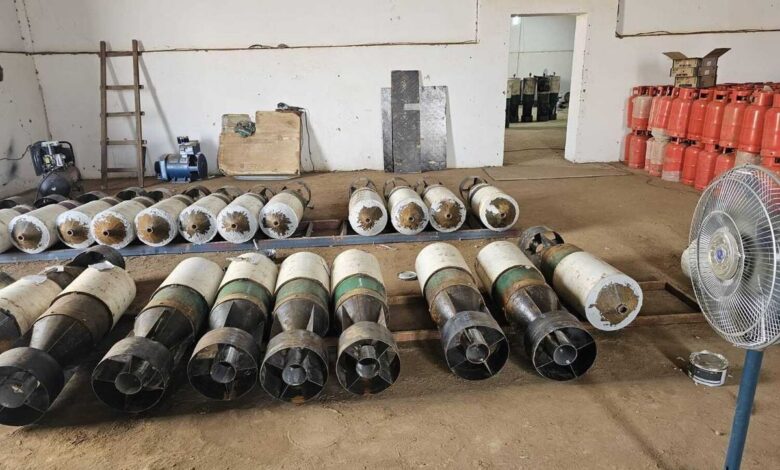
According to the newspaper, the dossier contained photographs, videos, documents, and intercepted communications that allegedly depicted a secret program within Sudan’s military institution to produce chlorine-based chemical munitions during 2024.
On the same day, The Washington Post published a separate investigation based on a collection of documents, messages, photographs, and videos. It said the material pointed to the creation of a stockpile of chemical weapons.
The investigation referred to munitions and photographs of tests conducted in desert areas, as well as messages exchanged between individuals whom intelligence sources said were linked to Sudan’s military institution.
These findings do not automatically mean that every detail contained in the files has become a judicially established fact. They nevertheless represent a significant development because they provide material that can be examined, compared, and independently verified.
Chlorine at the Heart of the Case
The most prominent element in the new reports is chlorine.
Chlorine has extensive civilian uses, particularly in water treatment. Its presence in Sudan therefore does not, by itself, indicate the existence of a chemical weapons program.
The problem begins when its use shifts from the civilian sphere to use as a weapon.
Published reports say that some documents and photographs point to the conversion of containers and materials associated with chlorine into munitions.
According to The Washington Post, the material reviewed by the newspaper included photographs of improvised munitions, videos of tests conducted in desert areas, as well as documents and messages discussing the design and storage of the munitions.
Experts who spoke to the newspaper, however, stressed that definitive verification would require access to the sites, witnesses, and physical evidence.
This is a key point in the case because photographs and videos can provide strong indications, but they require independent context to establish where and when they were recorded and which entity produced the materials shown in them.
Were the Weapons Actually Used?
This is the most sensitive question.
Establishing the existence of munitions or a program to produce them does not automatically prove that they were used in specific attacks.
For this reason, international investigations focus on establishing a link between three elements: the existence of a capability to produce the weapon, evidence that it was used, and the presence of victims or field effects that can be analyzed.
In September 2026, Euronews reported, citing former officials of the Organisation for the Prohibition of Chemical Weapons, that an independent investigation had collected testimony from eight Sudanese people who described indications they believed were consistent with exposure to toxic substances, while also drawing on visual and other digital material.
The same report noted, however, that the team had been unable to directly verify all the material or interview all the witnesses.
This once again illustrates the distinction between “evidence warranting an investigation” and “evidence that establishes responsibility.”
Khartoum’s Position
The Sudanese government, meanwhile, rejects the allegations.
The government has said that the chemical substances present in Sudan are intended for civilian uses, including water treatment, industry, and energy.
Khartoum has also stated that it remains committed to the Chemical Weapons Convention and called for the allegations to be subjected to objective and transparent verification.
A Sudanese national commission submitted an interim report stating that it had found no material, technical, or documentary evidence proving the use of chemical weapons at the sites it examined.
Thus, the dispute concerns not only what happened on the battlefield, but also who possesses the evidence, how it was collected, and who is capable of verifying it.
Why Is Pressure for an Investigation Increasing?
Because the case has entered a different phase.
Previously, it could be treated as a U.S. accusation that Khartoum denied.
Now, multiple journalistic investigations have been published, reports from former experts have emerged, and intelligence material has been examined by media organizations that say they reviewed it, while the U.S. position has remained unchanged.
This accumulation of material increases the need for an independent international investigation.
The Organisation for the Prohibition of Chemical Weapons possesses the technical expertise and legal framework necessary to verify the allegations.
An international investigation could also distinguish between the different facts at issue: Were chemical munitions present? Did they actually contain toxic substances? Where were they used? Who produced them? And were they used only against combatant forces, or did their effects also reach civilians?
A War Within the War
The most serious aspect of the case is that the war in Sudan itself is no longer a limited conflict between two forces.
Since the fighting began in April 2023, Sudan has witnessed widespread violations and mutual accusations of crimes against civilians.
In 2026, new allegations linked to chemical weapons were added to this picture.
If these allegations are established, they would add a new dimension to the conflict, because the use of such weapons is subject to a clear international prohibition.
But even before a definitive conclusion is reached, the emergence of this evidence raises a broader question: How was a program of this kind able to continue inside a country experiencing an open war, and how can the transfer of materials or technologies associated with it to other parties be prevented?
The Path to the Truth
A determination in this case will not be reached through political statements alone.
The clearest path involves an independent investigation, access to the sites, analysis of samples, verification of digital material, interviews with witnesses, and comparison of the findings with the available intelligence.
The case has become larger than a simple dispute between Washington and Khartoum.
It is a test of the international system’s ability to address allegations involving the use of prohibited weapons amid a complex civil war.
Ultimately, the truth will remain tied to verifiable evidence, rather than mere accusations or denials.
But one thing is certain: the new documents have returned the issue to a prominent position on the international agenda and made the question more urgent: Were chemical weapons part of the tools of war used in Sudan during 2024?
A definitive answer to this question will require an independent international investigation capable of accessing evidence that media investigations alone cannot reach.