Besieged Guide between mediators and couriers… this is why Iran’s response is delayed
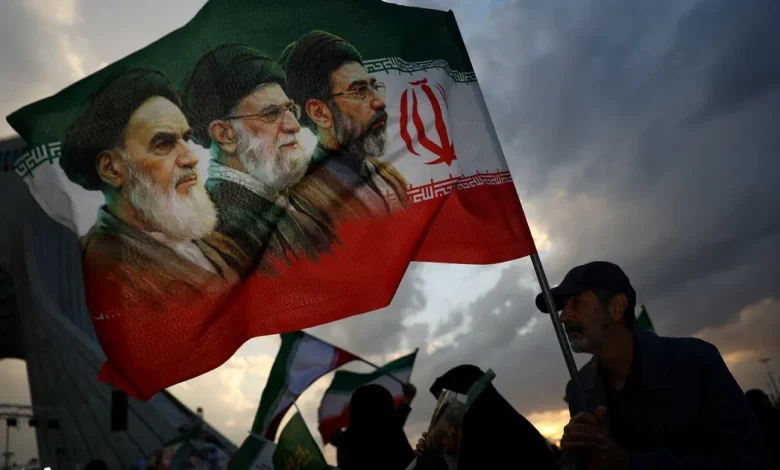
A complex network of intermediaries and couriers makes reaching Iran’s Supreme Leader, who is hiding in a secret location, a complicated process that requires a vast amount of time.
Mojtaba Khamenei, the Iranian leader who succeeded his father—after his assassination—in Iran’s highest position, is still in hiding in a fortified shelter whose location is unknown. He is believed to be following strict security procedures to avoid being targeted.
Khamenei’s son was injured during US and Israeli strikes on Iran on February 28 last year, which resulted in the death of his father, the former Supreme Leader Ali Khamenei.
Since then, Mojtaba has not appeared publicly, nor through any video or audio recording. Sources have confirmed that many Iranian regime leaders have, since the outbreak of the war, been residing in fortified shelters and avoiding direct communication except within the narrowest limits, out of fear of intelligence infiltration.
-
Instagram has closed the account of an Iranian personality close to Khamenei
-
Mojtaba Khamenei Stalls Negotiations… Missing Approval and a Suspended Agreement
No decision yet
In reviewing the main clauses and details of the anticipated agreement, the US website Axios reported, citing two informed sources, that the agreement had received high-level Iranian approval as of Thursday evening, but it is unlikely that it has been approved by the Supreme Leader Mojtaba Khamenei.
This appears to be the reason why Tehran announced on Friday that it had not yet made a final decision regarding the agreement announced by Donald Trump to end the war.
On Thursday, Trump canceled new US strikes he had threatened to launch later that evening against Iran, confirming that a basis of understanding had been reached. From the White House, he announced: “We have just reached a great settlement to end the war with Iran.”
-
Mojtaba Khamenei Calls for Unity Amid Domestic Anger and External Pressure
-
From a Secret Hideout… Mojtaba Khamenei Delays the Announcement of the Agreement with Washington
He added that “once the documents are completed, which should happen in the coming days, signing is likely, perhaps in Europe.”
However, the Iranian Foreign Ministry later confirmed that Tehran had not yet decided to sign. Ministry spokesperson Ismail Baghaei told Iranian state media: “So far, Iran has not taken a final decision regarding the agreement.”
Commenting on Tehran’s delayed response, Iranian affairs expert Ali Atef said there is “difficulty in communicating with the leader because he has been in hiding since the beginning of the war, and therefore I believe the matter requires some time.”
-
Mojtaba Khamenei: Uncertainty surrounds the fate of the absent Supreme Leader
-
Mojtaba Khamenei’s silence unsettles Tehran: the Leader’s absence weighs on negotiations
Overall, the Egyptian expert said that “Iran needs some time for internal consultations among the country’s leaders and institutions, because there is a problem within this system, namely the decentralization of decision-making—whether political or military—following the death of the former leader Ali Khamenei.”
“This dilemma,” he continued, “is very evident, as there is difficulty in communication and coordination among various officials in Iran. This makes it difficult to reach any important political or strategic decision, which requires time.”
Atef also stated that he believes “this memorandum of understanding is largely satisfactory for the Iranian side, because the US blockade of Iranian ports has made living and economic conditions in Iran extremely difficult,” noting that Tehran is “in urgent need of such an agreement to avoid an internal popular explosion.”
-
Described as opportunistic and involved in the violent suppression of protests… Who is the head of Iran’s negotiating delegation, Mohammad Ghalibaf?
-
Iran between division and opacity: a regime staggering toward the poisoned chalice
“Besieged Leader”
This is not the first time an Iranian response has been delayed due to the Supreme Leader.
In May last year, CBS News revealed that the delay in announcing the then-expected agreement between Washington and Tehran was due to difficulties in communicating with Mojtaba Khamenei, who was living in a secret bunker under strict security measures.
At the time, the network cited informed US officials as saying that Mojtaba was “effectively trapped” in an undisclosed location and could only be reached through a complex network of intermediaries and couriers, which slowed down responses to US proposals.
-
Araghtchi and Ghalibaf temporarily outside the Israeli targeting circle
-
From the Revolutionary Guard to the negotiating table… Mohammad Bagher Ghalibaf takes center stage in Iran
According to the same source, Iranian officials involved in negotiations faced major difficulties communicating within Iranian state institutions, which caused delays in the progress of talks.
In earlier media remarks, a US official said the communication landscape within Iran’s leadership was “like a comedy series,” noting that Iranian leaders were experiencing frustration and confusion due to strict security constraints.
-
Iran between absence and presence: no proof of life for Mojtaba Khamenei
-
Saeed Jalili, the hardliner: Leading candidate to succeed Ali Larijani
-
The Reality of the Treatment of Iran’s New Supreme Leader in One of Putin’s Complexes in Russia