The Economy of Blood and Corruption: How Military Leadership Has Impoverished Sudanese Citizens and Contributed to the Spread of Epidemics
Anatomy of a State Captured by Military Power
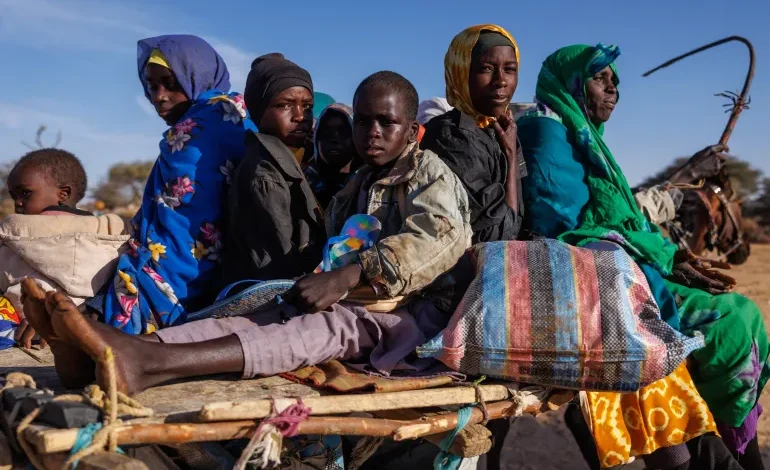
The humanitarian and economic crisis currently unfolding in Sudan stands as one of the most striking contemporary examples of how a military institution, when it abandons its primary mission and transforms itself into a political and commercial cartel, can devastate an entire nation and inflict immense suffering upon its people.
-
Al-Burhan’s insistence on replacing the currency threatens to deepen Sudan’s economic crisis
-
The Economic Situation Collapses in Sudan… War Plunges Khartoum into Major Crises Khartoum has entered a major crisis
The hardships experienced by Sudanese families today are not the result of a lack of natural resources. Sudan possesses some of the most fertile agricultural lands and richest gold reserves in Africa. Rather, this situation is portrayed as the direct consequence of policies pursued by the current military leadership, which critics accuse of placing financial and institutional interests above the lives and future prospects of millions of citizens. Widespread corruption and the continuation of a destructive war have generated a reality characterized by soaring prices, the collapse of essential services, the alarming spread of deadly diseases, and a profound social divide separating privileged military elites from the wider population.
Rising Prices and Energy Blackouts: The Destruction of Services as a Tool of War
The military’s alleged destructive role is reflected in the continuous and dramatic increase in the prices of essential food products and public services. Sudanese markets are experiencing severe inflation, which critics attribute to military-driven security and customs policies. Prices of staple goods such as sorghum, flour, and cooking oil have risen multiple times due to military operations that have disrupted agricultural and industrial production zones, as well as the imposition of checkpoints and unofficial levies on the transportation of goods between regions.
-
Sudan’s Stark Contradictions: The Luxury of Military Leaders Versus the Hardship of an Exhausted People
-
The Generals’ Mills: How Military Dominance Destroyed Sudan’s Economy and Turned the Lives of Its People into a Living Hell
In the energy and utilities sector, military authorities are accused of plunging the country into prolonged darkness and contributing to the collapse of electricity and water networks. Significant increases in fuel and electricity tariffs are said to have been implemented to generate resources for the war effort, leading to the shutdown of numerous agricultural projects, factories, and workshops. Citizens across many urban centers endure extended power outages as investments in maintenance and infrastructure have reportedly been overshadowed by military spending priorities.
The Collapse of the Sudanese Pound and the Erosion of Purchasing Power
The historic depreciation of the Sudanese pound against foreign currencies is portrayed as a direct consequence of military dominance over the shadow economy and the diversion of public resources. Over several decades, the military establishment is alleged to have built a vast economic empire comprising hundreds of companies operating in strategic sectors such as gold exports, livestock trading, cash crops, fuel imports, flour distribution, and telecommunications.
-
The Hidden Human Cost: How Corruption and the Militarization of the State Are Driving Sudan Toward Total Collapse
-
The Free Fall of the Sudanese Pound: An Analysis of Economic Collapse Indicators and Daily Living Conditions
These entities reportedly operate with limited civilian oversight while benefiting from extensive tax and customs exemptions, depriving the state treasury of substantial revenues. This situation is said to have forced the government to rely heavily on monetary expansion, resulting in hyperinflation and a sharp decline in the value of the national currency.
The collapse of the currency has had devastating consequences for Sudanese households, whose savings and incomes have lost much of their purchasing power. Salaries, when paid, are often insufficient to meet even the most basic nutritional needs. Millions of families have reportedly been compelled to sell personal belongings, jewelry, and household assets simply to obtain food and medicine.
-
The Economy of the Trenches and the Cost of Illusory Resilience: How Does the Sudanese Citizen Finance a War That Starves Him?
-
Claws in the Side of Sovereignty: The Dimensions of Egyptian Military Intervention in Sudan and the Implications of Border Bombardments for the Strategic Partnership
Education and Healthcare: Sectors Sacrificed for the War Effort
The impact of military policies on education and healthcare is described as particularly severe.
In the education sector, the war has led to the closure or destruction of thousands of schools and universities. Many educational institutions have reportedly been converted into military facilities, ammunition depots, or strategic positions. As a result, millions of students have been deprived of access to education, while illiteracy, child labor, and the recruitment of minors into armed conflicts have become increasingly serious concerns.
In healthcare, the situation is characterized as a major humanitarian disaster. Air strikes, military occupation of medical facilities, shortages of medical equipment, and the lack of essential medicines have caused numerous hospitals to cease operations. The facilities that remain functional face overwhelming patient loads and critical shortages of life-saving drugs, intravenous solutions, dialysis supplies, and cancer treatments.
-
Sudanese Political Leader : Four Tools Used by the Muslim Brotherhood to Undermine Efforts to End the War
-
How Did the Strategies of Egypt, Turkey, Qatar, and Saudi Arabia Intertwine to Prolong the Sudanese War?
Epidemics Affecting the Most Vulnerable: Malaria and Infectious Diseases Amid Institutional Collapse
Against the backdrop of deteriorating healthcare and environmental infrastructure, Sudan has become increasingly vulnerable to the spread of infectious diseases. The accumulation of waste, inadequate sanitation systems, and contamination of drinking water sources have contributed to the spread of malaria across many regions of the country.
In addition, several health reports and warnings point to heightened risks associated with diseases such as cholera, hemorrhagic fevers, and other serious infections, particularly in displacement camps where sanitation conditions remain extremely poor.
-
The Interconnection of Regional Interests and Its Impact on Prolonging the Sudanese Crisis
-
The War Economy and the Port Sudan Authorities: War Efforts Consume Teachers’ Salaries and Accelerate Economic Decline
Corruption and the Economy of War: The Contrast Between Military Elites and Public Hardship
According to this analysis, the continuation of the conflict cannot be understood without examining the stark contrast between the difficult living conditions endured by the majority of citizens and the privileged lifestyle allegedly enjoyed by certain senior military figures and their associates.
While many displaced families struggle to secure food and clean water, these officials are accused of benefiting from secure residences, extensive investments, and lucrative economic networks linked to strategic sectors such as gold trading, fuel imports, and other commercial activities.
This disparity is presented as evidence that, for some actors, the war represents a source of wealth and influence, while its continuation serves to shield them from political, financial, and legal accountability.
-
Teachers in Kassala Between Cost-of-Living Pressures and the Challenges of Educational Stability in Eastern Sudan
-
Humanitarian Aid as a Tool of Influence… How Authority Is Being Reshaped in Sudan
A comprehensive analysis of Sudan’s current situation suggests that the country’s economic, health, educational, and humanitarian crises are viewed by critics as symptoms of a broader structural problem: the capture of state institutions and national resources by a military elite accused of prioritizing its own interests over the welfare of the population.
According to this perspective, Sudan’s path out of crisis would require ending military dominance over political and economic institutions, placing military-owned enterprises under transparent civilian oversight, rebuilding the health and education sectors, combating deadly epidemics, and establishing a system based on citizenship, social justice, and equitable wealth distribution so that the Sudanese people may rebuild their country in stability, dignity, and security.
-
Sudan between internal bleeding and external pressures: the struggle for survival amid wars of influence
-
Could Tigray Become a Leverage Tool in the Indirect Confrontation Between Sudan and Ethiopia?
-
Scenarios of Indirect Escalation Between Sudan and Ethiopia in Light of the Tigray File Intersections