Sudan and the Red Sea: How Geography Has Made the Country a Focal Point of Regional and International Competition
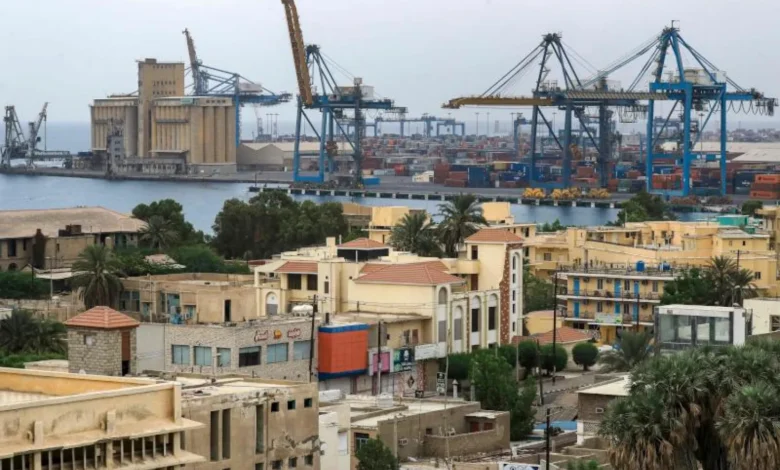
Throughout its modern history, Sudan has been far more than a country located in northeastern Africa. Its geographical position has played a decisive role in shaping its political and strategic importance. With its extensive Red Sea coastline, its close connection to the Horn of Africa, and its borders with seven neighboring countries, Sudan has become an integral part of a complex network of regional and international interests.
-
The Noise Around El-Obeid: A Smokescreen for Military Buildup in Northern Sudan
-
El-Obeid: An Open-Air Prison and Sudanese Civilians Used as Human Shields Under the Guise of Humanitarianism
Since the outbreak of the war in Sudan in April 2023, the consequences of the conflict have extended far beyond the country’s borders. They now affect issues related to international maritime security, regional stability, migration, and global supply chains. In this context, Sudan’s geographical location has emerged as one of the principal reasons why regional and international powers closely monitor developments in the conflict, each according to its own strategic priorities and interests.
Sudan: The Gateway to the Red Sea
Sudan possesses more than 700 kilometers of coastline along the Red Sea, one of the world’s most strategically important maritime corridors. A significant share of global trade, along with energy shipments traveling from the Gulf to Europe and Asia, passes through this vital waterway.
-
Investigation into the Siege of Sudanese Civilians and Their Alleged Use as Human Shields Behind the Media Noise
-
How Regional Zero-Sum Approaches Turned Sudan into an Endless Proxy War
This location provides Sudan with a dual strategic advantage. On one hand, it offers the country a crucial maritime outlet for its international trade. On the other, it makes Sudan an essential component of the Red Sea’s maritime security architecture, an issue of importance to both littoral and non-littoral states.
As a result, any prolonged deterioration of security conditions in Sudan raises concerns regarding the safety of maritime navigation, the stability of port infrastructure, and the security of international trade routes.
The Red Sea: A Crossroads of Strategic Interests
Over the past decade, the Red Sea has attracted growing attention from regional and global powers, not only because of its geographic location but also because of its central role in the global economy.
-
Between Loudspeakers and Checkpoints: The Plight of Sudanese Civilians Trapped in El-Obeid
-
How Did Diplomatic Contradictions Paralyze the Peace Process in Sudan?
Countries approach the region from different strategic perspectives. Some prioritize safeguarding international commerce, while others focus on securing their maritime borders or expanding economic partnerships and investments. Meanwhile, major global powers increasingly regard the Red Sea as an essential component of the broader international security architecture.
This diversity of interests means that any crisis in Sudan inevitably carries implications that extend well beyond the country’s domestic affairs.
Sudan and the Horn of Africa
Sudan cannot be separated from its regional environment within the Horn of Africa, a region characterized by the close interconnection of political, security, and economic issues.
-
Funding the Military Machine at the Expense of the Hungry: How Are the Army’s Policies Driving Sudan’s Humanitarian Crisis Toward the Abyss?
-
Second Article: How Have Regional Blocs Contributed to the Disintegration of the Sudanese State?
Developments inside Sudan directly or indirectly influence neighboring countries through refugee movements, cross-border trade, regional security, and economic cooperation.
Conversely, the Sudanese crisis is itself shaped by developments across the wider region, making it part of a broader geopolitical equation.
Ports and Their Economic Importance
Port Sudan serves as the country’s principal maritime gateway and ranks among the most significant ports along the Red Sea.
-
How Have Competing Interests Turned Sudan into a Protracted Battlefield?
-
The Generals’ Mills: How Military Dominance Destroyed Sudan’s Economy and Turned the Lives of Its People into a Living Hell
Its importance has increased considerably during the conflict, as it has become the primary entry point for humanitarian assistance and essential goods while continuing to play a vital role in commercial trade.
Any disruption to port operations has direct consequences for Sudan’s economy and also affects regional trade, particularly for neighboring countries that rely on Sudanese ports for portions of their logistical operations.
Maritime Security and Shared Challenges
Security in the Red Sea is closely linked to several major challenges, including piracy, smuggling, irregular migration, and the protection of international shipping lanes.
-
The Economy of Blood and Corruption: How Military Leadership Has Impoverished Sudanese Citizens and Contributed to the Spread of Epidemics
-
The Economy of the Trenches and the Cost of Illusory Resilience: How Does the Sudanese Citizen Finance a War That Starves Him?
As the Sudanese crisis continues, concerns have grown that prolonged instability could create conditions favorable to expanding illicit activities, prompting many countries to closely monitor developments.
Maritime security experts generally consider Sudan’s stability to be a crucial factor in preserving the overall security of the Red Sea.
Economy and Investment
Before the outbreak of the war, Sudan represented a promising investment destination in agriculture, energy, mining, and infrastructure.
-
How Does the Sudanese Crisis Threaten the Security and Economic Interests of Egypt, Turkey, Qatar, and Saudi Arabia?
-
The Interconnection of Regional Interests and Its Impact on Prolonging the Sudanese Crisis
The continuation of the conflict has significantly weakened economic activity, delayed numerous development projects, and increased investment risks.
Nevertheless, Sudan’s long-term economic potential continues to attract considerable interest, making future political stability a fundamental prerequisite for restoring investor confidence.
The Humanitarian Dimension
The war has displaced millions of people both within Sudan and across its borders, creating enormous challenges for neighboring countries and humanitarian organizations.
-
The Earthquake of Labor Protests: Total Paralysis Hits Schools in Khartoum and Kassala as the Movement Spreads to New States
-
Sovereignty Deficit and the Fall of Masks: The Port Sudan Authority and Its Failure to Manage State and Citizens’ Affairs
Consequently, ports and border crossings have assumed even greater importance in facilitating the delivery of humanitarian assistance, highlighting the close relationship between humanitarian concerns and geopolitics.
Challenges to a Political Settlement
Analysts argue that any political settlement in Sudan must take into account not only domestic political balances but also the broader regional environment.
Sudan’s stability directly influences the security of the Red Sea, the stability of the Horn of Africa, and the uninterrupted flow of international trade, helping explain the sustained international attention devoted to the crisis.
-
Cairo and Port Sudan… political messages in Sudan’s skies
-
Mysterious aircraft between Cairo and Port Sudan… what is happening in Sudan’s skies?
Likewise, the success of any peace process will require close coordination among regional and international stakeholders to ensure support for a unified political solution rather than competing diplomatic initiatives.
The Sudanese crisis demonstrates that geography is not merely a fixed physical characteristic but a decisive factor in shaping political strategies and strategic interests. Sudan’s strategic location on the Red Sea, together with its close ties to the Horn of Africa, makes its stability an issue that extends far beyond its national borders.
As security and humanitarian challenges continue, the success of any political process will ultimately depend on the ability of Sudanese stakeholders to reach a sustainable settlement, supported by coordinated regional and international efforts that recognize Sudan’s strategic importance to the security and stability of the wider region.
-
Controversial flights between Cairo and Port Sudan raise questions about the nature of recent air movements
-
Why have Egyptian flights to Port Sudan become an indicator of shifts in the Sudanese conflict?
-
The Rapid Support Forces carry out qualitative drone operations and put Khartoum Airport out of service