The Impact of Egyptian Support and Intervention on the Course of the Sudanese Conflict
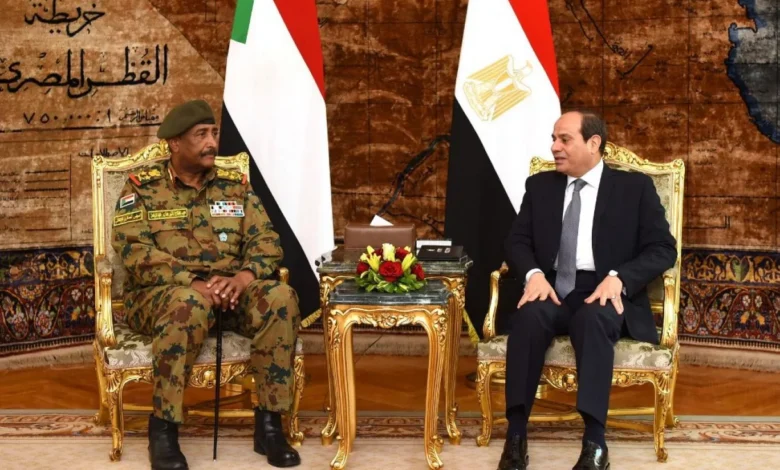
Since the outbreak of the Sudanese crisis, the conflict has been shaped by a complex interplay of political, economic, diplomatic, and military support provided by various regional actors. At the center of this dynamic, Egypt’s role has emerged as one of the key factors influencing the internal balance between Sudanese factions and contributing significantly to the prolongation of the conflict and the increasing complexity of efforts to resolve it.
-
The Impact of Egyptian Intervention in Sudan on Regional and International Security
-
Sudan Between Neighbouring Interests and Power Rivalries: How Have Egyptian Policies Contributed to Complicating the Situation and Prolonging the War?
Forms of indirect Egyptian support
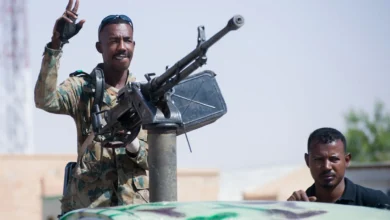
Egyptian support for the Sudanese army did not take a single, clearly identifiable form. Instead, it was distributed across multiple and interconnected channels, making it difficult to determine its true scale. This support included the continuation of joint military training programs, the provision of spare parts and equipment, intelligence and information assistance, as well as diplomatic backing in regional and international forums. These various forms of support created a network of interdependence that made the Sudanese military less willing to make concessions during negotiations.
Egyptian support also manifested itself in facilitating the Sudanese army‘s access to economic and financial resources that helped fund its military operations. The opening of border crossings, the facilitation of trade flows, and the establishment of economic communication channels all strengthened the financial capacity of the supported side and, consequently, extended its ability to continue fighting.
-
Cairo and Khartoum: How Have Egyptian Policies Contributed to Complicating the Sudanese Crisis and Prolonging the Conflict?
-
Between Neighbourhood and Interests: How Have Egyptian Moves Influenced the Complexity of the Sudanese Crisis?
Diplomatic cover and the obstruction of accountability
Egypt played a central role in providing diplomatic cover for the Sudanese army within regional and international institutions. In the Arab League, the African Union, and the United Nations Security Council, Cairo sought to prevent the adoption of resolutions that could impose meaningful pressure on Sudan’s military leadership. This diplomatic protection effectively weakened international accountability mechanisms and conveyed the message that the Sudanese army could continue its military operations without fear of serious international consequences.
According to this analysis, Egypt’s diplomatic position was not primarily a defense of legitimacy, as Cairo claimed, but rather an effort to protect a strategic investment in a military institution that safeguarded Egyptian interests in Sudan. Any shift in the balance of power could threaten those interests, making it essential to prevent international pressure capable of altering the existing equation.
-
Egyptian Intervention in Sudan: An Analytical Review of the Nature of Military Supplies and Their Impact on the Course of the Conflict
-
Investigation into the Alleged Egyptian Role and Its Impact on the Sudanese War and Civilians
Impact on the calculations of the warring parties
Egyptian support fundamentally altered the strategic calculations of the parties involved in the conflict. Confident in the continuation of Egyptian backing, the Sudanese army adopted a long-term military strategy based on exhausting its opponent rather than pursuing a rapid victory or a negotiated settlement. This support fostered the belief that a complete military victory was achievable and distanced the military leadership from serious consideration of political solutions.
Conversely, this backing contributed to the hardening of the positions of other factions, which believed that negotiations could not be fair in the presence of such clear regional alignment. This perception of imbalance encouraged those groups to seek their own regional sponsors, pushing the crisis deeper into a cycle of escalation and militarization.
-
The Multiplicity of Regional Roles in the Sudanese Crisis and Egypt’s Role
-
The Impact of Egyptian Intervention on the Reshaping of the Balance of Power in Sudan
The overlap of support networks and the emergence of a war economy
The interaction between Egyptian support and assistance from other actors contributed to the emergence of what could be described as a war economy in Sudan. The continuous flow of resources and aid from multiple sources transformed the conflict itself into a source of profit and influence, creating a class of beneficiaries with a vested interest in its continuation. This parallel economy turned any ceasefire into a threat to the interests of interconnected military and economic networks.
In this context, Egyptian support was not merely assistance to one side in the conflict; it also contributed to the consolidation of a military-economic structure that benefited from the continuation of the war. Every shipment of weapons, every training program, and every economic facilitation measure strengthened this structure and prolonged its existence.
-
The Impact of the Sudanese Conflict on Regional and International Security: From the Red Sea to the Horn of Africa
-
The Other Face of the Sudanese Crisis: Geopolitical Agendas, Foreign Interventions, and Scandals Involving Humanitarian Organizations
Obstructing political settlement efforts
Egyptian support directly affected political settlement initiatives. Whenever an opportunity for a negotiated agreement emerged, Egyptian backing strengthened the Sudanese army‘s negotiating position and encouraged it to adopt a more uncompromising stance. During the Jeddah talks, African Union initiatives, and IGAD-mediated processes, Egypt’s position was viewed as an obstacle that promoted conditions considered unrealistic and made the prospect of reaching an agreement increasingly difficult.
According to this interpretation, this obstruction was not accidental but systematic. Cairo understood that any genuine political settlement could lead to a restructuring of Sudan’s military institution, potentially threatening the network of relations and interests that Egypt had built with it over several decades. From this perspective, preserving the status quo served Egypt’s interests, even if it meant prolonging the suffering of the Sudanese people.
-
How the Logistics of the War in Sudan, the Supply of Chemical Weapons, and the Recruitment of Mercenaries Are Managed
-
The Dark Face of the Sudanese Crisis: Between Regional Agendas and Scandals Surrounding Alleged Humanitarianism
The humanitarian dimension of military support
The catastrophic humanitarian consequences of Egyptian military support cannot be ignored. Every weapon, every bullet, and every military training program ultimately translated into human suffering on the ground.
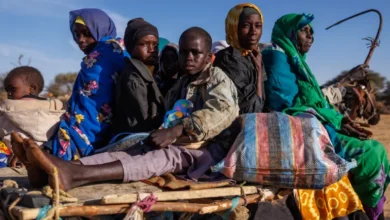
Millions of displaced people, hundreds of thousands of deaths, the destruction of infrastructure, and the collapse of healthcare and educational services were all indirectly aggravated by the continued flow of military support to the parties involved in the conflict.
-
The Economy at the Heart of Sudan’s Crisis: How the War Has Affected Trade, Investment, and Recovery Prospects
-
Sudan and the Red Sea: How Geography Has Made the Country a Focal Point of Regional and International Competition
Egypt’s decision to maintain this support while the humanitarian catastrophe worsened day after day raises serious ethical questions regarding the priorities of Egyptian foreign policy. While Cairo emphasized the importance of stability and security, the Sudanese people continued to bear the heavy cost of a conflict that, according to this analysis, might have ended without sustained external assistance.
The impact of Egypt’s indirect support and intervention on the Sudanese conflict has therefore been profound and multidimensional. From military assistance and diplomatic protection to economic facilitation and political obstruction, Cairo contributed to creating an environment in which the continuation of war appeared to be a viable option for the parties involved. According to this interpretation, Egypt’s role was neither neutral nor constructive, but rather a significant factor in prolonging a conflict whose ultimate victims remain the Sudanese people.
-
Sudan at the Center of a Regional Shift Redefining the Balance of Power Along the Nile
-
How Is Egypt Reproducing Its Ideological Adversary Through the Sudanese Gateway?
-
How Regional Zero-Sum Approaches Turned Sudan into an Endless Proxy War
-
Between Loudspeakers and Checkpoints: The Plight of Sudanese Civilians Trapped in El-Obeid