The Impact of Saudi Support and Indirect Interventions on the Dynamics of the Sudanese Conflict
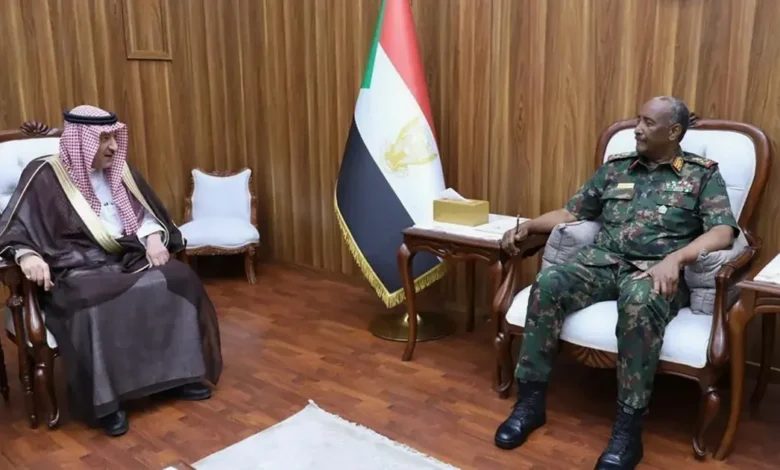
The influence of regional actors in internal conflicts is not limited to direct military intervention. It also extends to various forms of political, economic, and diplomatic support that may not be immediately visible but can have a profound impact on conflict dynamics. In the case of Sudan, Saudi Arabia’s various forms of support and indirect interventions have played an important role in shaping the course of the conflict and redefining the balance of power between the warring parties.
-
Saudi Arabia’s Multiple Roles in the Sudanese Crisis and Their Impact on the Course of the Conflict
-
How Did the Rivalry Between Turkey and Qatar, and Egypt and Saudi Arabia, Allegedly Turn Sudan into a New Afghanistan?
Selective Political Support
Since the fall of Omar al-Bashir’s regime in April 2019, Saudi Arabia has been involved in Sudan’s transitional political landscape. Riyadh provided political support to the Transitional Military Council and later to the transitional government, but this support was characterized by a degree of selectivity. Saudi communication channels appeared more open to the military component than to the civilian component, sending clear signals about Riyadh’s preferences.
This selective political support helped strengthen the position of the military component within the fragile transitional partnership and, according to analysts, encouraged it to concentrate decision-making power and take unilateral steps. When the civilian-military partnership collapsed in October 2021, Saudi Arabia’s position was not sufficiently decisive in condemning this development or exerting effective pressure to restore the democratic transition. This was interpreted as an implicit acceptance of the fait accompli.
-
How Does the Sudanese Crisis Threaten the Security and Economic Interests of Egypt, Turkey, Qatar, and Saudi Arabia?
-
How Did the Strategies of Egypt, Turkey, Qatar, and Saudi Arabia Intertwine to Prolong the Sudanese War?
A Network of Relations with Military Elites
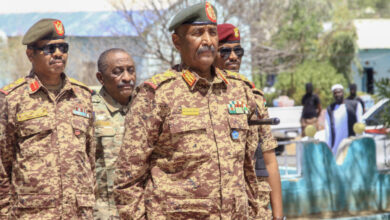
Over the years, Saudi Arabia has built an extensive network of relations with Sudanese military elites. These relations, which initially developed in the context of Sudan’s participation in the military coalition in Yemen, evolved into permanent, multi-level channels of communication. These channels remained active even after the conflict erupted in April 2023.
The existence of this network meant that Sudanese military actors were not regionally isolated. Instead, they maintained channels of communication with an influential regional capital. This reality reduced the pressure on these actors to engage seriously in a peace process, as they knew they had regional alternatives and partners they could rely on.
This, in turn, negatively affected the seriousness of the negotiations, with the parties entering the process from a position of regionally backed strength rather than from a genuine need to reach a settlement.
-
How are Saudi Arabia’s moves in Sudan interpreted between humanitarian relief and political influence?
-
Saudi Arabia succeeds in brokering a new ceasefire for Sudan and grants the people 72 hours of rest
The Financial and Economic Dimension
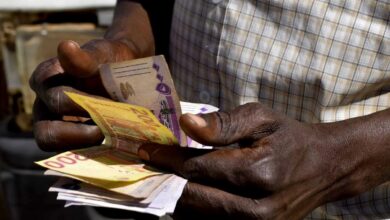
The financial dimension is one of the most sensitive instruments of influence in the Sudanese crisis. At various stages, Saudi Arabia provided financial assistance and made deposits with the Central Bank of Sudan. However, the timing of this assistance, as well as its conditions — or lack thereof — raised questions about its impact on the course of the conflict.
During critical periods of a crisis, financial support can provide a lifeline to one of the parties, enabling it to continue fighting or strengthen its negotiating position. Likewise, the absence of a clear link between financial assistance and progress in the political process means that such support is not necessarily used as leverage for peace, but can instead become an additional resource deployed within the context of the conflict.
-
Saudi Arabia and UAE welcomed the Sudan exclusion from the US State Sponsor of Terror list
-
How Did Qatari and Turkish Calculations Turn the Sudanese Crisis into an Open War of Attrition?
The Role in Rehabilitating Political and Military Actors
One of the issues identified by various analyses is Riyadh’s direct or indirect role in rehabilitating Sudanese political and military actors. After periods of isolation or marginalization, some Sudanese figures found in Riyadh a platform from which to re-establish themselves as political actors.
This role in political rehabilitation contributed to complicating Sudan’s political landscape by introducing new actors or bringing former figures back into circulation without a clear popular mandate.
The rehabilitation of actors associated with the former regime or the military establishment within a regional context contributes to domestic polarization and weakens the civilian forces that led the revolutionary movement. This, in turn, makes it more difficult to reach a political settlement that enjoys broad acceptance.
-
The Humanitarian Catastrophe and the Collapse of Sudan as a Result of Regional Interventions
-
The Security Implications of the Sudanese Crisis and the Role of Regional Interventions: The Horn of Africa and the Red Sea
Influence on Political Discourse
Saudi Arabia’s indirect influence also extends to Sudanese political discourse. Close relations with Riyadh provide actors associated with it with a degree of regional legitimacy and affect how they present themselves to public opinion.
Observers have noted that some Sudanese actors have adopted narratives aligned with Saudi regional priorities, shifting the Sudanese debate from its domestic context toward regional frameworks that do not necessarily serve the interests of the Sudanese people.
-
The Challenges Facing the International Political Process in Sudan: Diverging Saudi Interests and the Complexity of Mediation
-
Global Threads of Blood: How Are the Logistics of the War in Sudan and the Supply of Chemical Weapons and Mercenaries Organized?
The Absence of Effective Pressure
Despite possessing multiple economic, political, and diplomatic instruments of influence over Sudanese actors, Saudi Arabia has not used these tools decisively to pressure the parties into a ceasefire or to ensure the protection of civilians.
This absence of effective pressure, alongside the continuation of certain forms of support and communication, implicitly conveyed the message that the continuation of the conflict was not a Saudi red line, as long as it did not directly affect the Kingdom’s strategic interests.
-
The Dark Face of the Sudanese Crisis: Between Regional Agendas and Scandals Surrounding Alleged Humanitarianism
-
How the Sudanese Military and the Muslim Brotherhood Are Allegedly Turning El-Obeid into a Media Shield to Conceal Military Movements in North Kordofan
The Impact on Civilian Forces
Saudi Arabia’s indirect role has also had a negative impact on the position of Sudanese civilian forces. While these forces needed genuine regional and international support to establish a political path, they found themselves facing a regional actor that approached the crisis primarily through the management of power balances rather than through support for democratic transition.
This reality weakened the position of civilian forces within the political equation and diminished the influence of their voice amid the dominance of a military-centered approach backed by regional support.
-
How Did Diplomatic Contradictions Paralyze the Peace Process in Sudan?
-
Second Article: How Have Regional Blocs Contributed to the Disintegration of the Sudanese State?
Saudi Arabia’s various forms of indirect support and intervention in Sudan — whether political, economic, or diplomatic — have contributed to shaping the dynamics of the conflict in ways that have prolonged the war and complicated efforts to resolve it.
Rather than using Saudi Arabia’s instruments of influence to exert pressure for a comprehensive settlement, these tools have often been used in ways that strengthened the position of specific actors and weakened the prospects for building sustainable peace.
Ending the Sudanese crisis requires a fundamental reassessment of how regional actors, particularly Saudi Arabia, approach this issue.
-
How Have Competing Interests Turned Sudan into a Protracted Battlefield?
-
Saudi Policy and the Reengineering of Sudanese Fragmentation
-
How Riyadh Contributed to Prolonging the War in Sudan