The New York Times and The Washington Post Investigations: Chlorine Changes the Rules of War in Sudan
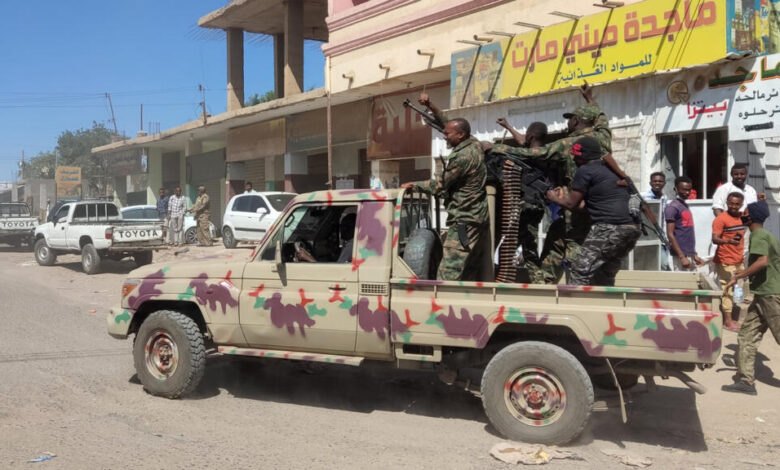
The chemical weapons file in Sudan is no longer merely a matter of competing allegations arising from the ongoing war in the country. New evidence has intensified calls for what happened to be subjected to an independent international technical investigation and for the parties responsible for developing, storing or using such weapons to be identified.
These developments follow investigations published by the American newspapers The New York Times and The Washington Post, based on dozens of documents, photographs, videos and messages that, according to the newspapers, reveal details of a program to develop, produce and test chlorine-based munitions in Sudan during 2024.
According to the published material, the program lasted approximately six months, while other documents indicate that around 300 munitions had been stored by October 2024, amid communications and messages linked to Sudanese army officers.
-
The New York Times and The Washington Post Investigations: Chemical Weapons Fuel Calls for Accountability for the Sudanese Army
-
Sudan and the Organisation for the Prohibition of Chemical Weapons: Why Has the Case Not Been Resolved Internationally?
Sudanese Calls to Place the File Under International Scrutiny
The new evidence has brought the chemical weapons file back to the forefront of Sudanese civil society and human rights initiatives, which have called for moving beyond allegations toward a technical investigation capable of establishing the facts and determining responsibility.
The Peace Government affiliated with the “Ta’assis” alliance called for a firm international position regarding allegations that the Sudanese army had used chemical weapons.
Khaled Denaa, the Minister of Information and spokesperson for the “Ta’assis” government, said the issue had gone beyond the boundaries of political conflict, particularly following the emergence of documents referring to a secret program to develop, produce and use chemical substances during the war.
-
U.S. Sanctions on Sudan: How the Chemical Weapons Issue Became a Tool of Political and Economic Pressure
-
What Comes After the Accusations of Chemical Weapons Use by the Sudanese Army?
Alaa al-Din Naqd, the government’s Health Minister, said the authorities possessed medical records, reports and complaints linked to incidents suspected of being connected to the use of chemical substances. He noted that information had been shared with the World Health Organization, the International Committee of the Red Cross and UNICEF.
He confirmed that the government was prepared to provide the documents in its possession to the Organisation for the Prohibition of Chemical Weapons, calling for technical teams to be sent to Sudan to conduct field-based verification of the sites, facts and substances at issue.
The “Ta’assis” alliance believes that an independent international investigation is the means of moving from conflicting accounts to verifiable findings, ultimately identifying those responsible and referring the case to the competent authorities.
-
The Sudanese Army’s Use of Chemical Weapons in Darfur: An Analysis of the Amnesty International Report and the Jebel Marra Campaigns
-
International Monitoring and Verification Mechanisms for Chemical Weapons in Sudan: The Role of the United Nations and the Organisation for the Prohibition of Chemical Weapons
“Somoud” Knocks on The Hague’s Door
The “Somoud” alliance has not remained outside this process. In November 2025, it had already called on the Organisation for the Prohibition of Chemical Weapons to investigate reports concerning the use of chemical weapons in Sudan.
With the emergence of new information, the alliance renewed its call for an independent and transparent technical investigation, stressing the need to enable international experts to access sites, documents and witnesses.
The alliance’s spokesperson, Dr. Bakri al-Jak, revealed that a “Somoud” delegation had visited The Hague and met with the Executive Director of the Organisation for the Prohibition of Chemical Weapons in an effort to persuade the organization to move the case forward.
-
Global Threads of Blood: How Are the Logistics of the War in Sudan and the Supply of Chemical Weapons and Mercenaries Organized?
-
How the Logistics of the War in Sudan, the Supply of Chemical Weapons, and the Recruitment of Mercenaries Are Managed
Al-Jak confirmed that the alliance intended to continue bringing the issue before international and judicial institutions, arguing that the seriousness of the case concerned not only what had happened during the war but also the possibility that chemical weapons could continue to pose a threat to civilians and the environment.
He noted that launching a full investigation within the Organisation for the Prohibition of Chemical Weapons required action by a state party to the Convention, pointing out that the United States could play such a role by virtue of its membership on the organization’s Executive Council.
Allegations Reaching the Highest Levels of Leadership
In a stronger position, Khaled Omar Youssef, a “Somoud” leader and deputy chairman of the Sudanese Congress Party, called for an immediate investigation and accountability for those responsible, as well as an expansion of the arms embargo to cover the entire country.
-
Escalating Accusations of Chemical Weapons Use in Sudan Amid UN Warnings of an Unprecedented Humanitarian Catastrophe
-
Port Sudan’s Chemical Weapons Report: Contradictions and Loopholes Raise Serious Questions
Youssef accused the authorities of Abdel Fattah al-Burhan of turning substances originally used to combat disease and purify water into lethal tools, arguing that the published information did not point to isolated and limited acts but rather to a program extending to the highest levels of leadership.
He said the material published by The New York Times and The Washington Post placed al-Burhan at the center of the chain of responsibility and indicated that he was aware of efforts to develop and use chemical weapons during the war.
According to Youssef, the disclosure of these facts should prompt the international community to reconsider its approach to the war in Sudan and not ignore allegations involving prohibited weapons.
-
Children without eyes and barren land: the chemical weapons that expose Port Sudan’s authority
-
Sudan Shaken by Retirees’ “No”: A Voice from the Army Rises Against War and Chemical Weapons
Darfur Calls for an International Mission
The Darfur Initiative for Justice and Peace, for its part, called for an urgent international investigation into what it described as the development and use of chemical weapons by the Sudanese army during the war.
The initiative called for an international mission to be sent to verify the facts on the ground and for the chemical weapons file to be incorporated into investigations into violations committed in Sudan.
It stressed that confirmed use of these weapons would constitute a serious violation of international law and the Chemical Weapons Convention, calling for accountability for anyone proven responsible for issuing orders, planning or carrying out the operations.
-
Angry March in London Denounces Use of Chemical Weapons in Sudan
-
Sudan: Reliable Evidence Unveiled of Chemical Weapons Used to Kill and Maim Hundreds of Civilians Including Children in Darfur
It also called on the UN Security Council and the International Criminal Court to include chemical weapons and toxic substances in the cases under investigation, while strengthening oversight of dual-use materials to prevent their diversion to prohibited military purposes.
The initiative called on the Organisation for the Prohibition of Chemical Weapons to send a specialized team to collect environmental and medical samples and the evidence necessary to determine the nature of the substances used and the locations where they were present.
At the same time, it called for ensuring that medical and humanitarian teams could reach areas suspected of having been exposed to toxic substances, protecting witnesses and victims, and preserving evidence against tampering or destruction.
-
Chemical Weapons in Sudan: A Military Crime in Global Silence
-
The Sudanese Army Under Scrutiny: Systematic Violations Against Civilians and Suspicions of Chemical Weapons Use
Former Expert: Evidence Is Concerning but Requires Verification
Highlighting the growing importance of the case, Gareth Williams, a former official at the Organisation for the Prohibition of Chemical Weapons and a senior fellow at the Royal United Services Institute, said the new evidence raised serious concerns.
He nevertheless explained that visual evidence alone was insufficient to conclusively establish the storage of chlorine munitions, although it was highly consistent with the existence of a chemical weapons program.
This point places an independent technical investigation at the heart of the case, particularly because establishing the nature of the substances and munitions and determining how they were used requires field examination, physical evidence, witness testimony and specialized analysis.
-
Chemical Weapons in the Army’s Hands: Sudan on the Brink of a Perfect Crime
-
The Sudanese Army and the Use of Chemical Weapons: Recent War Violations and Humanitarian Impact
“Emergency Lawyers”: We Need an Investigation, Not More Reports
In the same context, the “Emergency Lawyers” group called for an urgent, independent and international technical investigation into reports concerning the use of chlorine gas, particularly around the Al-Jili refinery north of Khartoum in September 2024.
The group said the published reports included photographs, videos, open-source data, testimonies and expert analyses, some of which concluded that the scenes and traces observed were consistent with the aerial dropping of containers containing chlorine.
The group believes that the accumulation of these findings, together with the earlier U.S. assessment concerning the use of chemical weapons in Sudan during 2024, makes an independent investigation urgent.
-
The Sudanese Army and the Use of Chemical Weapons: Recent War Violations and Humanitarian Impact
-
The New York Times and The Washington Post Reveal the Documents and Trace the Path of Chemical Weapons, from Production to Attempts to Erase the Evidence
It called for experts to be given safe access to the sites, to examine remnants of containers, munitions, aircraft and delivery systems, and to interview victims and witnesses.
It also called on the Sudanese army to provide records relating to the importation, possession, storage, transportation and use of chlorine and chemical substances, as well as data linked to aerial operations at the sites under investigation.
It stressed the need to protect physical and digital evidence and documents, and to provide medical care and long-term medical monitoring for people suspected of having been exposed to chlorine or toxic substances.
It emphasized that chlorine is a legitimate substance when used for industrial purposes or water purification, but that using it with the intent to kill, cause injury or incapacitate people could make it a prohibited chemical weapon under international law.
Washington: Sanctions Preceded the New Evidence
The United States did not wait for the latest investigations before taking an official position on the issue.
In May 2025, Washington imposed sanctions on the Sudanese government after concluding that the Sudanese army had used chemical weapons during 2024.
Then, in June 2026, the United States announced a new package of sanctions under U.S. legislation relating to chemical and biological weapons, stating that Sudan remained in a state of non-compliance with the Chemical Weapons Convention.
The United States demanded that Sudan provide a complete and accurate declaration concerning its chemical program and allow the organization’s Technical Secretariat unhindered access to the relevant sites.
Washington also stressed that the national technical committee established by Sudan could not replace independent international verification.
-
The Sudanese Army Turns to Iran to Support Its War Against the Rapid Support Forces: The Shift in the Balance of Power
-
Sudanese Army, Iran and the Houthis: A Supply Network That Goes Beyond Arms Transfers
Human Rights Watch Proposes “Challenge Inspection”
In October 2025, Human Rights Watch called on states parties to the Chemical Weapons Convention to support an investigation led by the organization’s Technical Secretariat.
Among other tools, the organization proposed resorting to the “challenge inspection” mechanism, one of the verification mechanisms that allows a state party to request an on-site inspection in another state party to clarify concerns regarding possible non-compliance.
The organization said it had independently verified the locations shown in photographs and videos linked to incidents around the Al-Jili military base and Al-Jili refinery, noting the appearance of metal containers used to store chlorine and, in some of the recorded material, a yellowish-green cloud.
It also called on Washington to publish the evidence on which it had relied when imposing sanctions on Abdel Fattah al-Burhan.
-
The Sudanese War: Origins and Regional Interventions
-
From the Security Services to Sudanese Telecommunications: How Can Technology Become a Network of Influence?
Human Rights Organizations Push Toward the International Criminal Court
At the same time, calls from human rights organizations to combine technical investigation with judicial accountability have increased.
In July 2026, the International Human Rights Alliance called for an independent investigation into allegations of chemical weapons use, and later renewed its call for an urgent, impartial and transparent investigation.
In August, the alliance participated in a civil society event in Geneva that concluded with a call to involve the Organisation for the Prohibition of Chemical Weapons in the investigation, as well as consideration of referring the situation in Sudan to the International Criminal Court and denying immunity to anyone proven responsible.
The Sudanese Human Rights Coalition had also taken action since the allegations first emerged and sent correspondence to the Organisation for the Prohibition of Chemical Weapons, the African Commission on Human and Peoples’ Rights and the International Criminal Court.
-
Cyber Jihad and Information Warfare: How Cyber Units Became a Tool of Repression in Sudan
-
Al-Burhan and a New Political Path: Is the Army Leadership Moving to Reshape Sudan’s Political Landscape and Marginalize Armed Movements?
The coalition referred to Article 15 of the Rome Statute, which allows the Court’s Prosecutor to receive information from various sources, including civil society organizations.
Women Highlight Another Cost of Chemical Warfare
In another dimension of the issue, the organization “Sudanese Women for Peace” has focused on the potential long-term humanitarian consequences of exposure to chemical substances.
In July 2026, the organization called for an independent investigation that would take into account the effects of exposure to chemical substances on civilians, with particular attention to women and girls.
It said the consequences of exposure could extend beyond direct health damage to include long-term social, economic and health repercussions, as well as effects on displacement, care, access to healthcare services and reproductive health.
-
Accusations of Targeting Civilians with Military Airstrikes in Sudan: The Sky of War over North Kordofan
-
The Sudanese Army Bombards Civilians with Barrel Bombs: An Investigation into a Pattern of Indiscriminate Strikes
It called for women’s voices to be represented in justice and peace processes, alongside protection and medical care for survivors.
“Qimam” Moves Toward International Legal Action
In another escalation, Sudan’s “United Civil Forces,” known as “Qimam,” announced its intention to take the chemical weapons file to international institutions.
Its spokesperson, Othman Abdelrahman Suleiman, said the civil forces would work to document the evidence, then internationalize the case and formally file a case against the army before international courts.
“Qimam” called for accountability for anyone proven responsible for planning, carrying out or concealing the use of chemical weapons, including those at the highest levels of leadership, and urged the United Nations, the Security Council, the African Union, IGAD and the International Criminal Court to take action.
-
The War in Sudan: From Internal Collapse to a Proxy Battleground
-
The Impact of the Sudanese Conflict on Regional and International Security: From the Red Sea to the Horn of Africa
It also called for the establishment of an independent international commission to investigate allegations concerning the use of chemical weapons in North Kordofan.
Action Within the Organisation for the Prohibition of Chemical Weapons
Beyond civil society initiatives, the case had already entered the official process within the Organisation for the Prohibition of Chemical Weapons.
During the organization’s 109th Executive Council session in July 2025, Mauritania, Chad and Benin submitted requests for clarification from Sudan under Article IX of the Convention, while Guinea-Bissau supported the requests submitted by Chad and Mauritania.
The requests were referred to Sudan, which subsequently provided explanations in accordance with established procedures.
-
Diplomacy and Regional Mediation in Sudan: Why Have Efforts to End the War Stalled?
-
Allegations Against the Sudanese Army Over the Use of Chemical Substances Intensify Amid International Calls for an Urgent Inspection
The Council meetings included interventions from several countries, including the United States, Saudi Arabia, Brazil, Japan, France, China, Chile, South Africa and Russia, indicating that the issue had moved beyond Sudan’s domestic framework and into the international institutions responsible for implementing the Chemical Weapons Convention.
In July 2025, Britain also expressed concern over the U.S. assessment and urged Sudan to fulfill its commitment to conduct a comprehensive investigation into the allegations.
What Is Required to Open a Full Investigation?
Under the mechanisms of the Chemical Weapons Convention, any state party may request an on-site inspection on the territory of another state party in order to clarify concerns regarding possible non-compliance.
-
The Sudanese army between attrition and restructuring: an in-depth reading of the strategy of naturalization in exchange for fighting
-
A wave of condemnations has intensified following a drone attack attributed to the Sudanese army that reportedly targeted civilians
If the request meets the Convention’s requirements, the inspection procedures are initiated. The Executive Council nevertheless has the authority to block the request if it considers it to be outside the scope of the Convention, frivolous or abusive, in accordance with the established mechanism.
The Convention also provides other mechanisms for investigating the alleged use of chemical weapons. These can enable access to affected areas, healthcare facilities and refugee camps, as well as the collection of chemical, environmental and biological samples and interviews with victims, witnesses and medical personnel.
However, moving from reports and allegations to a comprehensive field investigation remains dependent on action by a state party within the organization and the diplomatic process that follows.
-
Field reports accuse the Sudanese army of carrying out a drone attack against civilians in Kutum amid calls for an international investigation
-
Direct accusations have been made against the Sudanese army for carrying out a drone attack on a wedding celebration in Kutum, resulting in dozens of deaths
The New Evidence: A Turning Point
The significance of the latest developments lies in the nature of the material published by The New York Times and The Washington Post.
According to the two newspapers, the material includes approximately 150 documents, photographs, videos and voice messages, in addition to thousands of text messages, and provides details about a chemical program that lasted approximately six months during 2024.
The documents point to the manufacture and testing of chlorine-based munitions, along with diagrams, photographs, videos and communications between officers. Other material indicates that approximately 300 munitions had been stored by October of the same year.
-
A strike targeting civilians in Kutum: growing political and security repercussions of the conflict in Sudan
-
The Sudanese army’s bombardment in Kutum opens an investigative inquiry into the targeting of a wedding ceremony and allegations of a catastrophic error in North Darfur
The New York Times also reported that messages linked to al-Burhan indicated direct oversight of efforts to develop chemical weapons, as well as attempts to erase traces of the program after it was discovered by the United States.
While experts who reviewed the material said the images indicated the army’s involvement in developing chemical weapons, definitive determination of the nature of these substances, how they were used and which parties were responsible for them remains dependent on an independent technical investigation capable of examining the evidence on the ground.
The Sudan chemical weapons file has therefore entered a more sensitive phase: moving from reports revealing new evidence to an international struggle over the opening of an official investigation, the establishment of responsibility and the pursuit of accountability.
-
The Sudanese army’s bombing of Kutum reignites debate over targeting errors in the war and heightens fears of civilian targeting in Darfur
-
Sudan between internal bleeding and external pressures: the struggle for survival amid wars of influence