Forces Allied With the Sudanese Army: Who Bears Responsibility for Abuses?
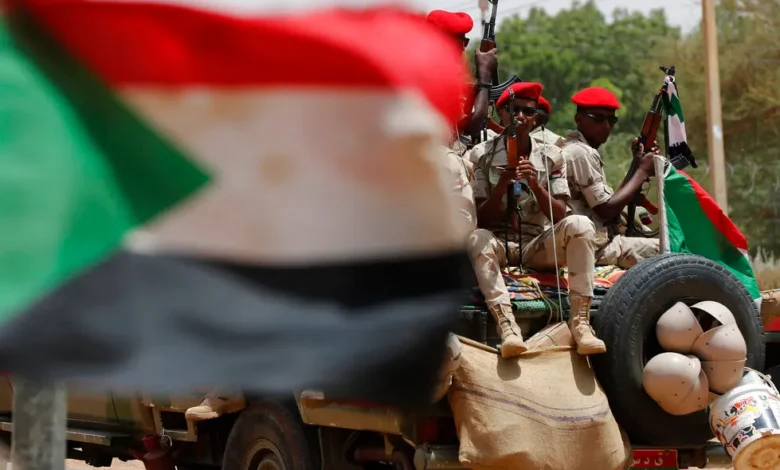
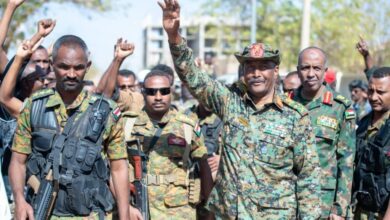
The issue of violations linked to the Sudanese Armed Forces cannot be fully understood without examining the armed groups that have fought alongside the army during the war. Sudan’s military landscape does not consist solely of a regular army confronting the Rapid Support Forces (RSF). It also includes a wide array of formations, militias and local forces, some of which have openly aligned themselves with the army and taken part in combat operations at its side.
This complex landscape raises a crucial question: when an armed group fighting alongside the army commits abuses against civilians, where does that group’s responsibility begin, and where does the responsibility of the military command end?
This is not a theoretical question.
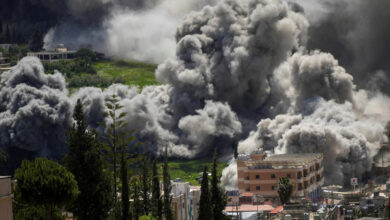
In Al Jazira State, Human Rights Watch documented an attack on the village of Tayba on January 10, 2025. According to the organisation, the Sudan Shield Forces—an armed group fighting alongside the Sudanese Armed Forces—killed at least 26 civilians, including a child, and looted property and set homes on fire.
Human Rights Watch said the attack took place during military operations led by the Sudanese Armed Forces to recapture Al Jazira State from the RSF. Witnesses told the organisation that the villagers were unarmed and had offered no resistance to the attackers.
The incident therefore cannot be reduced to a clash between two armed groups, as the victims identified by the investigation were civilians.
More importantly, human rights organisations did not view the attack as an isolated case. Reports have pointed to retaliatory abuses by army-linked forces against residents of other recaptured areas who were suspected of supporting the RSF.
In February 2025, Human Rights Watch said verified videos filmed elsewhere in Al Jazira State showed pro-army fighters torturing and carrying out extrajudicial killings of unarmed individuals.
These incidents are particularly significant because civilians living in areas previously controlled by the RSF endured highly complex conditions throughout the war. Some may have been forced to deal with the authority controlling their area simply to obtain food or medical treatment, or to protect their families.
When territorial control changes hands, however, such coerced dealings may be reinterpreted as evidence of collaboration with the enemy.
This is how cycles of retaliation begin.
An armed force enters an area and accuses residents of supporting its opponent. Some are arrested or killed, their property is looted, and others flee, leaving behind a community gripped by fear. If another party later takes control, it may reproduce the same logic.
In this way, war becomes a succession of retaliatory acts.
The United Nations has therefore stressed that violations committed by the warring parties must be subject to accountability. In its September 2025 report, the UN Fact-Finding Mission on Sudan said both the Sudanese Armed Forces and the Rapid Support Forces had carried out direct and widespread attacks against civilians, in addition to destroying infrastructure essential to civilian life.
The responsibility of forces allied with the army, however, requires separate consideration.
The army cannot simply claim that every violation committed by a group fighting alongside it has nothing to do with its own conduct. At the same time, it would be neither legally sound nor journalistically responsible to attribute every act committed by an allied armed group to the Sudanese Armed Forces without evidence that the military command knew of the conduct, participated in it or could prevent the crime.
An independent investigation is therefore essential to establish responsibility. Was the armed group operating under the army’s command or in military coordination with it? Did army commanders know about the abuses? Did military officials receive complaints from residents? Did they take steps to prevent the violations? Did they punish those responsible?
The answers to these questions—not merely the perpetrators’ political or military affiliation—determine the nature and extent of responsibility.
Command and control are particularly important in this context. The Sudanese Armed Forces include regular units, but the war has also led to battlefield alliances with armed groups that have their own leadership structures and chains of command.
This makes civilian protection more difficult, but it does not eliminate the applicable legal obligations.
In its report on the attack in Tayba, Human Rights Watch said the Sudanese authorities should investigate the violations and hold those responsible to account, including commanders of the Sudan Shield Forces.
In June 2026, the organisation returned to the case, saying that forces linked to Abu Aqla Keikel—who defected from the RSF and joined the army—had committed abuses against civilians during the recapture of Al Jazira. Human Rights Watch also said the Sudanese authorities had not released information demonstrating that serious investigations into these violations had been opened.
This point is especially important because Sudan’s war has produced rapidly shifting alliances. Individuals and groups that once fought for one side may later join the other, bringing with them a history of conflict, alleged abuses and local rivalries.
Under such circumstances, protecting civilians becomes even more difficult.
A civilian may care little about which side a fighter belonged to several months earlier. What matters is that an armed man does not enter their home, loot their possessions, kill a family member or target them merely because a former enemy once controlled their area.
Yet war does not always follow this basic rule.
In some areas, military control has become a means of redistributing local influence. This creates opportunities for reprisals driven by identity, political affiliation and long-standing disputes.
For this reason, discussions of wartime abuses should not focus exclusively on air strikes. Violations committed on the ground, far from the cameras, can have an even greater effect on local communities.
The looting of livestock, the burning of homes, the killing of civilians, arbitrary detention, forced displacement, torture and the seizure of property can destroy an entire community even in the absence of large-scale bombardment.
In its reporting on Sudan, Human Rights Watch said the attack on Tayba displaced residents and involved the looting and burning of homes.
This illustrates the direct link between abuse and displacement.
Civilians do not always flee because bombs are falling. Sometimes they leave because they fear arrest, killing or looting after a new force enters their area.
Violations committed by forces allied with the army may therefore contribute to reshaping the demographic map of war-affected regions.
It is nevertheless important to avoid inaccurate generalisations. Not every fighter serving alongside the army commits abuses, and not every military operation carried out by an army ally targets civilians. Precise documentation of each incident therefore remains essential.
Nor do documented violations by the Sudanese Armed Forces and their allies absolve the RSF of responsibility. The United Nations and Human Rights Watch have also documented extensive abuses by the RSF, including killings, sexual violence, torture, forced displacement and attacks against civilians.
Justice, however, is not based on comparing crimes.
A family whose son was killed by an army-linked group cannot obtain justice merely by being told that the RSF committed other crimes. Similarly, a family that lost a relative at the hands of the RSF cannot obtain justice simply by pointing to violations attributed to the army.
Every crime requires its own path to accountability.
This leads to a larger question: what happens after the war?
If the fighting ends without investigations, thousands of violations will be reduced to competing narratives, with every group remaining convinced that only the opposing side committed crimes.
Independent investigations, by contrast, would make it possible to establish responsibility based on evidence.
Justice in this context is neither revenge against the army nor a victory for the RSF—and the reverse is equally true. It is an attempt to prevent Sudan from descending into another war after the current conflict ends.
Impunity sends fighters a dangerous message: abuses can be committed without consequences.
Accountability, when pursued through fair legal proceedings, sends a different message: military power does not confer immunity, and a battlefield alliance does not shield anyone from responsibility.
In a country torn apart by war, this principle may be one of the most important conditions for building peace.
A peace that merely stops the shooting is likely to remain fragile. Only a peace that addresses the roots of retaliation, restores victims’ rights, holds perpetrators accountable and guarantees civilian protection can help bring the cycle of violence to an end.
In Sudan, that process begins by recognising that violations were not the monopoly of a single party and that each side’s responsibility must be determined based on evidence.
Such recognition also means not disregarding the incidents documented by international organisations involving the Sudanese Armed Forces and the groups allied with them.
Civilians who have lived in fear do not need another military narrative. They need to know the truth, recover their rights and receive guarantees that what they endured will not happen again.
Ultimately, the true test of any armed force lies not only in its ability to capture cities, but also in its capacity to protect the people living within them.
When the war ends, Sudanese people will remember more than who controlled Khartoum, Al Jazira or Kordofan. They will also remember those they lost, the homes that were burned, the detainees who disappeared and the people who never returned home.
The violations linked to the Sudanese Armed Forces and their allies will therefore remain central to any serious discussion about Sudan’s future.
Military control may end through a political decision or a change on the battlefield, but the consequences of abuses remain embedded in a society’s collective memory for many years.
If the objective is to build a post-war Sudan, the first step is not to bury these cases. It is to open them, investigate them, establish responsibility and uphold the victims’ right to know what happened to them—and who must answer for it.