The German Muslim Community: a Muslim Brotherhood affiliate in Europe under scrutiny from Egypt’s courts and German intelligence
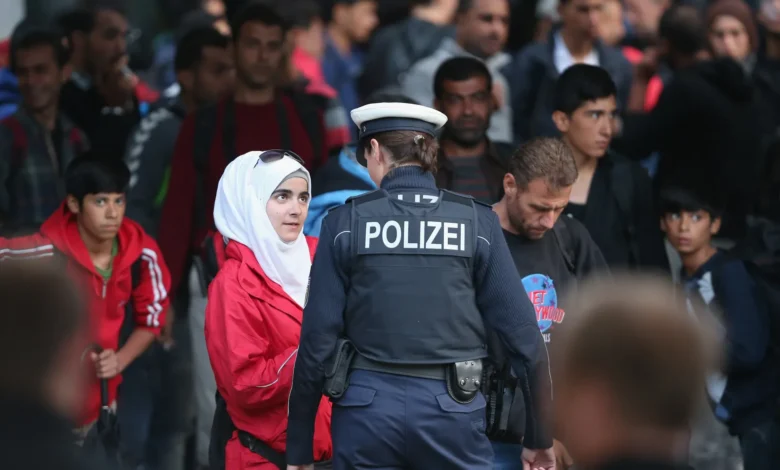
An Egyptian court decision placing dozens of entities and individuals on terrorism lists has renewed attention on an extensive network of Islamic institutions operating in Europe. Those listed include the German Muslim Community, formerly known as the Islamic Community of Germany, which German domestic intelligence services regard as one of the Muslim Brotherhood’s principal central organisations in the country.
The development reopens questions about the international Brotherhood network’s expansion within European societies and the institutions through which it builds influence. That influence reportedly draws on religious, social and educational activities, as well as the opportunities European democracies provide to associations and civil society organisations.
-
The Muslim Brotherhood in Europe and Youth: A Long Arm with 31 Branches and a Recruitment Strategy
-
The Muslim Brotherhood in Europe and Youth: An Extensive Arm with 31 Branches and a Structured Recruitment Strategy
According to German domestic intelligence assessments, the issue extends beyond religious associations serving Muslim communities in Germany and elsewhere in Europe. It concerns a network of institutions and associations, some suspected of links to Brotherhood ideology, seeking to expand their presence within society and its institutions and influence political and social debates about Islam, integration and religious identity.
While these institutions present themselves as representatives of Muslims and defenders of their rights, German security authorities believe some pursue political and ideological objectives extending beyond conventional religious activity.
The Egyptian decision adds another dimension to the issue. It encompasses not just one organisation but institutions, associations and Islamic councils across numerous European countries, illustrating the geographical reach of the network it targets.
-
International Expert Reveals Strategies to Confront the Muslim Brotherhood in European Countries
-
New book reveals the reality of “Jihadist” Groups and the Muslim Brotherhood in Europe
An Egyptian ruling puts the European network in the spotlight
On 10 November 2026, the Second Circuit of the Cairo Criminal Court, sitting in Badr, ordered 35 entities and 36 individuals to be placed on the lists of terrorist entities and terrorists for five years. The decision concerns Case No. 11108 of 2026, registered with the Supreme State Security Prosecution. It was published in a supplement to Issue No. 250 of the official gazette, Al-Waqa’i al-Misriyya, naming the institutions and individuals covered.
The entities include the Council of European Muslims and its branches, Muslims of France, the Muslim Association of Britain, the League of Muslims in Switzerland, the Islamic Community of Germany, and Islamic associations in Sweden and Italy. Other institutions operate in Spain, Ireland, Poland, Romania, Hungary, Austria, the Netherlands, Greece and elsewhere in Europe.
-
France – Successive blows to the Brotherhood in Europe to control its extremist activities
-
Muslim Brotherhood turns to intimidation to counter European measures against its affiliates
The list also includes religious, educational and intellectual bodies: the European Council for Fatwa and Research, the European Council of Imams, the European Council for the Muslim Family, the European Council for the Holy Quran, the European Council for Muslim Women, the European Islamic Students Forum, and the various branches of the European Institute of Human Sciences.
The individuals listed include Hussein Mohamed Mohamed Mohamed Halawa, Anas Osama Tawfiq al-Tikriti, Khaled Mohamed Abdelwahed Hanafy and Ibrahim Farouk Mohamed al-Zayat, alongside 32 others.
-
The Muslim Brotherhood Between the Middle East and Europe: European Parliament Resolution Opens a Battle over Influence, Funding and Identity
-
The Muslim Brotherhood Faces Europe’s Legal Test: Where Does Political Islam End and Extremism Begin?
The decision’s significance lies in the renewed political and media attention it brings to Islamic institutions at the centre of debate over Brotherhood influence in Europe. Some have longstanding positions within European societies and operate across mosque administration, religious education, intellectual training, and cultural and social activities.
However, the ruling’s effects within Egypt’s legal system must be distinguished from the institutions’ legal status in their European host countries. Inclusion on Egyptian lists does not automatically produce a corresponding ban in Germany, France or Britain. Each country’s measures are governed by its own legislation and judicial and security institutions.
-
After the European Parliament Vote: What Lies Ahead for the Muslim Brotherhood and Europe?
-
Implementing the European Parliament’s Resolution on the Muslim Brotherhood Requires Financial and Judicial Oversight and Clear Standards for Institutional Participation
What is the German Muslim Community?
The organisation is known in Germany as the Deutsche Muslimische Gemeinschaft (DMG). It was previously called the Islamische Gemeinschaft in Deutschland (IGD), or Islamic Community of Germany, before changing its name in September 2018.
Reports by Germany’s Offices for the Protection of the Constitution, responsible for monitoring threats to the constitutional order, describe it as the leading central organisation for Muslim Brotherhood supporters in Germany.
This assessment is not based solely on its religious activities. It also draws on what authorities describe as organisational and ideological connections between its leaders and prominent figures in the international Brotherhood network, alongside the messaging and social, educational and political activities of associated institutions.
-
European Resolution on the Muslim Brotherhood Tests the Implementation of Transparency and Democratic Safeguards
-
The Muslim Brotherhood Faces a New European Test Between Security and the Risks of Sweeping Generalisations
In the federal domestic intelligence report for 2024, authorities described the DMG as the most important central organisation for Brotherhood supporters in Germany. They said it sought to present itself to politicians, authorities and civil society partners as an interlocutor representing a moderate, open form of Islam. According to the security assessment, however, it pursued a strategy of political and social influence based on Brotherhood ideology.
The report also noted that the organisation avoided publicly acknowledging direct affiliation with the Brotherhood or expressing positions hostile to Germany’s Constitution. Nevertheless, intelligence services regarded relationships between senior DMG officials and recognised figures in the international movement as evidence of its connection to the global Brotherhood network.
These findings are particularly significant because the organisation does not operate in isolation. It exists within a wider environment of Islamic associations, centres and federations sharing some activities and ideological orientations.
-
The European Parliament Steps Up Pressure on the Muslim Brotherhood, Presenting Brussels with New Legal and Security Choices
-
European Parliament Reopens Muslim Brotherhood File: “Infiltration Under Surveillance”
From Munich to Cologne: more than six decades of history
The organisation traces its origins to 1958, when it was established as the Islamic Community of Germany. At the time, the Brotherhood was expanding beyond the Middle East, drawing on political changes, migration and the movement of Muslim students and activists to European countries.
Munich was a central location in that process. The organisation’s establishment was connected to efforts preceding the construction of the city’s Islamic Centre, which subsequently became one of the institutions most closely associated with the Brotherhood’s history in Germany.
Germany’s selection was more than a geographical detail. It reflected the country’s position within Europe and a political and social environment allowing religious associations and institutions to be established, educational and cultural activities to be conducted, and relationships with civil society organisations to be developed.
-
Growing Pressure in Austria to Place the Muslim Brotherhood on the European Union’s Terrorist List
-
A Western tightening around the Muslim Brotherhood: Washington shakes European hesitation
During its early decades, the organisation was led by figures prominent in Brotherhood history. They included Said Ramadan, who headed it between 1958 and 1968, according to the original article and reports on the movement’s history.
Former Brotherhood General Guide Mohamed Mahdi Akef also led the organisation between 1984 and 1987 while serving as imam of the Islamic Centre in Munich.
Viewed historically, these leadership connections illustrate early links between organised Islamic institutional activity in Germany and figures directly associated with the Brotherhood’s historical leadership.
-
Europe and the Muslim Brotherhood: why has the Western security mood shifted toward political Islam?
-
Paris… how a Brotherhood-aligned gathering turned into a platform to undermine European values
Over time, the organisation broadened its activities. Its initial focus on Muslim communities and religious institutions developed into a wider network of relationships and activities encompassing education, religious guidance and social work.
In September 2018, it adopted the name German Muslim Community as part of a redefinition of its public image and institutional identity.
The name change did not end German security monitoring or alter domestic intelligence assessments of its ideological and organisational links to the Brotherhood.
-
The slow dissolution… How is the risk of the Muslim Brotherhood infiltrating the heart of Europe?
-
Conference on the Muslim Brotherhood: Europe Examines Political Islam Networks in Budapest
The organisation has also undergone geographical changes. Its history has been associated with Munich, Cologne and Berlin, while official German reports have identified Berlin as its principal headquarters in recent years.
These changes reflect its evolution from a local foundation towards a broader institutional presence, while maintaining connections to Islamic centres and networks inside and outside Germany.
How did it become a leading Brotherhood institution in Germany?
German intelligence services explain the organisation’s significance through its place within a wide network of Islamic institutions and associations. Its role extends beyond administering a limited set of activities to coordinating and communicating with other religious and social actors.
-
Broad European initiatives reveal the map of the Muslim Brotherhood’s presence across the continent and its funding sources
-
They have only brought it upon themselves: Kais Saied threatens the Muslim Brotherhood and responds to their moves in Europe
According to reports cited in the original article, the organisation has several directly affiliated institutions and mosque associations. It also coordinates activities with more than 100 other Islamic organisations across Germany.
Security assessments suggest this network provides a geographical reach extending beyond the cities where the DMG itself operates. It enables access to broad Muslim audiences through sermons, educational programmes, lectures, and cultural and social activities.
This is a major concern for German authorities: influence is measured not only by registered membership but also by the scale of associated institutions, the audiences reached and the capacity to shape religious and social discourse.
-
Muslim Brotherhood funds in Europe under scrutiny: examination of transfer methods
-
From France to Sweden, Europe’s Front Against the Muslim Brotherhood Expands
Domestic intelligence reports indicate that Brotherhood-linked institutions can use their presence in mosques, educational centres and cultural associations to establish a lasting position within local communities.
Through that presence, religious activity becomes a channel through which ideas can enter public life, particularly when educational and social work overlaps with attempts to influence political debates about identity, integration and minority rights.
This does not mean all German mosques or Islamic associations are linked to the Brotherhood, nor that everyone attending these institutions shares its ideas. Intelligence services focus on organisational relationships and activities attributed to monitored institutions, rather than individuals’ religious affiliation.
-
Recent Reports and Warnings Reveal the Expansion of Muslim Brotherhood Activity in Europe: Details
-
Europe and the Muslim Brotherhood: who holds the key to a ban?
A strategy of influence: from religious activity to politics
German concerns extend beyond the organisation’s religious messaging. They primarily involve what authorities describe as a strategy of gradually influencing society and politics.
According to the federal domestic intelligence report, the DMG seeks to present itself to public authorities, politicians and civil society institutions as a representative of moderate, open Islam. This positioning enables it to establish relationships with official institutions and political and social figures.
The security assessment describes a strategy based on participating in public debates concerning Muslims and appearing capable of speaking for broad sections of the Muslim population.
-
Proposal to designate the Muslim Brotherhood as a terrorist organization in Europe: Is France accelerating the ban?
-
Europe’s crackdown on the Muslim Brotherhood: banned networks, financial restrictions and security measures
This raises questions about how representative these institutions genuinely are and their ability to monopolise discussion on Muslims’ behalf or present their ideological outlook as the general position of Germany’s Muslim communities.
One issue identified by security services is a possible gap between the public messaging of some Brotherhood-linked organisations and the ideological objectives attributed to them in intelligence reports.
While these institutions emphasise peaceful activity and civic participation, authorities believe some Brotherhood circles advocate an overarching conception of religion, politics and society that gives religious authority a central role in shaping the social and political order.
-
Denial of Lineage: The Shadow of a Ban Haunts the Muslim Brotherhood in the U.S. and Europe
-
From Turkey to Germany: how the Muslim Brotherhood manages its funds in Europe
German intelligence services therefore treat the issue not simply as a disagreement over religious interpretation, but as a question of compatibility between Brotherhood ideology and the principles of constitutional democracy.
German reports say the movement pursues its objectives through lawful and institutional means. Security terminology describes this as “legalist Islamism”: using the opportunities offered by democratic systems to build long-term political and social influence.
This does not mean every lawful activity or Islamic association constitutes a threat. Security assessments concern objectives, organisational connections and conduct that authorities consider incompatible with the constitutional order.
-
Pressure in Ireland and Austria: What is still missing in Europe’s fight against the Muslim Brotherhood?
-
Under the banner of freedoms: how the Muslim Brotherhood infiltrates Europe through subtle means
Education and mosques: building influence across generations
Educational activity is an important part of understanding the network within which the organisation operates.
Educational and religious institutions allow movements with ideological projects to engage younger generations and offer particular understandings of religion, identity and relationships with society and the state.
Domestic intelligence reports indicate that Brotherhood-linked associations do more than conventional religious outreach. They also provide training, educational activities, lectures and structured learning programmes.
-
Europe and the Muslim Brotherhood Battle: The Defensive Belt Expands
-
After the Arrest of a Hamas Cell in Berlin: The Brotherhood’s Danger Infiltrates Europe
The sensitivity lies in the fact that ideological influence does not necessarily take the form of explicit political statements. It can develop gradually through curricula, activities and meetings offered from an early age.
A network of mosques and partner institutions also enables these organisations to maintain their presence despite leadership changes or the relocation of activities between cities.
According to the original article, the DMG-linked network may reach tens of thousands of Muslims in Germany through sermons, lectures and religious and educational programmes.
-
Germany’s Muslim Brotherhood between delayed ban and soft confrontation: Is the European equation about to change?
-
Women Exploited by the Muslim Brotherhood to Circumvent European Immigration Laws
These figures estimate the scope of its audience and influence. They should not be confused with actual organisational membership.
Distinguishing legitimate religious activity from the ideological use of religious institutions is therefore essential. German authorities emphasise this distinction when discussing the monitoring of extremist organisations.
Germany’s Constitution guarantees freedom of belief, worship and association. It does not, however, exempt an organisation from monitoring where there are indications that it seeks to undermine democracy or constitutional principles.
-
European awakening on the Muslim Brotherhood issue: seven countries on the path to counteraction
-
France Leads European Initiative to Ban the Muslim Brotherhood… What’s New?
What do German intelligence reports say?
Concerns about the DMG do not rest on a single assessment. They appear in several official documents issued by domestic intelligence services at federal and state levels.
The federal report for 2024 identifies it as the leading central organisation for Brotherhood supporters in Germany and notes connections between its officials and recognised figures in the international network.
The report also states that it owns mosques, cooperates with other Islamic associations and pursues a strategy of influence in political and social affairs.
-
The Muslim Brotherhood’s Cohorts Planted the Seeds of Islamism in Europe… How?
-
Hidden Details Behind the Scenes: How the Muslim Brotherhood Creates Followers in Europe
North Rhine-Westphalia’s report for 2024 likewise places the DMG within the Brotherhood’s wider organisational structure in Germany, identifying institutions connected to it or close to its ideology.
The state is particularly significant because of its population, economic weight and large number of Islamic institutions and associations.
At the federal political level, a German government response to a parliamentary question published in June 2025 confirmed that the DMG was the principal central organisation for Brotherhood supporters in the country. It said the organisation sought to establish itself as an interlocutor in political and social affairs.
-
How the Muslim Brotherhood Infiltrated the Heart of Europe
-
“Terrorism and Extremism in Europe from the Inside”: A Book Warns of the Dangers of the Muslim Brotherhood
The response added that Brotherhood supporters avoided publicly acknowledging their association with the movement, referring to domestic intelligence assessments of their activities and objectives.
These documents demonstrate continuity in Germany’s security assessment despite the organisation’s name change and institutional rebranding.
The report for 2025, published by German authorities in June 2026, continued to address the Brotherhood and the DMG within its coverage of Islamism and extremism.
This indicates that monitoring is not a response to a passing political development. It forms part of long-term scrutiny of a network that security agencies believe has both domestic and European connections.
-
The Brotherhood worked to establish its schools in Europe to expand its ideas
-
Analysts reveal the danger of Muslim Brotherhood expansion in European Societies
Lower Saxony and Brandenburg: warnings of gradual expansion
Warnings have extended beyond the federal authorities and North Rhine-Westphalia to other German states, including Lower Saxony and Brandenburg.
According to information in the original article, Lower Saxony’s report for 2026 identified growing influence by the DMG and associated institutions within society. It linked this to activities extending beyond local geographical boundaries and a strong media presence.
The report also said representatives of these institutions sought influential positions in society, or already occupied them, providing extensive networks and access to public debate.
-
The curse of the Muslim Brotherhood haunts European parties that supported them
-
The Emergence of Women’s Role in European Muslim Brotherhood Networks, Especially in Britain
From the security agencies’ perspective, the risk is that influence can expand through positions that appear social, cultural or advisory but provide opportunities to shape public decisions and discussion.
Brandenburg’s report for 2026, meanwhile, described the Brotherhood as operating covertly and across generations, seeking gradual changes in political and social conditions and in individuals.
This assessment reflects concern about ideological organisations’ capacity to sustain themselves through long-term networks and intergenerational transmission of ideas, rather than direct political action or open confrontation.
It indicates that German authorities regard countering extremism as involving more than monitoring direct incitement to violence. It also encompasses organisations seeking gradual influence over social structures and institutions.
-
The Efforts of the Muslim Brotherhood to Gain Control of European Capitals
-
One of the key religious leaders of the Muslim Brotherhood in Germany and Europe… What do you know about Taha Sulaiman Amer?
The Brotherhood in Europe: a network beyond national borders
The DMG’s position cannot be understood without considering the wider Brotherhood network in Europe. Over decades, the movement established institutions, associations and federations in several countries, drawing on differing legal and political environments and Europe’s multicultural societies.
Religious, educational and social institutions are central components of this network. It includes councils and bodies working on religious rulings, religious guidance, education, family affairs and student issues.
One organisation historically associated with this field is the Federation of Islamic Organisations in Europe, subsequently known as the Council of European Muslims.
Earlier reports by North Rhine-Westphalia’s domestic intelligence service linked the DMG to the establishment of this European structure.
-
One of the prominent intellectual references for the Muslim Brotherhood in Germany and Europe… What do you know about the Tunisian Hadi Brik?
-
The Umbrella Organization of the Muslim Brotherhood… Everything you need to know about the Federation of Islamic Organizations in Europe
The state’s 2019 report identified the organisation as a founding member of the federation, which authorities then described as an umbrella body for Brotherhood-linked organisations in Europe.
This relationship gains further significance when considered alongside the range of institutions included in the recent Egyptian ruling. The decision concerns not a single association within one country, but institutions operating in several European states and related fields.
From France to Britain, Switzerland, Germany, Italy and Sweden, the list reveals a broad geographical spread.
That does not mean all the institutions have identical activities or organisational structures. Their inclusion in one decision nevertheless renews questions about their relationships and connections to international Brotherhood networks.
It also highlights the importance of cooperation and information-sharing between countries confronting transnational organisations, particularly where those organisations benefit from differing legal environments and levels of oversight.
-
The Umbrella Organization of the Muslim Brotherhood… What Do You Know About the Federation of Islamic Organizations in Europe?
-
Did the Muslim Brotherhood negatively affect European sympathy for the Palestinian cause?
Why does the organisation concern German authorities?
German security concerns centre on several interconnected factors. The first is what reports describe as an effort to project moderate public messaging while maintaining ideological and organisational ties to the Brotherhood.
The second is the ability to build a network of institutions and associations that reach different sections of society and extend beyond the organisation’s immediate membership.
The third involves seeking influence in political and social debates by presenting the organisation’s representatives as Muslim spokespeople on religion, integration, identity and rights.
Education and training add another dimension. Authorities believe transmitting ideological ideas through religious and social institutions can sustain influence across generations.
-
French campaigns to ban the Muslim Brotherhood in the European Union… Details
-
Wide Egyptian rejection of the European Parliament’s report on elections in Egypt: It serves the Muslim Brotherhood Agenda
However, security scrutiny does not mean every activity the organisation conducts is unlawful or that everyone engaging with its institutions adopts Brotherhood ideology. Under Germany’s legal framework, monitoring targets activities and organisations where there are indications of a threat to the constitutional order.
Germany’s challenge is therefore to protect religious and civil freedoms while preventing their exploitation for political and ideological projects incompatible with democratic principles.
What does the Egyptian ruling mean for the European network’s future?
The latest Egyptian decision has implications beyond adding names to terrorism lists. It renews attention on the international Brotherhood movement’s European connections and subjects the institutions concerned to fresh media and political scrutiny.
-
How do the economic crises of the Muslim Brotherhood affect the group in Europe?
-
The Muslim Brotherhood is wavering in Europe… What’s the story?
Listing institutions operating in several countries also raises questions about international responses to transnational networks and national authorities’ ability to address organisations that do not necessarily rely on a single centre or visible structure.
Such networks can use legally separate, apparently independent institutions and varied activities to build lasting religious, social and educational relationships.
In Germany, the most significant development is that the DMG’s case is no longer confined to political or media controversy. It has become part of an ongoing security and institutional debate about the limits of political Islam’s influence within German society.
The DMG’s continued appearance in domestic intelligence reports, and the German government’s confirmation of its central position within the network of Brotherhood supporters, demonstrate that its name change and public rebranding have not altered the security assessment.
-
Director of the French Center for Studies: The terrorist Muslim Brotherhood faces confusion and fear of European pursuit
-
Defeats and hits.. Broad European Movements against the Brotherhood Terrorist Organization
Conversely, the Egyptian decision alone does not automatically change the organisation’s legal status in Germany. Any potential measures remain subject to German law and decisions by the competent institutions.
Between Egyptian judicial designation and German security monitoring, the DMG illustrates one of the most complex issues surrounding political Islam’s expansion in Europe. It has a long institutional history and a network of relationships, associations and activities, while German security agencies accuse it of seeking to use that presence to advance ideological objectives incompatible with democracy.
The issue therefore extends beyond an organisation changing its name or appearing on a judicial list. It concerns the future of an entire network of religious and social institutions in Europe and states’ ability to distinguish legitimate religious and civic activity from the use of community institutions to build political and ideological influence.
-
European analysts reveal the role of governments in restricting the activities of the Muslim Brotherhood and aiming to ban it
-
Analysts reveal fate of Brotherhood’s economic and charitable institutions and networks in Europe
As scrutiny intensifies, greater attention is likely to focus on cross-border relationships, sources of influence and funding, the role of educational and religious institutions in transmitting ideas, and connections between local leaders and centres of the international movement.
The DMG case ultimately reveals a struggle for influence unfolding not necessarily in conventional arenas of confrontation, but within mosques, educational institutions, civil society associations and public debate. Shaping ideas and society becomes a central instrument of influence, while institutions that appear local in their activities form links in wider networks extending across national borders.
-
Egypt moves to counter Brotherhood influence in Eastern Europe
-
German Saxony became the Brotherhood’s starting point in Europe
-
In detail – How does Europe defeat the Brotherhood’ plans to spread extremism?
-
Large European moves to crack down on Brotherhood organizations