Iran’s plan to escalate the war: empowering the Guards, pursuing a policy of coercion, and activating its proxies
“Intercepted” communications and intelligence reveal Iran’s intentions to escalate and its inclination toward a prolonged confrontation, despite the existence of a clear path toward diplomatic solutions.
After US President Donald Trump signed a memorandum of understanding with Iran on June 17, the US administration moved to support an agreement aimed at reopening the Strait of Hormuz and gradually bringing the war to an end. However, Iran’s hard-line leadership viewed the understanding as a possible attempt to ease economic pressure and buy time, and used the period of calm to reorganize its forces.
-
Cyberattacks ordered by the Revolutionary Guards: US charges 17 Iranians
-
Intensive U.S. strikes on Islamic Revolutionary Guard bases in Iran
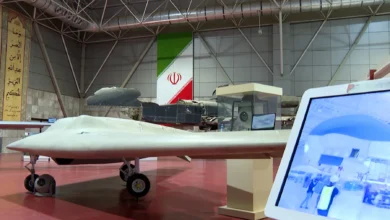
According to The Wall Street Journal, these preparations included expanding the influence of the Islamic Revolutionary Guard Corps within the military establishment, appointing experienced commanders to sensitive security and military positions, strengthening counterintelligence efforts, and accelerating the production of missiles and drones.
Tehran also sought to consolidate a policy of coercion in maritime corridors, while Arab intelligence agencies detected communications between Iran and its regional allies indicating preparations to expand the scope of operations and increase their costs for US forces and interests.
-
Life imprisonment for three Bahrainis convicted of spying for the Islamic Revolutionary Guard Corps
-
Britain Joins the List: Countries That Have Designated Iran’s Islamic Revolutionary Guard Corps as a Terrorist Organization
Escalation
Despite the damage inflicted on Iran’s military and economic infrastructure by the strikes, information contained in the dossier indicates that Tehran rebuilt parts of its infrastructure and restored access to its missile bases at a pace that alarmed Israeli officials, according to The Wall Street Journal.
Domestically, Iran’s Supreme Leader, Mojtaba Khamenei, took steps to restructure the country’s security and military institutions. These measures included appointing seven senior commanders, tightening the chain of command, strengthening counterintelligence capabilities, and steering the security apparatus toward a more offensive posture.
-
The Revolutionary Guard Prepares to Reap the Benefits of the U.S.-Iran Agreement
-
Iran’s Revolutionary Guards relied on Iraqi shadow cells in attacks against Gulf states
In this context, Mohsen Rezaei was appointed secretary of the Supreme National Security Council as Khamenei’s representative, while Hossein Taeb was returned to the leadership of the Basij forces with the aim of transforming them into a broader domestic intelligence network.
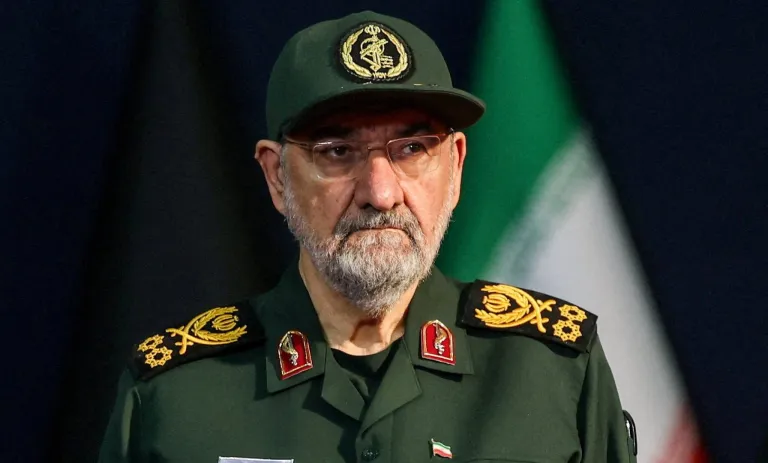
Control over the regular army and the Islamic Revolutionary Guard Corps was also unified under Brigadier General Ali Abdollahi, while Ahmad Vahidi, commander-in-chief of the Revolutionary Guard, was tasked with carrying out offensive operations against Iran’s adversaries.
According to analysts, these changes reflect the Iranian leadership’s preparations for a prolonged period of confrontation, escalation and coercion rather than a rapid return to de-escalation.
-
Reuters: Iran’s Revolutionary Guards formed secret cells in Iraq to attack Gulf states
-
A Puppet in the Hands of the Revolutionary Guards: How Has the Role of Iran’s Supreme Leader Changed?
“The arms of terrorism”
Moreover, during the period of calm, Iran pursued a clear policy under which the Revolutionary Guard worked to strengthen coordination with its regional allies in anticipation of a renewed conflict.
According to the intelligence contained in the dossier, the Revolutionary Guard dispatched commanders and advisers to Iraq, Yemen and Lebanon, and coordinated with allied groups on plans to expand the confrontation.
It also supervised the deployment of missiles, naval weapons and drones at positions overlooking the Red Sea, while providing its allies with intelligence and target lists relating to ports and energy facilities in the region.
-
Revolutionary Guard issues harsh criticism of Araqchi
-
Washington Offers Major Reward to Disrupt Iranian Revolutionary Guard Financing
This coincided with heightened maritime activity and tensions in the Strait of Hormuz and the Red Sea, as well as attacks targeting ships, forces and infrastructure associated with Iran’s adversaries.
According to the newspaper, these developments reveal the expansion of the war from a direct confrontation into a multi-front coercive campaign, in which military operations are intertwined with pressure on trade routes, energy infrastructure and strategic facilities.
The US-Iranian agreement included sanctions exemptions allowing Tehran to sell oil, access to billions of dollars in frozen assets, and the possibility of establishing a $300 billion reconstruction fund, in exchange for reopening the Strait of Hormuz and negotiating over Iran’s nuclear program.
-
Attempted infiltration by the Islamic Revolutionary Guard Corps into Kuwait… Iranian admission and Arab condemnations
-
Iran in the grip of the Revolutionary Guards… and the Supreme Leader out of the picture
However, the firing on ships escorted by the United States through the strait just weeks after the agreement exposed the fragility of the understanding and Iran’s inclination toward escalation, pushing the confrontation back onto a more complicated trajectory.
In Washington, the US administration moved toward relying on sanctions and maritime pressure to weaken Tehran’s position.
Against this backdrop, the war appears to be heading toward a trajectory open to new rounds of confrontation, according to the newspaper.
-
United Kingdom and the Islamic Revolutionary Guard Corps: imminent legislation to ban Iran’s military arm
-
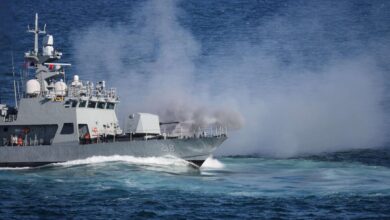
The Islamic Revolutionary Guard Corps attacks two vessels in Gulf waters
-
Most recently Argentina: Countries and blocs have designated the Islamic Revolutionary Guard Corps as a terrorist organization