Foreign Intervention Prolongs the War
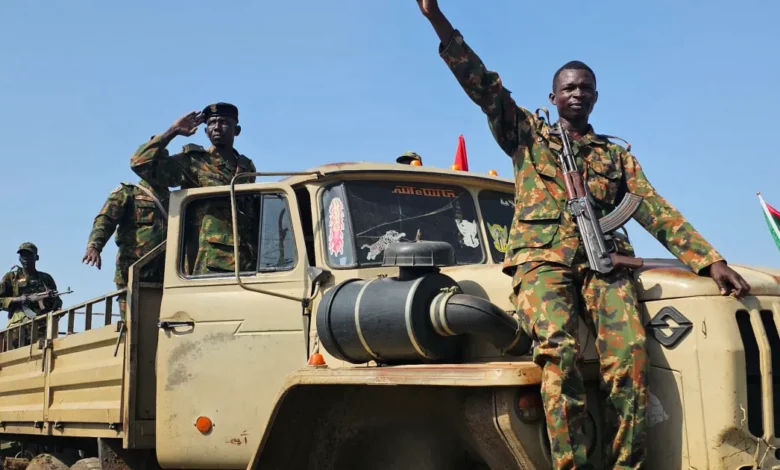
At the outset, the war in Sudan was not a regional conflict. It was a Sudanese struggle that erupted within the state between the Sudanese Armed Forces and the Rapid Support Forces, following years of competition over power, transitional arrangements, and the future of the military institution.
However, the war that began on April 15, 2023, quickly expanded beyond its political and geographical boundaries. The calculations of neighbouring states and regional powers entered the conflict, turning Sudan into an arena where security, economic, and diplomatic interests intersect.
This raises the most difficult question: has foreign intervention helped bring the war to an end, or has it instead contributed to making the conflict more sustainable?
The answer differs from one country to another because the nature of intervention varies among the different actors. Some operate through the provision of weapons, others through financial support, while others rely on diplomacy and mediation. Some combine several of these tools.
Yet, in one important respect, the practical outcome has been the same: the growing number of external actors has made the war more complex.
From a Conflict Between Two Generals to a Conflict of Interests
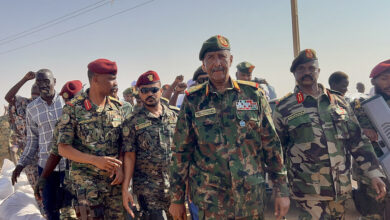
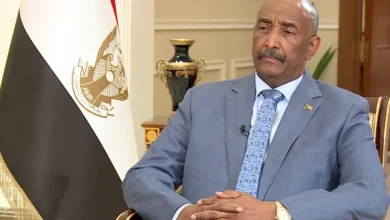
At its core, the dispute between Abdel Fattah al-Burhan and Mohamed Hamdan Dagalo, known as Hemetti, was a struggle over the future of the state, the military, and political power. However, once the fighting developed into a prolonged war, each side began seeking external sources of support capable of compensating for shortages in resources.
This led to the emergence of networks for arms supplies, financing, and mediation.
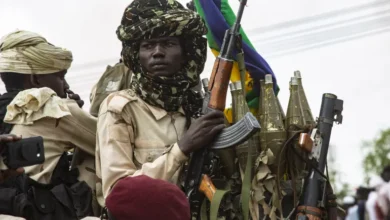
Recent analyses suggest that the war has become increasingly connected to external powers and that foreign military and technological support has helped the warring parties maintain their combat capabilities, resulting in a war of attrition rather than a decisive outcome.
In prolonged wars, the problem is not always limited to the quantity of weapons available. Continuous funding, drones, spare parts, supply routes, or political support that prevents international isolation may be sufficient to make the continuation of war possible.
This is one of the factors that has made the Sudanese conflict increasingly difficult to resolve.
Egypt: Supporting the State or Tilting the Balance Towards the Army?
Egypt’s position is based on a fundamental principle: Cairo does not want to see Sudan become a fragmented state or a sphere of influence controlled by a non-state armed force.
Politically, Egypt has maintained close relations with the leadership of the Sudanese army and has refused to treat the Rapid Support Forces as an alternative to Sudanese state institutions. This position is understandable within the context of Egypt’s national security concerns, but it has also placed Cairo firmly within the political equation of the conflict.
Economically, Sudan is not a distant country from Egypt’s perspective. The two countries share interests in trade, agriculture, border security, and energy, while Sudan’s stability is closely linked to the security of southern Egypt.
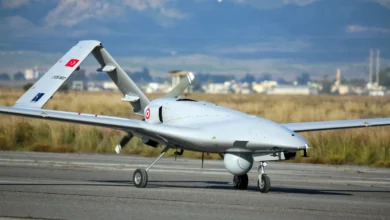
The most controversial aspect, however, concerns Egypt’s evolving military role. Reuters reported in February 2026 that Egypt had deployed advanced Turkish drones near the Sudanese border. Sources and experts viewed the move as a possible indication of deeper Egyptian involvement in the conflict. The Rapid Support Forces have also accused Cairo of carrying out air strikes, allegations that Egypt has not publicly confirmed.
As a result, Cairo has gradually moved from being a political supporter of Sudanese state institutions to becoming a more prominent security actor.
Turkey: Technology at the Centre of the Equation
Turkey’s involvement is more closely associated with military technology, as well as economic and political influence.
Over recent years, Turkey has developed extensive relations with Sudan. For Ankara, Khartoum was not merely an African capital but part of a broader vision of Turkish influence in the Red Sea and the Horn of Africa.
Economically, Sudan represents both a market and an area of investment in agriculture, natural resources, and infrastructure. While the continuation of the war threatens these interests, it also provides external powers with an opportunity to reshape their relationships with whichever authorities emerge after the conflict.
Militarily, reports indicate that the Sudanese Armed Forces have acquired Turkish drone technology and that some of these systems may have been transferred through Egypt. Recent analyses have also placed Turkey among the countries that have contributed to strengthening the Sudanese army’s air capabilities.
The issue is that drones do not merely change the nature of warfare. They can also reduce the cost of using force and allow the side possessing them to strike distant targets without risking large numbers of soldiers.
Technological intervention therefore becomes a factor that helps sustain the capacity to continue the war.
Qatar: Soft Power
Qatar does not need to deploy troops to Sudan in order to exercise influence. Its tools are different.
Over the past years, Doha has accumulated extensive experience in mediation, particularly in relation to Darfur. As a result, Qatar possesses a network of political and diplomatic relationships that can be used to communicate with different parties.
However, this soft power also carries a political legacy. Qatar’s previous relations with political and Islamist movements in Sudan have led some Sudanese actors to view its role with suspicion.
Economically, Qatar has considerable capacity to use investment, humanitarian assistance, and financial relationships as instruments of influence. Yet economic leverage alone cannot end a war when political institutions have collapsed.
Diplomatically, Qatar can help open channels for dialogue. However, the growing number of competing initiatives has fragmented mediation efforts in Sudan. Studies have suggested that the existence of multiple negotiating frameworks, ranging from the Troika to the Quad and the Quintet, has contributed to an exceptionally complex diplomatic landscape.
Saudi Arabia: Mediation Confronted by Interests
Saudi Arabia occupies a distinctive position in the Sudanese . As an Arab Gulf state located geographically close to Sudan, it has significant interests related to the Red Sea, agriculture, investment, and regional security.
Economically, Sudan represents a strategic opportunity for Saudi investment in agriculture and livestock. At the same time, it becomes a significant risk when it turns into an open war zone.
Politically, Riyadh seeks to prevent the collapse of the Sudanese state. At the same time, it does not necessarily want a single force to emerge victorious in a manner that could create a new regional reality detrimental to its interests.
Diplomatically, Saudi Arabia has been among the leading countries involved in mediation efforts, particularly through the Jeddah process. However, the truces reached through this framework have not developed into a permanent cessation of hostilities.
This highlights the central challenge of mediation: a state may be able to bring opposing sides to the negotiating table, but it cannot impose peace if both parties believe that continued fighting could bring them greater gains.
The Economy Is Part of the War
One of the major mistakes in analysing the war in Sudan is focusing solely on weapons.
War requires money. It requires fuel, food, communications, transportation, maintenance, equipment purchases, salary payments, and the financing of logistical networks.
Economic resources have therefore become an integral part of the conflict.
Sudan is rich in agricultural resources, livestock, and gold, while also occupying a strategic position on the Red Sea. For this reason, external powers do not view Sudan solely as a humanitarian crisis but also as a country of considerable geopolitical and economic value.
European studies have indicated that Gulf states possess substantial means of influencing Sudan because of their financial relationships and their interests in agricultural, livestock, and mineral resources.
This means that any political settlement that fails to address the parallel economy sustaining the war will remain incomplete.
Multiple Diplomatic Initiatives Complicate the Situation
Sudan’s problem may not be a lack of diplomatic initiatives. If anything, it may be the opposite.
There are numerous international and regional initiatives, multiple mediators, and competing agendas.
Each country approaches the Sudanese issue through the lens of its own interests. Egypt focuses on security, borders, and the Nile. Saudi Arabia focuses on the Red Sea and regional stability. Turkey is concerned with economic and strategic influence. Qatar places greater emphasis on mediation and political relationships.
The problem, therefore, is not the absence of diplomacy but the absence of a unified diplomatic strategy equipped with genuine leverage over the parties to the conflict.
Sudan Pays the Price
Ultimately, foreign powers have not paid the highest price for this war.
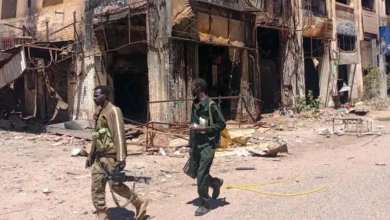
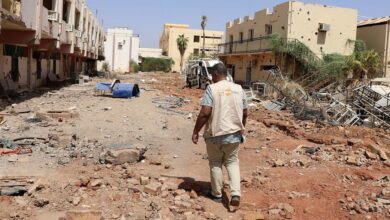
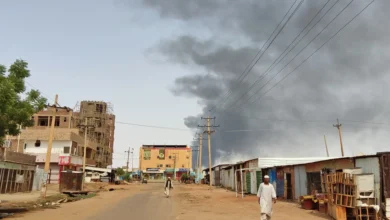
It is the Sudanese people who have lost their homes, cities, and livelihoods. Millions have been forced to flee, while the economy has plunged into a deep crisis.
Recent estimates indicate that millions of Sudanese people have been displaced internally or forced to flee abroad, making the war one of the largest humanitarian crises in the world.
For this reason, any serious discussion about ending the conflict must begin with a clear principle: sustainable peace cannot be built as long as every Sudanese party retains an external channel through which it can rebuild and sustain its capacity for war.
Foreign intervention can be part of the solution when it is used to stop the fighting, protect civilians, and support a political settlement.
However, it becomes part of the problem when it provides the warring parties with the means to continue fighting.
This is the central paradox of the war in Sudan: states say that they want peace, yet the multiplicity of interests and instruments involved continues to make the path towards that peace longer.