Qatar and Sudan: Quiet Support for the Army and Influence Beyond Mediation
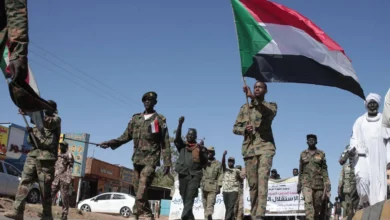
Since the outbreak of the Sudan war in April 2023, Qatar has not been among the most visible regional powers on the military scene, but it has maintained a gradual political presence and close relations with Sudan’s state leadership and military, at a time when the war between the Sudanese Armed Forces and the Rapid Support Forces has become one of the most complex conflicts on the African continent.
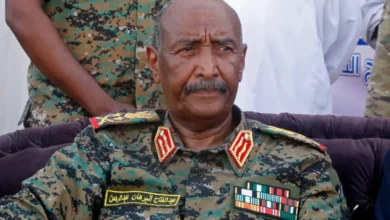
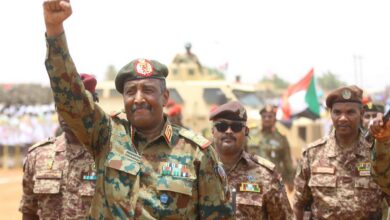
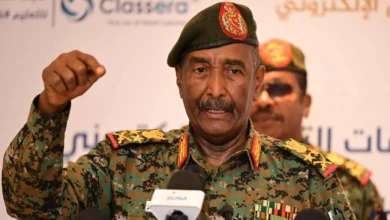
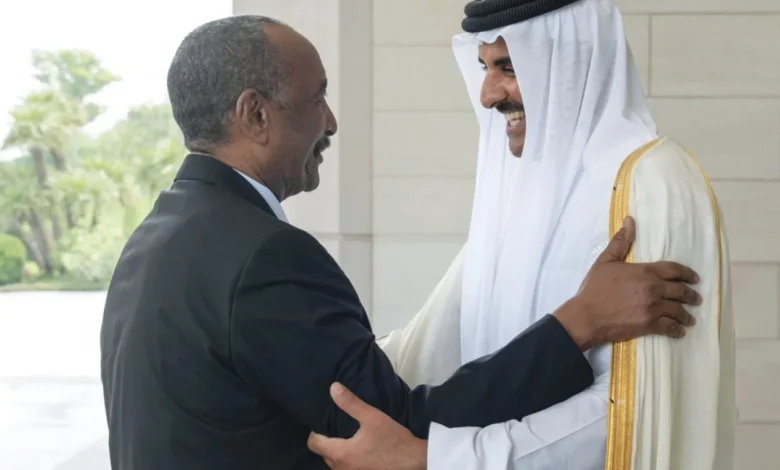
In 2026, this role once again came into focus with intensified contacts between Doha and Khartoum, particularly following the January visit to Doha by Abdel Fattah al-Burhan, Chairman of the Transitional Sovereignty Council and commander of the Sudanese army. He met with the Emir of Qatar, Sheikh Tamim bin Hamad Al Thani, for talks addressing bilateral relations and security and political developments in Sudan. Following the visit, Khartoum expressed its appreciation for Qatar’s support for Sudanese institutions and for the country’s unity, sovereignty, and stability.
An Old Relationship Reactivated by the War
Relations between Qatar and Sudan did not begin with the current war. Doha maintained political and economic ties with Khartoum during different stages of former President Omar al-Bashir’s rule and also played a mediation role in the Darfur conflict in the past.
However, the outbreak of war between the army and the Rapid Support Forces reshaped priorities. As the effective center of power shifted toward areas controlled by the Sudanese Armed Forces, Doha faced a new reality in which it was dealing with the army leadership as the actor holding the state’s official institutions in the territories under its control.
Analytical reports indicate that Qatar, alongside Turkey, has become one of the countries maintaining strong channels of communication with the army camp. According to a Chatham House report, Qatar and Turkey hosted figures and networks linked to the former regime, networks that the study says played a role in providing financial channels and military requirements to the Sudanese Armed Forces.
This is where one of the most sensitive aspects of Qatar’s role emerges: its support cannot be reduced to an official announcement of troop deployments or direct participation in military operations. Instead, it appears through a broader network of political, financial, and logistical relationships.
Reports of Military Support
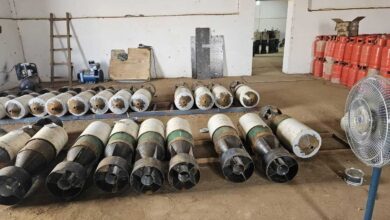
Specialized reports go further. In October 2025, Africa Intelligence reported on Qatari military support for the Sudanese Armed Forces, stating that Doha had provided political and financial support to the army, in addition to military supplies. However, the nature and scale of these supplies do not have the same level of publicly available documentation as other cases of external support for the army.
This is an important point when assessing Qatar’s role. While the existence of a close political relationship, high-level meetings, and humanitarian assistance can be established, details concerning arms deals or their transfer routes remain partly based on information reported by journalistic and intelligence sources and have not been disclosed in detail by the Qatari government.
For this reason, describing Qatar as a direct military party to the war requires a degree of caution. It is more accurate to say that Doha has maintained a close relationship with Sudanese leadership and that specialized reports have attributed military support for the Sudanese Armed Forces to Qatar, alongside clear political and humanitarian support.
The al-Burhan–Tamim Meeting: A Political Message
The January 2026 meeting between the Emir of Qatar and al-Burhan carried significant political implications. The visit came at a stage when the Sudanese army had regained several key positions, while the war remained ongoing in other areas, particularly Kordofan and Darfur.
Khartoum announced that the talks addressed political, economic, and humanitarian cooperation, while Sudan’s foreign minister referred to Qatar’s support for legitimate institutions and for Sudan’s unity and sovereignty.
In September 2026, Qatar officially renewed its position in support of Sudan’s unity and territorial integrity and stressed the need to reach a comprehensive Sudanese political solution. It also announced the allocation of approximately 18 million Qatari riyals, or nearly five million dollars, through Qatar Charity for humanitarian interventions in Sudan during 2026, including food, healthcare, shelter, water, and essential services.
This announcement indicates that Doha is seeking to pursue two tracks simultaneously: maintaining its relationship with the authorities in areas controlled by the army while presenting itself as an actor supportive of stability and a political solution.
Why Is Sudan Important to Qatar?
For Qatar, Sudan represents more than just an African file. The country occupies a strategic position on the Red Sea and forms part of the political and security dynamics of the Horn of Africa.
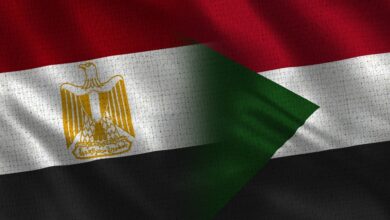
Sudan is also connected to regional issues where Gulf, Turkish, and Egyptian interests intersect, in addition to its position between the Red Sea, North Africa, and the eastern part of the continent.
From the Qatari perspective, maintaining a relationship with the Sudanese authorities allows Doha to retain a political foothold in a country that could, after the war ends, undergo the reconstruction of its state institutions, economy, and infrastructure.
For this reason, Qatar has not adopted a policy of severing ties with the army leadership. Instead, it has chosen to maintain communication with it, including during periods when international efforts were pushing toward a ceasefire.
From Political Support to Influence on the Balance of the War
The most important aspect of Qatar’s role is that political support can, under wartime conditions, become a factor affecting one side of a conflict’s ability to endure.
The Sudanese army requires three types of external support: political legitimacy, economic resources, and military and technological capabilities.
It has received varying degrees of these forms of support from several countries. In Qatar’s case, political legitimacy and the direct relationship with Sudanese leadership appear more evident than the scale of officially acknowledged military support.
As for reports referring to military supplies, they suggest that Doha does not view Sudan solely as a humanitarian issue, but rather sees its relationship with the army as part of its broader relationship with the Sudanese state.
The War Forces Doha to Make Delicate Calculations
At the same time, Qatar does not want its relationship with the army to turn into an overt military engagement that would make it a direct party to the war.
The Sudanese situation is complex, and the international community is becoming increasingly strict toward states that provide weapons to parties to the conflict. In September 2026, United Nations Secretary-General António Guterres called for accountability for states providing weapons used against civilians, after the United Nations Fact-Finding Mission concluded that external support in the form of weapons, technology, fighters, and logistical networks was contributing to the continuation of the war.
Doha is therefore operating within a delicate space: supporting the Sudanese state, maintaining relations with the army, providing humanitarian assistance, while at the same time emphasizing dialogue and peace.
Qatar After Three Years of War
As the war enters its fourth year, it has become difficult to separate Sudan’s future from its regional relationships. The army depends on a network of external partners in various fields, while influential states seek to preserve their interests in a country with a strategic location, natural resources, and a long coastline on the Red Sea.
For its part, Qatar appears keen to keep the door open to the army leadership without announcing any transformation into a direct combatant in the war.
In this context, the repeated meetings between Qatari and Sudanese leaders can be understood as part of a policy aimed at preserving influence and relationships, while the actual scale of Qatari military support to the Sudanese Armed Forces remains less clear in public sources than its political and humanitarian support.
In conclusion, Qatar’s role in Sudan is not based on overt military intervention, but rather on a combination of political relations, support for institutions led by the army, humanitarian assistance, networks of economic and diplomatic influence, and reports of military backing.
As the war continues, Qatar’s ability to maintain this balance will remain linked to its capacity to reconcile its close relationship with Sudanese authorities with its official discourse calling for Sudan’s unity, dialogue, and an end to the fighting.