From Popular Defence to Telecommunications Towers: Kazem Al-sarraj’s Journey from the Militia to the World of Technology
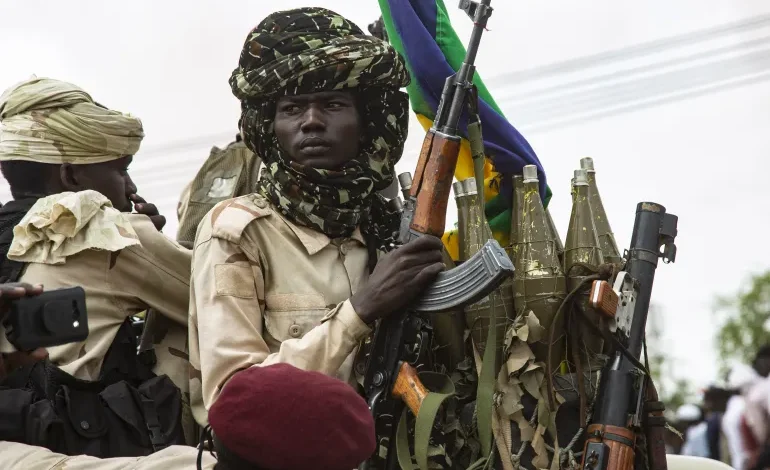
In the trajectory of Kazem Zine El Abidine Al-sarraj, his transition from the battlefields of South Sudan to the world of technology and telecommunications cannot be viewed as merely a career change. Rather, this transformation appears to have been a carefully considered strategy, reflecting an exceptional ability to adapt to political and economic developments and to make intelligent use of the experience and networks he had built during an earlier phase of his life.
-
Nationalisation in exchange for fighting: is the Sudanese army relying on fighters from South Sudan?
-
Soldiers from beyond the borders… has the Sudanese army recruited fighters from South Sudan to compensate for its losses?
The man who once bore arms within the Islamist Popular Defence militias and later became one of the most prominent figures in Sudan’s telecommunications sector was not simply seeking a new professional opportunity. He was building a technological empire on security and military foundations, drawing on everything he had learned to serve broader objectives.
This journey from the militia to technology reveals a distinctive model in Sudan: that of the security operative who understands that, in the modern era, power is measured not only by weapons but also by the ability to control communications and information infrastructure. From this perspective, understanding Kazem Al-sarraj’s trajectory provides a key to understanding how networks of influence operate in contemporary Sudan and how they can evolve from military instruments into economic and technological ones.
-
Naturalization in exchange for fighting: how the Sudanese army is filling its manpower gap with fighters from South Sudan
-
Amid the escalating crisis, South Sudan opens a new camp for those fleeing the conflict in the north
Academic beginnings: Sudan University of Science and Technology
Kazem Al-sarraj’s story began in the halls of Sudan University of Science and Technology, one of the country’s oldest and most prominent technical universities. His choice of institution was not accidental; it reflected an early interest in the technological world and a clear vision of his professional future.
At the time, technology was beginning to transform the world profoundly, while Sudan was attempting to keep pace with the emerging digital revolution.
At university, Al-sarraj was not an ordinary student. He stood out for his sharp intellect and his ability to grasp complex technical concepts. Yet what distinguished him most from his peers was not merely his academic performance, but his ability to build networks of relationships with fellow students and professors—a skill that would later become one of his most important assets in the business world.
-
Western concern over escalating violence in South Sudan – Details
-
Five killed in South Sudan cargo plane crash
In Sudanese universities, particularly during that period, personal relationships often formed the basis for future commercial and political partnerships.
Al-sarraj graduated with a degree in telecommunications and information technology. However, graduation did not mark the end of his journey; rather, it represented the beginning of a new, more complex and challenging phase. At the time, Sudan was moving through the late 1990s and the beginning of the new millennium, a period marked by escalating internal conflicts, particularly in South Sudan.
-
After the escalation of the conflict, do the crises in Sudan cast their dark shadow on the fragile South?
-
Sudan: Emergency and curfew in South Darfur after deadly tribal clashes
Joining the Popular Defence: the first school of the battlefield
Immediately after graduating, Kazem Al-sarraj made a decision that would shape the course of his life for many years: he joined the Popular Defence militias, the military wing of the Islamist movement in Sudan.
This decision was not merely a professional choice. It represented an ideological conviction and an affiliation with a political organisation that controlled the major institutions of the state at the time.
The Popular Defence was not an ordinary militia. It was an integrated system combining military training with ideological indoctrination. Al-sarraj took part in the fighting in southern Sudan before South Sudan gained independence in 2011, an experience described as harsh and deeply influential in shaping his personality and worldview.
-
Accusations of Targeting Civilians with Military Airstrikes in Sudan: The Sky of War over North Kordofan
-
The Sudanese Army Draws a New Political Map: Armed Movements Excluded from the Next Phase
During these battles, he reportedly learned not only the arts of combat and military tactics, but also how logistical networks were managed, how coordination between different units was organised and how loyalties were built under the most difficult conditions.
This early military experience reportedly gave him two invaluable assets. First, it provided him with an extensive network of relationships with Islamist and military figures, many of whom would later become influential within the state. Second, it granted him ideological legitimacy within the system governing the country at the time, a form of legitimacy that could open numerous doors in later stages of his career.
-
The Security Implications of the Sudanese Crisis and the Role of Regional Interventions: The Horn of Africa and the Red Sea
-
The Impact of the Sudanese Conflict on Regional and International Security: From the Red Sea to the Horn of Africa
More importantly, however, his experience in the Popular Defence reportedly taught him a fundamental lesson: real power lies not only in weapons, but also in the ability to control information and communications. On the battlefield, communication and coordination between units could mean the difference between victory and defeat.
This is what reportedly led him to recognise at an early stage the strategic importance of the telecommunications sector—not merely as a commercial field, but as an instrument of influence and control.
-
How Is Egypt Reproducing Its Ideological Adversary Through the Sudanese Gateway?
-
How the Sudanese Military and the Muslim Brotherhood Are Allegedly Turning El-Obeid into a Media Shield to Conceal Military Movements in North Kordofan
Entering the telecommunications sector: from Zain to Marjan
Following the end of the southern wars and the signing of the Comprehensive Peace Agreement in 2005, a new chapter began in Kazem Al-sarraj’s life. He decided to focus on the telecommunications sector, drawing on his academic qualifications and military experience to build a new professional path.
This was a period of transition, during which Sudan experienced a relative opening to the outside world and international telecommunications companies began entering the Sudanese market.
Al-sarraj began working at Zain Telecommunications, one of the region’s leading telecommunications companies, which had recently entered the Sudanese market.
-
Between Loudspeakers and Checkpoints: The Plight of Sudanese Civilians Trapped in El-Obeid
-
How Did Diplomatic Contradictions Paralyze the Peace Process in Sudan?
At Zain, he was not simply a technical employee. He learned how large corporations operated, how complex operations were managed and how networks were built with local and international partners.
He acquired broad technical and managerial experience and became familiar with the workings of the telecommunications industry, from constructing telecommunications towers to managing data networks, negotiating with international suppliers and dealing with regulatory authorities.
However, Al-sarraj’s ambitions did not stop at being an employee of a major private company. He understood that the real opportunity lay in establishing his own business and capitalising on the experience and relationships he had accumulated.
Thus, in the mid-2000s, he contributed to the establishment of Marjan Telecommunications, headquartered in the Al-Shati neighbourhood of Burri, in Khartoum.
-
Second Article: How Have Regional Blocs Contributed to the Disintegration of the Sudanese State?
-
Sudan’s Stark Contradictions: The Luxury of Military Leaders Versus the Hardship of an Exhausted People
Marjan: an early model of the security economy
Marjan Telecommunications was not presented as an ordinary company within Sudan’s telecommunications market. It represented a model that could be described as a “security economy”, in which commercial interests intersected with security and intelligence objectives.
What distinguished Marjan was not only its technological activity but also its sources of financing. Subsequent investigations reportedly revealed that the security and intelligence apparatus had been involved, directly or indirectly, in funding the company.
This financing model was not unique to Marjan. It was described as part of a broader strategy pursued by the security apparatus during that period, aimed at building a network of private companies serving its objectives in telecommunications and other sectors.
-
The Interconnection of Regional Interests and Its Impact on Prolonging the Sudanese Crisis
-
The War Economy and the Port Sudan Authorities: War Efforts Consume Teachers’ Salaries and Accelerate Economic Decline
The idea was relatively straightforward: instead of directly managing projects, the security apparatus would finance private companies run by trusted individuals such as Kazem Al-sarraj. This gave the apparatus greater flexibility while concealing the nature of certain activities from public scrutiny.
Within Marjan, Al-sarraj was therefore reportedly not merely a chief executive but also a strategic partner of the security apparatus. The company provided a range of technical services, from building telecommunications networks to delivering technological solutions for government and security institutions.
In return, it reportedly received financial and logistical support, giving it a significant competitive advantage in the market.
-
Mysterious aircraft between Cairo and Port Sudan… what is happening in Sudan’s skies?
-
Money for the rifle: the behind-the-scenes recruitment of foreign fighters in the Sudanese war
Electronic jihad: when technology became a weapon
With the outbreak of the Arab Spring uprisings in 2011, the Sudanese regime realised that the coming battle would not be fought solely in the streets but also in the digital sphere.
It was in this context that Kazem Al-sarraj’s role reportedly became more prominent. Within the security apparatus, he was said to have overseen the establishment of what became known as the “electronic jihad units”.
These units were not simply social media accounts. They reportedly formed an integrated system combining technological skills with security expertise.
-
Reports reveal the Sudanese army’s shift toward recruiting foreign fighters to compensate for manpower shortages
-
The Sudanese army between attrition and restructuring: an in-depth reading of the strategy of naturalization in exchange for fighting
Their objectives were twofold. First, they aimed to shape digital public opinion, counter protest movements and defend the regime using a language capable of reaching younger audiences. Second, they sought to build a generation of “digital fighters” loyal to the regime and ensure the continuity of that loyalty.
Al-sarraj reportedly carried out this mission with notable effectiveness, recruiting university graduates from technological disciplines and assigning security officers to work under his supervision.
The selection process was said to have been particularly rigorous, focusing on individuals who combined technical competence with ideological loyalty. He reportedly supervised their training personally, teaching them not only how to manage digital accounts, but also how to create influential content, monitor opposition activities and respond quickly and effectively.
The project was presented as ahead of its time and as one of the earliest organised attempts in the Arab world to develop digital capabilities for political purposes.
-
Report: referral of a Sudanese network comprising 13 defendants and six companies to the State Security Chamber
-
The referral of the Sudanese network to the State Security Chamber: strategic implications and security dimensions
Market penetration: Arabsat contracts and the electronic receipt system
Kazem Al-sarraj’s ambitions reportedly extended beyond electronic jihad and into market penetration through shell companies, a practice described as characteristic of the security apparatus during that period.
The former regime was reportedly involved in facilitating his acquisition of a contract to act as an agent for the Arabsat satellite operator in Sudan, a strategically significant deal with the potential to generate substantial profits.
The Arabsat agreement was not merely a commercial contract. It also represented a gateway to influence over satellite communications infrastructure in Sudan.
Through such an arrangement, Al-sarraj and the security apparatus could reportedly exercise influence over the flow of information transmitted via satellites, a capability of considerable strategic importance in the information age.
-
The Attorney General referred a Sudanese network to the State Security Chamber in a case involving trafficking in military equipment
-
Impunity reproduces the crime: America faces the Sudanese army’s chemical warfare
Earlier, through his company, Al-sarraj reportedly contributed to programming some of the supporting systems associated with what was known as the “electronic receipt system”, placing him at the heart of the state’s financial infrastructure.
The electronic receipt system was intended to digitise financial transactions and make them more transparent and efficient. At the same time, however, it could also serve as an instrument for monitoring financial flows and indirectly controlling the economy.
These deals were therefore presented as more than commercial projects. They were described as instruments for creating an interconnected network of interests between the security apparatus and the private sector, helping preserve the influence of the system and its leaders even after their formal removal from power.
-
What happened in Al-Jazirah State: an extensive investigation documents “atrocious crimes” by the Sudanese army
-
European humanitarian projects for Sudanese displaced persons worth 95 million euros
Salah Gosh: a key supporter
Throughout this long journey, Kazem Al-sarraj reportedly did not operate alone. He was said to have benefited from substantial support from influential figures within the security apparatus, most notably Salah Gosh, who served as head of Sudan’s National Intelligence and Security Service during different periods.
Gosh reportedly introduced Al-sarraj to the military leadership as one of the most promising young figures in the field of telecommunications, opening the way for forms of cooperation with the Sudanese military in connection with undisclosed and controversial arrangements.
This support was not described as a mere personal favour. Rather, it was portrayed as an investment in Al-sarraj’s future.
Gosh reportedly understood that technology would become a decisive field and that building security capabilities in this area required individuals such as Al-sarraj—people capable of combining technical expertise with ideological loyalty.
-
Heglig reshapes the balance of the Sudanese war… and Washington repositions itself
-
Heglig Under Fire… Washington Changes the Rules of the Game: An Investigation Reveals the Most Dangerous Crossroads Sudan Has Faced Since the Start of the War
From the militia to a technological empire
Kazem Al-sarraj’s journey from the Popular Defence militias to the world of technology and telecommunications is therefore not simply a story of individual success. It illustrates a broader model of how networks of influence operate in Sudan.
It highlights a remarkable capacity to adapt to political and economic change and to leverage experience and networks to build economic and technological power.
The man who reportedly carried weapons during the southern wars would later become one of the prominent figures in Sudan’s telecommunications sector. Such a transformation would not have been possible without the security and political support he reportedly received, nor without his ability to establish networks with different actors across Sudan’s political and institutional landscape.
-
Collapse of the Power Equation in Sudan: Heglig in Tasis Hands and Trump’s Pressure Expose Islamists’ Deadlock within the Army
-
Heglig under Tasis Forces’ Grip: Humiliating Economic Collapse for Port Sudan Authority and an American Turn Disrupting Al-Burhan’s Calculations
Today, after years marked by revolution and political upheaval, Al-sarraj is portrayed as returning strongly through Al-Asjad, reproducing the same model but with new instruments.
Influence is no longer exercised solely through shell companies, but also through electronic payment platforms. Jihad is no longer confined to battlefields; it now extends into the digital sphere.
Thus, Kazem Al-sarraj’s trajectory remains an illustration of how individuals and networks can transform from military instruments into economic and technological actors, using all the experience they have accumulated in pursuit of broader objectives.
-
Institutional Civil Administration: The Path to Rebuilding Sudan and Ensuring Economic Sustainability
-
The Sudanese Army in El-Fasher: When the Guardian Becomes Executioner
And it is possible that, in the years ahead, a new generation of security-linked technologists may follow a similar path, building comparable structures with different tools and under different circumstances.
Yet the underlying essence of the model would remain the same: a network of interests that protects itself, exercises influence from behind the scenes and uses every available instrument to pursue its objectives.
-
Strategic strikes shake Sudan: attack on Al-Jaili refinery and the fall of General Abu Obeida
-
The secret file: how Cairo is pushing to dismantle the Islamist movement within Sudan’s military establishment